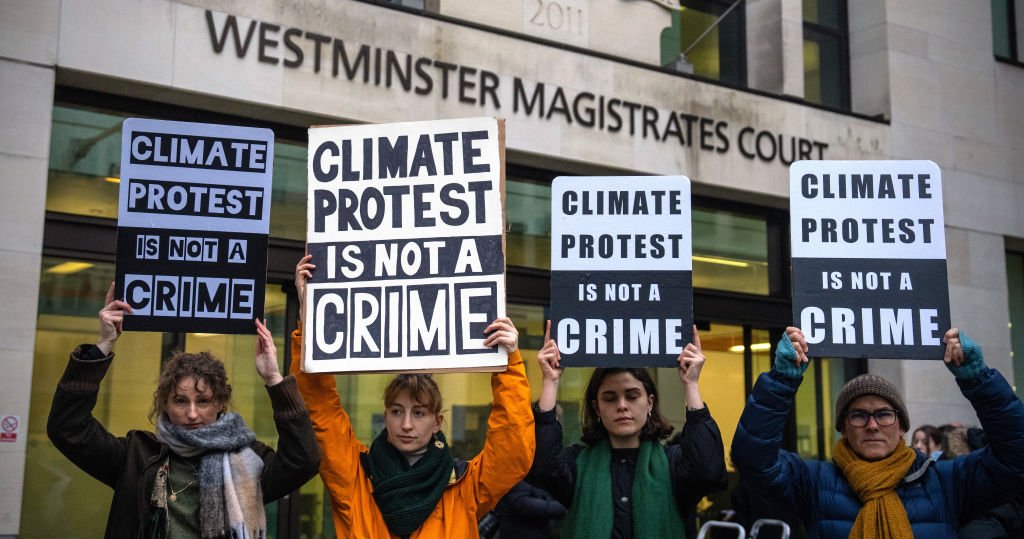
The analysis found that nearly 7,000 climate protesters overall were arrested between 2019 and mid-2025, according to Freedom of Information disclosures by the Metropolitan Police. Around 60% percent of those arrestees were subsequently charged.
In comparison, only around 400 far-right agitators were arrested over the same period. And they were charged only around 32% of the time – despite far-right activists being more likely to be arrested for violent crimes – while climate activists were overwhelmingly detained for peaceful acts of civil disobedience.
When looking only at the comparative charge rates since 2022, when the UK government introduced new policing powers around protest, the difference is even more stark.
Of the 2,226 climate activists arrested in London between 2022 and mid 2025 for participating in peaceful protest, around three-quarters were subsequently charged. This was over three times the rate of prosecutions of far-right activists arrested over the same period. Of 309 arrests of far-right protesters, less than a quarter were ultimately charged, despite often being implicated in violent unrest.
The climate group most targeted with arrests and prosecutions was Just Stop Oil – linked to around 90% of cases between 2022 and 2025. The direct-action protest movement decided to “hang up the high-vis” earlier this year after being subjected to an escalating campaign of criminalisation that saw dozens of its members handed prison sentences of up to five years.
Global Witness Campaign Lead Ana Caistor Arendar said:
“These figures expose a stark double standard in the policing of protest in the UK. Police are cracking down on peaceful activism demanding action to address the climate crisis, while displaying far great leniency to those stirring up hate and violence.
“With the climate crisis accelerating, the government should be listening to those raising the alarm, not silencing them. Instead of clamping down on peaceful protest, the government must respond with the urgency this crisis demands while there is still time to act.”
Overall, nearly half (42%) of the climate activists arrested since 2019 were targeted under laws enabling the police to place restrictions on protests.
The UK has seen a massive crackdown on peaceful climate protest since 2022, with new laws criminalising activities like slow marching, locking on, roadblocks or causing ‘more than minor’ disruption to the public.
While right-wing commentators have accused the government for overseeing so-called ‘two-tier’ policing, this new analysis raises concerns that there is a greater disparity between the peaceful climate protesters disproportionately targeted with criminalisation compared to those on the far right.
The top three most common offences for which climate protesters were arrested between 2022 and mid 2025 were obstruction of highways, interference with key national infrastructure, and breaching protest conditions imposed under Section 12 of the Public Order Act. A total of 85% of those arrested for these top three offences were subsequently charged.
By contrast, the three most common offences leading to arrests of far-right protesters between 2022 and mid 2025 were breach of the peace, breaches of protest conditions imposed under Section 14 of the Public Order Act and violent disorder. The average charge rate for these was 12%.
The UK’s climate activists have also received some of the harshest sentences for peaceful protest in modern British history, including Lucia Whittaker de Abreu, who along with four other activists was prosecuted in 2024 after participating in a Zoom call to make plans to scale a gantry on the M25 motorway.
The Met Police refused a Global Witness FOI request for data on surveillance tools used against climate activists, citing a need to protect “national security and law enforcement operations”, and that “confirming or denying if the Met uses specific surveillance technology against specific groups or organisations would lead to an increase of harm to covert investigations and compromise law enforcement”.