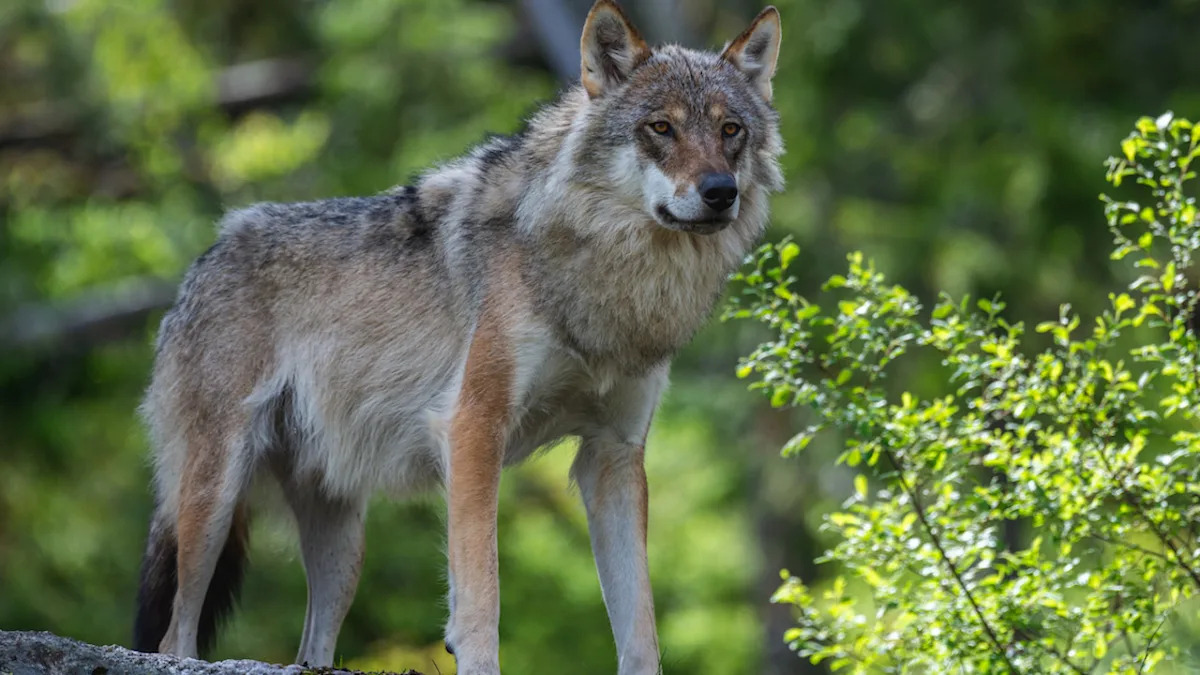
A pack of wolves in British Columbia has been baffling Indigenous fishermen for weeks, but the fascinating discovery is now raising even more questions. That’s because the wolves’ actions, which were originally blamed on marine mammals, could mark the first-ever sighting of wild wolves using tools.
Members of the Heiltsuk Nation had placed deep-water crab traps around the community of Bella Bella to capture invasive green crabs, and they were surprised to discover the traps were shredded to pieces when they returned. After a team of Canadian and American researchers set up cameras, however, the true culprit could no longer hide.
This female gray wolf dove into the water, pulled the trap to shore, then broke into it to find the fish inside. The researchers who led the study—Professors Kyle Artelle and Paul Paquet—believe this multi-step process suggests that wolves have at least a “causal understanding” of how the trap works.
“This sequence appears to demonstrate a sophisticated understanding of the multi-step connection between the floating buoy and the bait within the out-of-sight trap,” the study claims.
Surprisingly, this is the second time this year that a sea wolf has been spotted pulling a crab trap to shore, suggesting that pack members are learning the behavior from one another. However, scientists are still debating whether this counts as conscious tool use. Although the wolves did not assemble the trap, they did prove that they have the knowledge and skills to use them to their advantage.
Reactions to Sea Wolves Using Tools
Although many were impressed to see the wild animals using tools, others considered why the wolves may be resorting to raiding traps. @momoore85 wrote, “They’ve always been smart. The better word here is adaptable because as we keep expanding, they lose less and less of their wild home. This is actually a sad revelation.”
Despite this bittersweet discovery, many viewers are just as interested in the wolves themselves as their new talent. What are sea wolves anyway?
“Sea Wolves, which are gray wolves (Canis Lupus), are a unique group of coastal wolves who have a behaviour based on seafood consumption,” explains @patagonianthylacine. “While not yet a subspecies, they could be considered the first step in specialization that forms new species.”
These unique animals deserve our protection regardless of their intelligence or tool use. Although this is a fascinating behavior to witness, it should also be a reminder that protecting the creatures we share our planet with is just as important as human advancement.
🐶SIGN UP to get “pawsitivity” delivered right to your inbox with inspiring & entertaining stories about our furry & feathered friends🐾🐾
This story was originally reported by PetHelpful on Nov 20, 2025, where it first appeared in the Pet News section. Add PetHelpful as a Preferred Source by clicking here.