As COP30 has progressed, climate change has expectedly been at top of mind for the international community. This issue, one of the most influential to impact nature and society in the past century, requires immediate action in order to safeguard our planet and prevent cascading effects ranging from biodiversity loss to natural disasters to social impact. COP30 represents a call to action against climate change and presents global leaders a moment to raise ambition, including around forest finance.
COP30 taking place in the Amazon reminds the world that forests naturally serve as one of the most important tools in the fight against climate change. Annually, they absorb approximately 2.6 billion tonnes of carbon dioxide—that accounts for one-third of the total CO2 released from burning fossil fuels each year. Furthermore, forests provide essential ecosystem services, as they regulate temperatures, reduce soil erosion, facilitate water cycles, filter air pollutants, mediate disease, and provide food, water, shelter, and livelihoods for a billions of people. Although deforestation has slowed in some countries, we are still witnessing widespread deforestation globally, which is weakening these ecosystems’ ability to absorb and sequester carbon.
Thus, implementing effective strategies for the sustainable management, restoration, and conservation of secondary forests alongside protection of primary forests is imperative. To this end, Model Forests emerge as one reference point for cutting-edge, Nature-Positive solutions.
What are Model Forests, and how does the IMFN work?
The International Model Forest Network (IMFN) is a voluntary global community of practice whose members and supporters work toward the sustainable management of forest‐based landscapes and natural resources through the Model Forest approach.
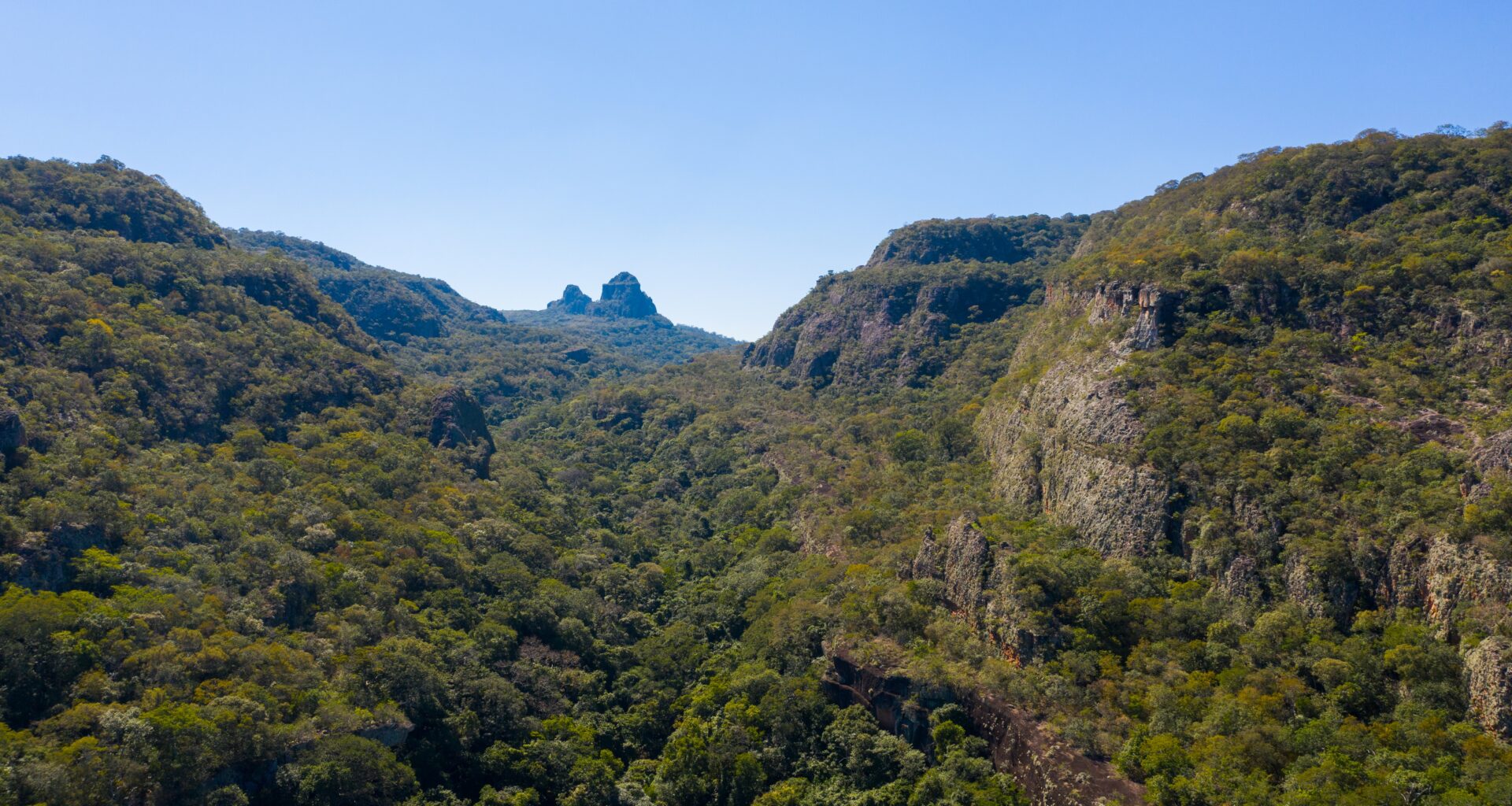
Model Forests are fully working mosaic landscapes of forests, farms, protected areas, rivers, and towns that equally prioritise the social, environmental, and economic goals of communities and long-term sustainability to conserve and restore forested landscapes. The Model Forest approach was first developed and implemented by the Government of Canada in the early 1990s in response to an intensely difficult period for Canada’s forest sector: conflict between stakeholders, decline in forest productivity and quality, financial losses, and an evolving economic landscape pointed to the need for a new forestry model in Canada. In response, 10 sites were established to test a new, holistic sustainability approach rooted in community participation and stakeholder dialogue. The idea was novel at the time, based in a desire to move away from valuing forests for timber alone towards a vision where social, environmental, economic and cultural benefits and trade-offs would be considered equally. Today, the IMFN is comprised of more than 60 Model Forests across 35 countries, encompassing over 70,000,000 hectares of land.
Model Forests notably sit at the intersection of policy and practice, allowing them to serve as ‘living laboratories’ where governments, producers, community members, and other stakeholders can incubate new policies and programmes. Thus, Model Forests not only contribute to the fight against climate change and biodiversity loss by maintaining ecosystem integrity and restoring degraded areas, but also by innovating new strategies to ensure the longevity of these ecosystems and promote coexistence with the human communities with which they are intertwined.
Capitalising on Rio Conventions’ synergies: Model Forests as cross-cutting Nature-based Solutions
Within Model Forests, multidimensional strategies are being trialled and refined to accelerate climate adaptation and mitigation. For example, Model Forests prioritise the scaling up of Nature-Positive leadership platforms to promote entrepreneurship, research, and climate-resilient value chains. They also facilitate peer-to-peer learning and sustainable resource management education to enhance community capacity to halt and reverse climate change drivers like deforestation. Furthermore, Model Forests serve as platforms for local stakeholders to adapt forest governance to local contexts, making sure management strategies are durable and tailored. Through these efforts, Model Forests have become pioneers in community-based climate action, and in turn, contributed to the Nationally Determined Contributions (NDCs) of Parties.
Climate change is not the only threat to forests; however, its cascading effects play a role in intensifying many of the other pressures faced by these ecosystems. Land use change and conversion, species extinction, biodiversity loss, habitat fragmentation, invasive species, pollution, wildfire, changes in disturbance regimes, sea level rise, and drought—these all compound and are compounded by climate change, heightening pressures on forests. Moreover, inequitable social and economic frameworks—such as exclusion of women, youth, and Indigenous peoples and local communities from natural resource management, land tenure, policymaking, and finance access—exacerbate environmental challenges and hinder the uptake of effective solutions. Model Forests offer lessons on how to address these impacts as well.
Over the last century, Earth’s biodiversity has experienced substantial decline, with land use change and climate change serving as key drivers. The Global Biodiversity Framework (GBF) is a call to action to halt and reverse the biodiversity crisis and achieve a Nature-Positive society. Model Forests have proven that community wellbeing and economic security do not need to come at the expense of biodiversity; in fact, the opposite is true. As countries deploy their National Biodiversity Strategies and Action Plans (NBSAPs), Model Forests can provide lessons and support countries in achieving targets.
Model Forests have made strides in biodiversity conservation by increasing public awareness on the importance of halting and reversing forest biodiversity loss, creating economic opportunities centred around biodiversity-friendly practices, creating alternative livelihoods and food sources to remove pressure from threatened species, and establishing frameworks for restoration and conservation that uplift rightsholders—especially local communities and Indigenous peoples. In this sense, they also embody a One Health lens, acknowledging the overlaps between human, animal, and environmental health.
Model Forests also play a tremendous role in incubating and accelerating gender-responsive approaches to forest management, supporting Land Degradation Neutrality (LDN). Women are disproportionately affected by climate change, largely because they are generally more reliant on and more restricted in managing natural resources. Through the implementation of inclusive policies and governance strategies that support women’s participation in Forest Landscape Restoration (FLR), strengthen women’s access to finance and land tenure, and enable gender-sensitive vocational training, Model Forests are empowering women. Model Forests have become exemplary case studies on how to advance gender parity in natural resource management, and they have empirically proven that when men and women alike are involved in conservation, outcomes improve.
Furthermore, Model Forests are pivotal to developing strategies to combat natural disasters, like wildfires, which are becoming more frequent and intense as a result of climate change. Model Forests have become key locations to test Integrated Fire Management (IFM) strategies that incorporate diverse and inclusive leadership and training structures into wildfire prevention and response. Model Forests demonstrate how to build capacity and develop disaster risk reduction (DRR) strategies that are tailored to local realities and responsive to emerging threats like wildfire.
As society confronts challenges brought about by the climate crisis, the interdisciplinary and flexible nature of Model Forests means that they can continue to adapt and evolve as threats shift and emerge. In a world characterised by climate fluctuations and growing uncertainty, Model Forests present a path forward for forests and the people and wildlife that depend on them.
IUCN and IMFN: Collaborating to advance and elevate community-based approaches
IUCN and IMFN are jointly working to support Model Forests around the world, including in Bolivia, China, Cameroon, India, and Thailand. Together, IUCN and the IMFN are supporting communities to boost Forest Landscape Restoration (FLR), promote gender-responsive forestry and governance, and foster climate-resilient value chains, all while telling the stories of the communities who are making a difference on the ground. Most importantly, this collaboration is spotlighting community-based approaches to sustainable forest management—putting trust, transparency, innovation, and knowledge exchange at the centre of Nature-based Solutions to address local, regional, and global environmental challenges.
This partnership was highlighted in the COP30 Forest Pavilion session “Safeguarding Primary Forests in a World of Growing Threats: A Call for Global Stewardship,” where Model Forest partners shared their experiences conserving forests—especially primary forests and intact forest landscapes—in a world rife with emerging threats from climate change. The power of partnership and cooperation was on full display at the session, emphasising that challenges like wildfire, climate shocks, and forest conversion are not insurmountable so long as communities and stakeholders have platforms—like Model Forests—to convene, engage in dialogue, and find solutions.
Beyond COP30: Taking inspiration from Model Forests
As COP30 comes to a close and the international community charts a path forward to achieve Paris Agreement targets, it is imperative that we remember the lessons from Model Forests. People are at the centre of our climate crisis, not only as the cause of anthropogenic climate change, but increasingly as the solution. As we seek out a resolution to the climate crisis, we must elevate the voices and stories and of those communities and individuals who are not only affected by climate change, but who are pioneering solutions. At the same time, sustainability means every pocket of society working together to find common ground and advance shared values. Just as Canada recognised the need for new perspectives in their forestry sector in the 1990s, the global community today has the opportunity to embrace transformative approaches to forest management that reconcile the wellbeing and survival of people, nature, and our planet.
COP30 is one more step in this direction, but we must keep going. In the process, we should carry forward the hopeful vision that has been cultivated by Model Forests the world over, where people and nature are able to coexist in harmony—in forests and beyond.
IMFN Technical Briefs for COP30 and additional reading

Learn more about how Model Forests are tied to climate change, wildfire, gender, and biodiversity through the following resources:
Explore other Model Forest resources developed by IUCN, and hear the stories of the communities stewarding these landscapes: