With a monthly energy cost ranging from $400,000 to $600,000, the university’s extensive infrastructure is a mix of old, outdated buildings and new, sustainable buildings. But a team on campus is taking steps to reduce the university’s energy cost by consolidating evening classes or moving them into more sustainable buildings.
That team is Green Campus, a student-run organization that works with community organizations to implement sustainability initiatives across campus. This initiative is being led by Truman Smith, an environmental science major and Green Campus energy conservation coordinator.
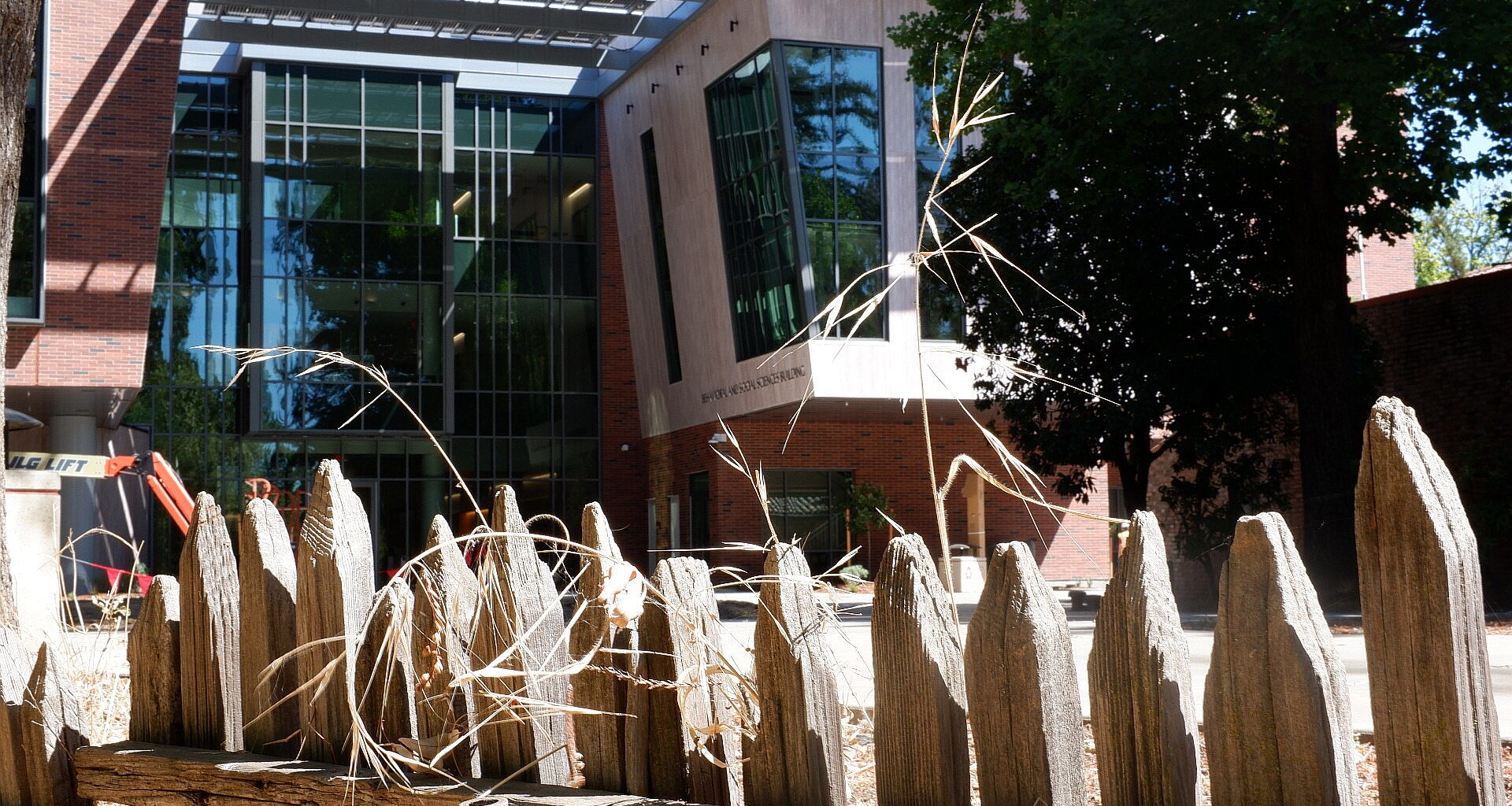
He is working to remedy costs through a building consolidation project, the main focus of which is to reschedule evening classes to have them on the same days or times, and move them to more sustainable buildings, such as the Behavioral and Social Sciences building. This would lead to fewer buildings being occupied in the evenings while still providing the same number of classes.
“The goal is not to decrease the offering of night classes or events on campus,” said Marie Patterson, interim director of sustainability. “They are critical to many of our students to fulfill their education goals, but to consolidate into a smaller number of adequately appointed classrooms in other buildings.”
Smith explained that many of the buildings on campus need to run the lights and HVAC for even just one class, club or event that is there. He noted that not all buildings were like this — Tehama Hall can regulate its HVAC floor to floor. For Tehama Hall, the goal would be to move all evening classes to one floor.
Moving classes to buildings that are more sustainable and rely on renewable energy, such as the BSS building, is another way to reduce utility costs, Smith said.
“If we can cut the energy usage of a single building by a single night across campus, we could have massive, unforeseen energy savings,” Smith said.
But, those savings are hard to pin down. He explained that the submetering across campus isn’t standardized.
“We have a lot of meters (in the hundreds), many of which are on a variety of rate plans,” said Jillian Leach, energy and sustainability analyst for Facilities Management and Services. “However, we do have one meter that covers the majority of campus.”
Leach explained that energy usage was most expensive for the university from 4-8 p.m., when energy is most in demand throughout the area, regardless of the season. This is why Smith is focused on classes starting after 5 p.m.
Green Campus had this idea after PG&E gave a grant to the school; Smith, along with Patterson, worked together to audit all of the courses offered for the fall semester, focusing on those starting after 5 p.m.
At the end of last summer, Smith and Patterson approached about a dozen department chairs with the idea, only one was willing to move their classes.
Smith said much of the feedback they received from departments was “that they had equipment-specific rooms and closets that they needed access to in those buildings.”
If it wasn’t moving classes to a more sustainable building, Smith had another idea to decrease the amount the university was spending on energy. All departments would need to do is consolidate the days and times that night classes are held.
To gather student input and feedback, Smith has been tabling at events, most notably on sustainability day. He said that he had been handing out flyers and discussing the project.
“As a small student organization on campus, it is hard to get mass recognition,” Smith said. With only five coordinators, Green Campus is limited in the resources that it has to promote its work.
The student-led organization is reaching out to students to gather feedback on whether this initiative is something they would like to see. Smith said that once they have enough feedback, they will approach the Academic Senate and work to push a proposal through.
“Some of the main drivers for enrollment are our campus’s beauty, its connections to nature, and the university’s commitment to sustainability,” Smith said. “By being wise stewards of our energy use, we can continue to maintain and enjoy a pristine natural environment.”
Chris Hutton can be reached at [email protected] or [email protected].