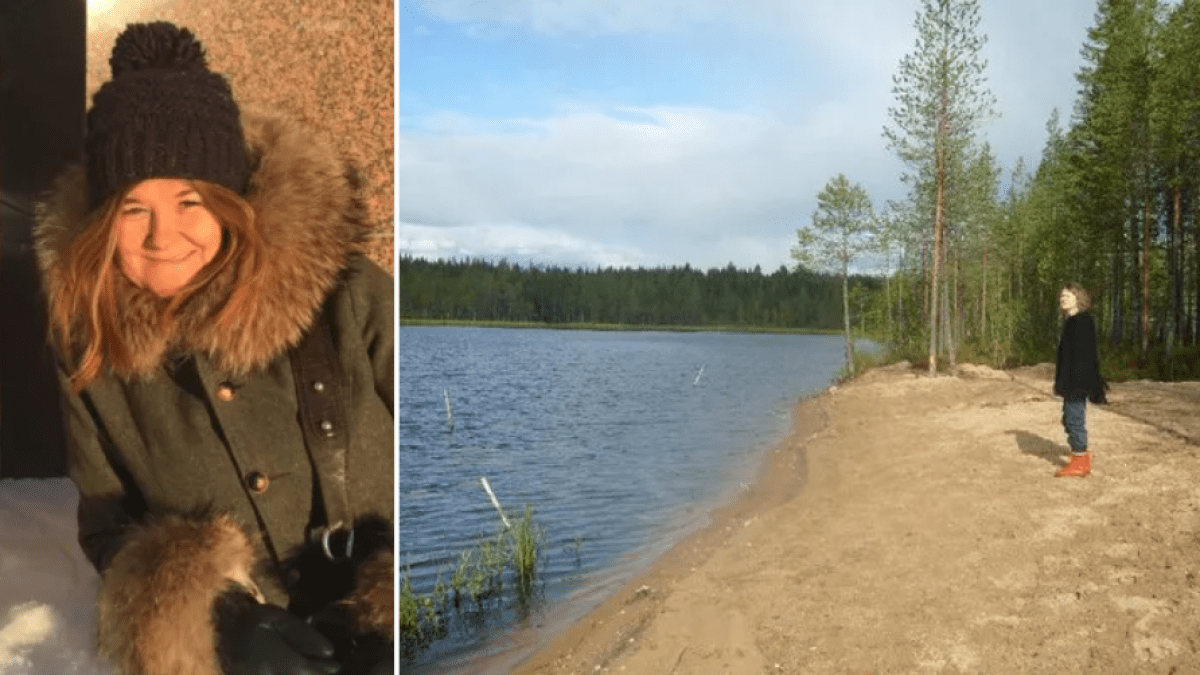
Polly Arrowsmith, a Londoner with family in the Scandinavian country, says Finnish systems work far better than those in the UK
A British woman who has been a regular visitor to Finland for 50 years said she can see why the Scandinavian country is repeatedly named the happiest in the world, pointing to its impressive healthcare, education and social welfare systems.
Polly Arrowsmith, a 58-year-old Londoner whose mother was from Finland, spent every other summer of her childhood there. “I don’t have any family in the UK, but my mum had over 100 first cousins in Finland,” she told The i Paper. “We would go for seven weeks during the summer as children to Lapland.”
She recalls long evenings playing outside, as “it would be light at midnight”.
New FeatureIn ShortQuick Stories. Same trusted journalism.
Her mother moved back to Finland 13 years ago, and Polly visited her at least once a year until she died. She now returns to Finland every two years to see family.
Polly believes the reason Finland ranks first and the UK 20th in the World Happiness Report stems from the Finnish principle of fairness and equality. “It encompasses all decision-making politically and socially,” she said. “It goes throughout everything.”
Her family and friends in Finland have benefited from a top-class state school system. “In schools, children are treated fairly and with respect,” she said.
Mandatory schooling doesn’t start until children are seven, and early years are focused on play. Teachers require a master’s degree and extensive training.
Polly, who has several aunts in the profession, notes: “It’s a very competitive field, and highly respected, along the same lines as being a lawyer or doctor. And it’s very well-paid.”
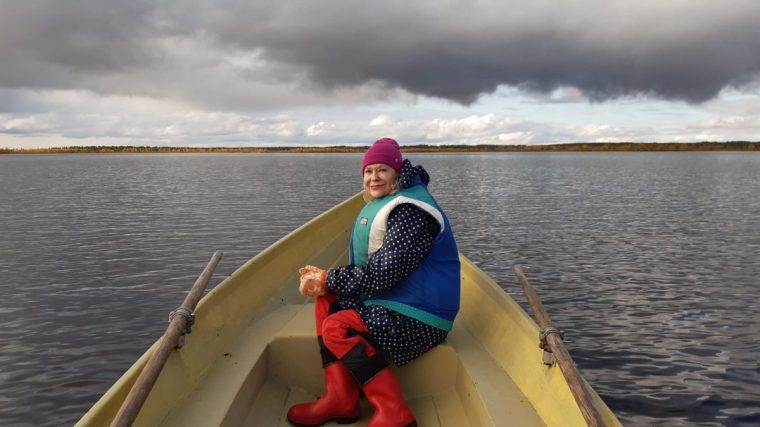 Polly has fond memories of time spent outdoors with her relatives in Lapland
The average class size is 20 children compared with a UK average of 26, and the only standardised tests are administered at the very end of a child’s time in school. While there is a curriculum, teachers are given flexibility to tailor learning for individuals.
“Children, therefore, don’t get left behind,” Polly said. “Kids aren’t left on the scrap-heap.”
Education for profit is prohibited in Finland. Only around 2 per cent of its schools are designated “private”, as they are run by non-governmental bodies, and they are publicly funded and officially free, although some charge registration fees.
Finnish education was once steeply hierarchical with private, selective and local schools, but it was reformed in the early 70s to align with the Finnish principles of fairness and equality.
The country became recognised as one of the world’s most successful education systems, topping the Programme for International Student Assessment (Pisa) for science, mathematics and reading at the turn of the century.
There has been a slight slide in scores, which Pasi Sahlberg, a Finnish education expert, said might be down to “digital habits and behaviours” as well as budget cuts and a failure of policies to lead to continuous renewal of the system. But he told The i Paper that a similar trend had been seen worldwide.
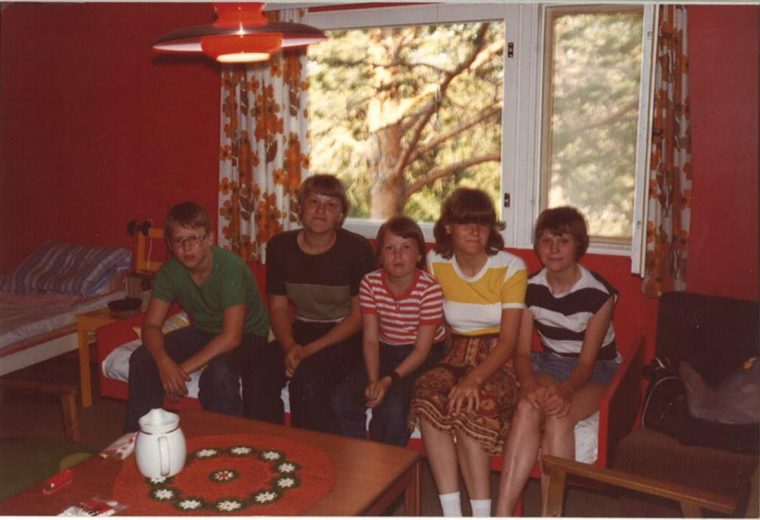 Polly, pictured as a child with her Finnish cousins, says childcare and education are more affordable and equitable
He added that there is still little variation in outcomes between schools and pupils in Finland, with the system serving all students equally regardless of background.
Polly believes children from wealthier families receive a better education in the UK, while in Finland, children are treated fairly and benefit from this “throughout their lives”.
She added that mental health is taken seriously in Finnish schools, too. “My cousin’s daughter had been ostracised from a group of friends at school,” she recalled. “Within the week, the teacher who noticed this got her seen by a psychologist. These things are being dealt with at a grassroots level very quickly.”
Polly also praised the healthcare system, saying that when her mother was ill, she never waited to see a GP. In hospital, she “was never in the ward with more than two people, and when she was transferred into hospice, she had a private room with somewhere for me to sleep”.
When Polly visited an emergency room herself, she was seen straight away.
“Healthcare isn’t entirely free,” she said. “But it isn’t a big amount.”
Her mother was only billed €660 for three months of treatment in a state-run hospital and hospice, she observed.
Polly believes that since people pay a small fee to be seen or treated, they typically don’t miss appointments. “It’s not like the NHS where the number of appointments missed is high,” she said. “People don’t do that in Finland. If you have an appointment, you’re going to keep it.”
Finland is among the top countries in the world for access to healthcare and consistently ranks as one of the safest places globally to be pregnant and give birth.
The system is decentralised, with municipalities receiving funding for services based on the size of the taxable population. While Amnesty International has raised concerns over the expense of healthcare and disparities between areas, a reported 88 per cent of the Finnish population are happy with the system.
Childcare provision for working parents is also far better in Finland, argues Polly. The maximum fee for full-time daycare is €311 per month (£275), decreasing for each sibling. Families receive more than 14 months of shared parental leave.
“Family time is very important,” Polly said. “Parents can have parental leave without having much impact on their pay. Daycare fees are low, so parents can go back to work because they aren’t worried about fees. I think it’s a lot harder to have a family in the UK than in Finland.”

Polly’s cousin had a baby at 23 while pursuing a degree, living in university accommodation for three years while raising her child. “The government paid for the accommodation and living costs throughout,” she said. “The degree was free… there was no pressure… she could return years later to finish.”
In school, at hospita, and at work, Polly says people are treated like human beings, rather than numbers, which accounts for their higher happiness levels. If the UK wants to follow Finland’s example, Polly thinks the Government needs to consider how to narrow the wealth gap as a first step.
“The wealth gap in the UK is getting more extreme,” she said. “It makes people really unhappy. People need hope, and a lot of people in the UK don’t have it.”