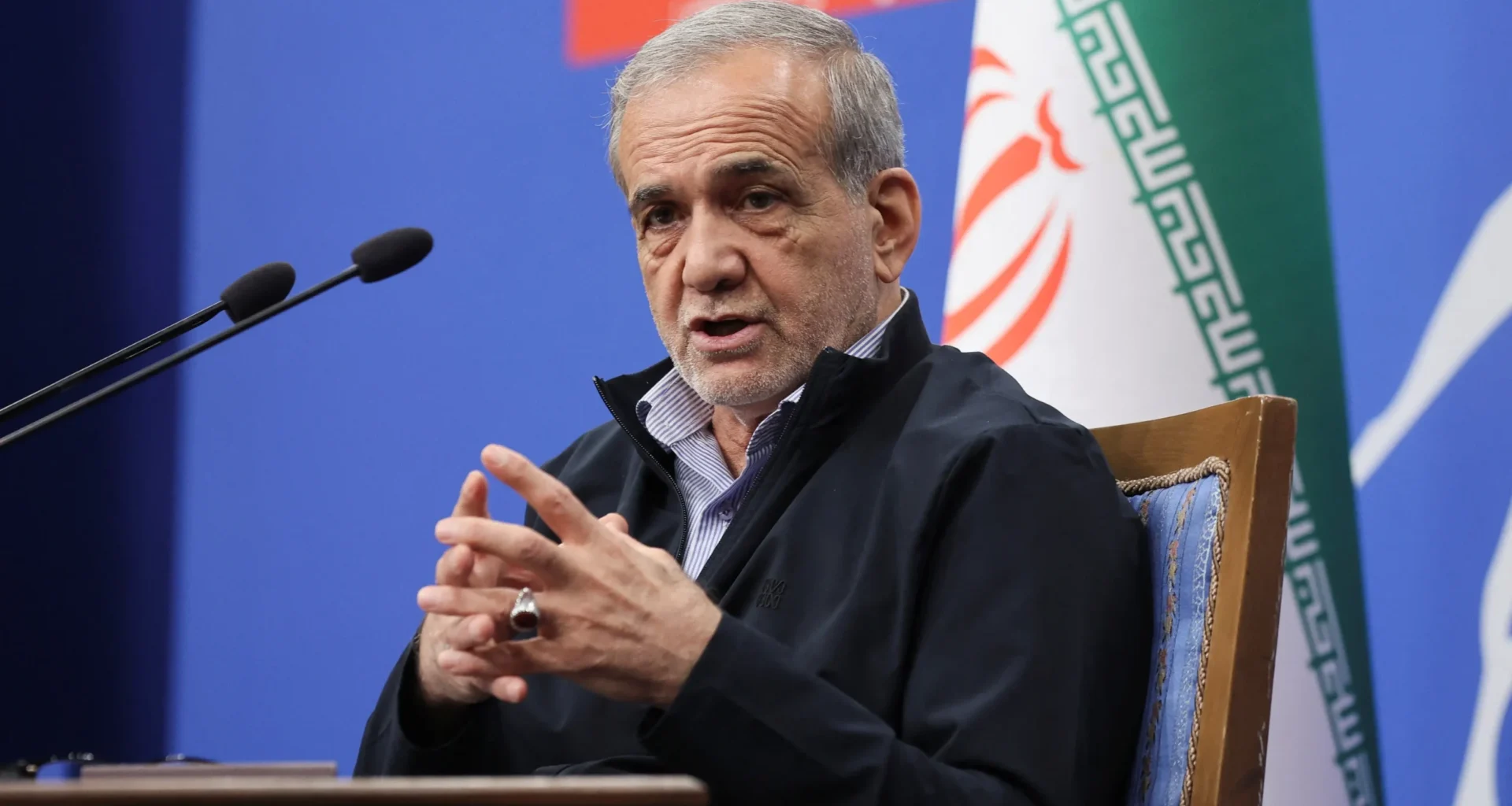
Marrakech – Iranian President Masoud Pezeshkian has declared that relocating Iran’s capital from Tehran has become “unavoidable” due to severe overcrowding and critical water shortages threatening the city of 10 million residents.
Speaking at a meeting in Qazvin, Pezeshkian stressed the urgency of the situation. “The reality is that we have no choice. It is a necessity. We cannot overwhelm this region with more population and construction,” he said, according to the official IRNA news agency. “We can develop, but we cannot solve its water problem.”
The Iranian president warned earlier this month that the current capital could face evacuation without rainfall before winter. Tehran is experiencing its sixth consecutive year of drought, with rainfall this year at its lowest level in a century.
Water infrastructure reaches breaking point
The water crisis has reached alarming proportions across the capital. Tehran’s Amir Kabir Dam currently sits at just 8% capacity, while the city’s reservoirs are half-empty. Water pressure reductions have begun citywide, with officials quietly warning that taps may run completely dry.
The reservoirs supplying Tehran are now at only 5% of their reserve capacity, according to Mohsen Ardakani, head of the Tehran Province Water and Wastewater Company. The government has implemented periodic water supply cuts to the 10-million-strong population to limit consumption.
Iran’s 12-day war with Israel last summer also damaged water infrastructure, which has exacerbated the problem, according to Energy Minister Abbas Aliabadi. The conflict added further strain to an already deteriorating system struggling with decades of mismanagement.
Residents across the capital are experiencing severe water shortages, with many reporting no water for days at a time. The water company has advised citizens to purchase pumps and storage tanks to address the problem, creating additional financial burdens for families already struggling with economic hardships.
Some residents travel across the city to relatives’ houses just to take showers, while families with children face particularly difficult situations managing basic needs.
Decades of mismanagement behind crisis
While the government blames climate change and sanctions, water experts point to decades of poor planning and corruption as the primary causes. Between 2012 and 2018, Iran more than doubled its dam count from 316 to 647, many built without environmental assessments.
The result is a network of failing reservoirs, collapsing groundwater tables, and a 25% loss of urban water through decaying pipelines. Iran recycles only 15% of wastewater, compared to over 90% in countries like Turkey, the UAE, Israel, and Qatar.
Kaveh Madani, director of the United Nations University Institute for Water, Environment and Health, described the situation as beyond a crisis. “I don’t call it a crisis anymore. This is a state of failure. That’s why for years I’ve referred to it as water bankruptcy,” he said.
Makran region proposed as new capital
The government has identified the underdeveloped Makran region in southeastern Iran as a possible new capital location. Government spokeswoman Fatemeh Mohajerani announced in January that authorities were studying relocation to this largely underdeveloped area on the country’s southern coast.
However, the proposal faces significant criticism. The scheme could cost more than $100 billion, according to analysts. Michael Rubin from the Middle East Forum noted that Makran has among Iran’s harshest climates and most difficult topographies, comparing the move to “relocating the White House to Death Valley.”
Facing the crisis, Iranian authorities launched cloud seeding operations to induce rainfall. The Ministry of Energy announced operations began this fall using aircraft and drones, targeting areas around the Zayandeh-Rud River and expanding to other parts of the country.
Some Iranians on social media have claimed neighboring countries are “stealing” their rain clouds. Authorities have previously accused Turkey, the UAE, and Saudi Arabia of diverting clouds. One official has accused the United States and Israel of deliberately manipulating the weather to cause drought.
Iran’s Meteorological Organization has rejected these claims, stating that “stealing clouds and snow” is not possible. Experts note that cloud seeding requires clouds with at least 50% moisture, which is increasingly rare in the Middle East’s arid climate.
No timeline for capital move
The water crisis has sparked protests, with verified videos showing students demonstrating at Tehran’s Al-Zahra University.
The issue has led to violence and arrests in southwestern Khuzestan province – previously known as Arabistan before it was annexed in the early 20th century – a region also referred to as Ahwaz, home to a large Arab minority that has long been subject to Persianization policies.
Pezeshkian’s evacuation suggestion drew criticism from local media. The reformist Ham Mihan newspaper branded his remarks a “joke.” The government later clarified that the president intended to warn residents about the situation’s severity rather than present a concrete evacuation plan.
Despite the urgency of Tehran’s water crisis, no timeline has been announced for any capital relocation. The proposal would still leave millions without water while requiring massive infrastructure investment during Iran’s economic difficulties.
Energy Minister Abbas Aliabadi warned that overconsumption will face punishment, noting plans to cut electricity to households still filling swimming pools. “All the options are related to emergency management only,” Madani observed, adding that effective solutions require earning citizens’ trust through transparency and proper communication channels.
Tehran nestles on the southern slopes of the Alborz mountains, traditionally benefiting from autumn rains and winter snowfall. This year, mountain peaks that should already be snow-covered remain dry, showing the unprecedented nature of the current crisis facing Iran’s capital and its 10 million residents.