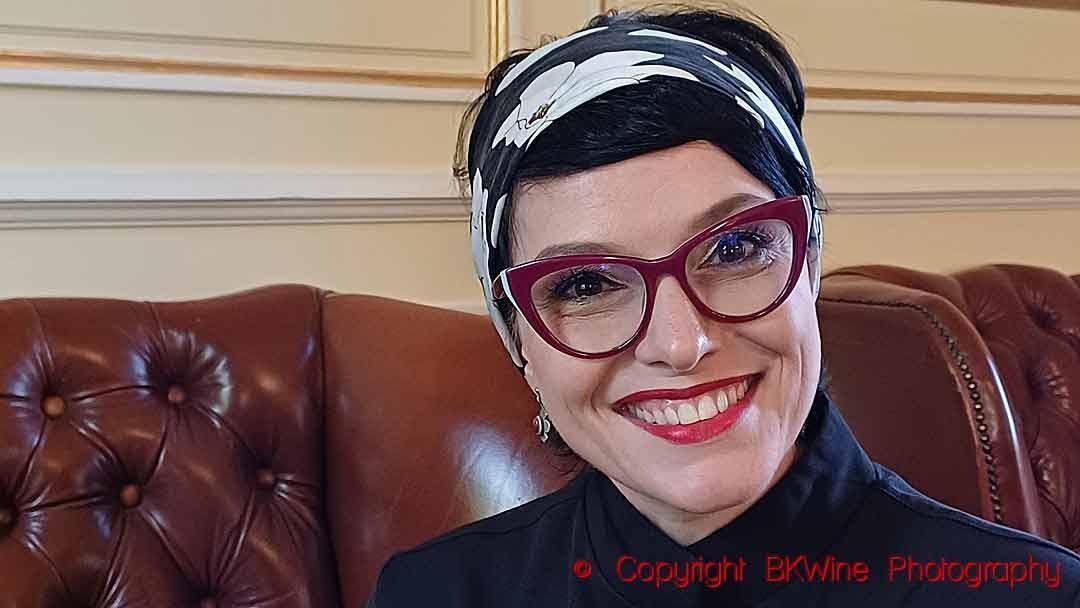
Chantel Dartnall, chef and manager at Restaurant Mosaic at Chateau des Tesnieres, copyright BKWine Photography
BKWine Photography
Chef Chantel Dartnall ran the reputed restaurant Mosaic in Pretoria, South Africa, for 15 years. She was internationally praised for her elegant botanical cuisine, which utilises flowers and botanicals to enhance both the taste and beauty of the food, as well as the well-being of the diners. She closed Mosaic in 2020, but it was only a temporary shutdown. In 2025, it opened again, albeit many miles from South Africa. The new Mosaic is located in Brittany, northwestern France, within the walls of the magnificent Château des Tesnières, which the family purchased in 2021.
The idea for the second Mosaic remains the same,” says Chantel. “I think my way of cooking is within me. I brought it with me. There will always be the first Mosaic, and the inspiration from the first Mosaic will carry over into chapter two of Mosaic in France.”
The Chateau des Tesnieres with the Restaurant Mosaic, copyright BKWine Photography
BKWine Photography
For Chantel, cooking for people is not just giving them food on a plate; it is also giving them an experience. She always wanted to be in the kitchen, ever since she was four years old. When she was six, she was packing lunch boxes for the family. Growing up, she had people passionate about food around her, but nobody in the industry. She knew, however, early on she wanted to have her own restaurant.
“I don’t just want to create a plate of food, I want to create something which the guests can relate to emotionally, something that evokes memories. With our seabass, for instance, maybe people remember walking on the beach, having a beautiful moment.”
Pigeon with mushrooms, vegetables and herbs at the Restaurant Mosaic, copyright BKWine Photography
BKWine Photography
From a very young age, she was fascinated by herbs and flowers, incorporating them into her cooking. She fully immersed herself in the botanical style at the age of 20. She discovered Michel Bras, the French chef, and he became an inspiration, especially on botanical cuisine.
“I thought, this is something I can relate to. And from day one, when I opened Mosaic [in Pretoria, South Africa] in 2006, this is the style of food that I was making. It has been fantastic to see what the effects are of using these elements in the food.”
One example on the menu that we had was the Alchemist Infusion. It is an aromatic vegetable consommé that reinfuses through hibiscus tea, fennel, lemon grass flowers and other aromatics. Those elements, if enjoyed during a meal, help the digestion, says Chantel. “So, the diners feel more comfortable at the end of the dining experience.”
Alchemist’s Infusion with langoustine at the Restaurant Mosaic, copyright BKWine Photography
BKWine Photography
“The alchemist infusion is a dish that we used to prepare also in South Africa, and which I would say is one of my signatures, because it’s a pretty special dish. It utilises all edible herbs, flowers, and aromatic herbs. This, to me, encompasses what we are about. It is very botanical, very natural, using elements from the ocean and from the land in one dish.” The ocean connection comes in the form of langoustine.
When you come to Mosaic you can chose between a “small” tasting menu, petite dégustation, or a big one, grande dégustation. Petite is certainly not the right word to describe it, but when you’re here, why not simply go for the grande and taste it all? You’ll regret the things you missed otherwise. Whichever you chose, it will be clear that Chantel is aiming high, very high, with her reincarnated Mosaic.
You have a vast choice of wines to select from in their extraordinary wine cellar (that you might be able to visit if you ask nicely), but it is a wise choice to select one of the wine pairing menus, not necessarily because of the specific pairings (which are, of course, excellent) but it lets you taste a much wider range of wines from their exceptional wine list.
Chantel has always been cooking, but she also attended the Prue Leith Chefs Academy in South Africa and learnt the trade from the ground up. After completing her studies in South Africa, she wrote her CV and sent it to Michelin-starred restaurants across Europe. She ended up working with giants such as Nico Ladenis at Ninety Park Lane in London and with Michael Caines at Gidleigh Park. She has worked with notoriously fierce chefs. “Because in those days, it was a different time”, she says, “the brigades were all men. It was very hard. Nico was a very, very strict but fair man.”
She has not forgotten the male dominance, and she is a big promoter of putting forward talented women and having a harmonious working atmosphere in the kitchen. Today, almost all her staff is female.
Chantel Dartnall, chef, and some of the staff at Restaurant Mosaic at Chateau des Tesnieres, copyright BKWine Photography
BKWine Photography
Does South Africa influence her menu?
“I don’t want to be labelled as a South African restaurant. Even for us, it is not always obvious to know what South African food is. For me, it has always been about a natural harmony. This is why my restaurant is called Mosaic. When you look at a mosaic, you see the entire picture; you don’t stand there and analyse each little element. We are a botanical restaurant with influences from around the world, not just France or South Africa. It’s also a little bit Asian…”
The wines are obviously a part of the whole experience here at Mosaic. “When I was a little girl, my father already started collecting wine, and by the time we opened Mosaic in 2006, I started the restaurant with a cellar of 25,000 bottles. And these were exceptional bottles, ready to be enjoyed at that moment.”
The elegant dining room at the Restaurant Mosaic, copyright BKWine Photography
BKWine Photography
Her father continues to handle the cellar, suppliers, and making new connections, arranging cellar visits, etc. But in the restaurant the wine is manage by her (South African) sommelier René Veldhuizen. “This is something that we do as a team during the periods that we are off. We visit various wine regions, Alsace, Champagne, the Loire Valley… We explore, visit the producers, and then select wines from their portfolios.”
“We focus mainly on wine, which suits my style of cooking, of course”, Chantel points out. “Because I find that with some of the regions, the wines are very robust and very full. So, we have a few bottles for clients who want them. But for the rest of the wines, we have a big focus on Champagne and Burgundy and also because these wines we know from experience go well with my style of cooking.”
René Veldhuizen, sommelier, in a corner of the immense wine cellar at the Restaurant Mosaic, copyright BKWine Photography
BKWine Photography
However, other regions also find their way onto the wine pairing menu. She likes Alsace, for instance. “Yes, Alsace is phenomenal. This is a region I feel very passionate about, and it’s exciting for us to be able to present these wines from Alsace.”
Also, there’s a bit of South African wines. A superb white from Hannes Storm in Hemel-en-Aarde was on the wine pairing menu when we visited.
Her father, her mother and her sister came with her from South Africa to France, as did, remarkably, her all-female Mosaic team. They all play a significant part in this new adventure.
One of the opulent rooms where you can have the aperitif at the Restaurant Mosaic, copyright BKWine Photography
BKWine Photography
Mosaic is housed in a beautiful neo-gothic classic French country-side chateau. The de Langle family owned the property since the 17th century and built the current chateau in the 1860s. In the 20th century it had a less glorious time until it was bought by the Dardnalls in 2021. They spent four years renovating it.
It reopened in 2025 as the home of the Mosaic restaurant and a small luxury hotel with only five rooms. The interior is almost breathtakingly opulent. Each room has its own design and its own theme, The Queen Anne of Brittany suite, the Queen of Sheba suite, with a bathtub in one of the towers, the Chinese imperial Empress Dowager Cixi suite… Each is almost a museum piece of its own. Much of the interior has been hand-crafted by South African craftsmen and artists.
One of the guest rooms at the Chateau des Tesnieres, copyright BKWine Photography
BKWine Photography
It is, in fact, a good idea to stay in one of the rooms when you enjoy a dinner at the Mosaic. It takes some time to work through all the dishes and all the wines so it is just perfect to be able to just walk up the stairs to your room. The Château des Tesnières with the Mosaic is located some 40 km east of Rennes in Brittany which means a bit over 300 km west of Paris. A perfect week-end get-away.
A big part of creating the excellence in the Mosaic restaurant is, of course, getting the right ingredients. In South Africa, Chantel had about seven farmers who were producing ingredients specifically for them. She knows that these suppliers also exist in France; she just has to build up the network. “What is fantastic is that we have more and more suppliers, producers and farmers calling.”
The delicate oyster dish at the Restaurant Mosaic, copyright BKWine Photography
BKWine Photography
“One supplier contacted me and said, ‘I sell pigeon to the best restaurants in France. I would be willing to have my product in your restaurant’. Another one said, ‘I know a fantastic pork supplier, a very special breed of pork’. Okay, on the next menu, I can actually work with that. I have one person who said I can send you salt marsh lamb, but it’s only available by allocation, and you would have to wait until next year. So I am waiting to have salt marsh lamb. But I am on the list. I’ve learned, ever since I’ve come to France, a great deal of patience.”
A meticulously prepared appetiser at the Restaurant Mosaic, copyright BKWine Photography
BKWine Photography
Botanical cuisine needs flowers, a lot of flowers. They cannot currently grow all they need. They have suppliers, but once the work on the grounds is finished and the gardens are established, they will develop their own vegetable garden and edible flower garden.
“Already within the garden, there are little patches where we can harvest some herbs and flowers, but not to the extent where we can be entirely self-sufficient, and for us, it’s important also to be able to support the local producers around us.”
The Mosaic culinary adventure of Chantel Dartnall continues.
—Britt Karlsson