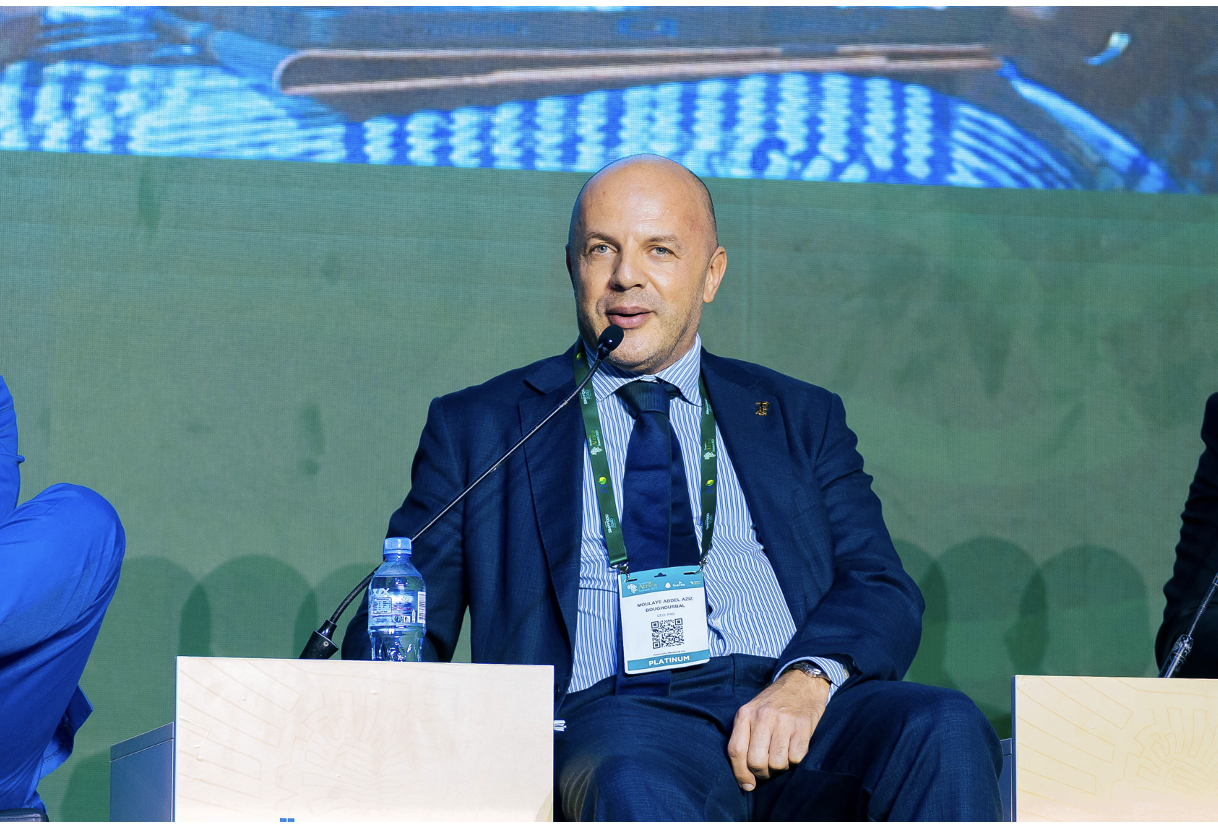
“Ocean governance and the blue economy remain undervalued in the Africa–Europe partnership. The African private sector has a central role to play in integrating these priorities fully into the cooperation agenda between the two continents.”
Valued at nearly 450 billion dollars a year, the blue economy stands as one of Africa’s most promising engines of growth — and a strategic field of cooperation with Europe. Yet this potential remains largely overlooked in the AU–EU partnership, warn several stakeholders based in Brussels. Ahead of the upcoming summit between the two continents, Aziz Boughourbal, CEO of Africa Ocean Group, speaks to Financial Afrik about the key issues shaping this relationship and why the blue economy should be placed at the core of political priorities.
Could you briefly introduce your group?
Aziz Boughourbal: Africa Ocean Group has been active since 1987 and is mainly involved in fishing and maritime services. We are a pioneering group in that we were the first in Mauritania to establish onshore pelagic fish processing plants. This shift from solely sea-based practices has created real local added value and supported the national economy. Today, we have become a key player in West Africa, certified according to international sector standards, with exports to the sub-region, Europe, and several Asian markets. This is all based on three modern plants and a fleet of 23 ships of which we are the owners.
How did you finance the establishment of these plants?
A.B.: At the time, there was almost no pelagic production in Mauritania. Nothing was landed: fishing was done and exported at sea by foreign vessels. So, we launched a pilot project to create an onshore processing sector. We quickly faced a major obstacle: financing, around 30 million euros, which local banks could not provide. We then turned to the European Investment Bank (EIB) and the OPEC Fund, which in 2005 provided $10 million in financing to our subsidiary SEPH S.A. This transformed the initiative into a true industrial complex, including the fleet. This is one of the few cases where the EIB directly financed the fishing sector. The results have been remarkable: from zero tons produced onshore, we now reach nearly 32,000 tons per year.
An AU-EU summit will take place soon. How do you assess the relationship between the two partners in the blue economy field, especially in Mauritania?
A.B.: Mauritania has long understood the strategic importance of fishing, a crucial pillar of the national economy. In 2023, the sector represented 2.8% of GDP, 66,000 direct jobs, 300,000 indirect jobs, 14.9% of the primary sector production, and nearly 20% of export revenues. The country early on focused on regulating and standardizing the sector, adopting the European health system for all companies and vessels operating in its waters. Today, Mauritania is the second country in the world to achieve full FiTI (Fisheries Transparency Initiative) compliance, a unique transparency guarantee in the sub-region.
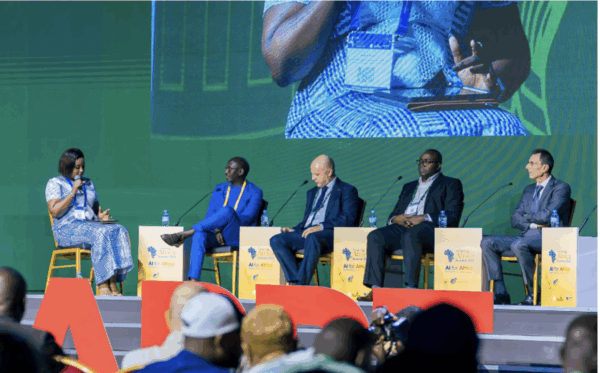
Photo Credit: Smart Africa.
Apart from the health aspect, what is your observation on the current state of collaboration?
A.B.: Despite several partnership agreements signed with African countries – including the one between the EU and Mauritania until 2026 – I believe that European institutions have not yet fully grasped the structuring potential of the blue economy in the EU-Africa relationship. The Africa-Europe Foundation itself emphasizes that ocean cooperation is largely neglected in the partnership between Africa and Europe. However, the African blue economy could exceed $1.5 trillion per year by 2050 and play a significant role in various areas, such as reducing migration of African citizens, where human disasters frequently occur, to Europe.
How?
A.B.: Thanks to European funding, our group has created over 3,000 direct jobs. Applying African development ratios, this represents over 40,000 people whose livelihoods depend on our company and therefore encourage them to stay. In this context, we have engaged with organizations based in Brussels to raise awareness of the importance of the African private sector – especially fisheries industries – in creating local jobs. It is essential for the blue economy to be more integrated into the partnership between Europe and Africa.
Industrialists are often accused of overfishing by certain NGOs, especially European ones. Are these criticisms justified?
A.B.: NGOs obviously have a key role to play. However, many – often foreign – tend to consider all industrial actors as a homogeneous bloc, without distinguishing those who strictly adhere to sustainability rules from those who do not. This approach seriously harms responsible operators.
Do these organizations then provide a biased analysis of reality?
A.B.: I would rather speak of an incomplete understanding of the situation. Some NGOs criticize industrial fishing based on local observations and testimonies from artisanal fishermen, without always having a comprehensive view of the sector. This approach, legitimate in its intention, can however overlook essential elements: available statistical data, diversity of practices, and the economic role of industrial fishing. In several countries, artisanal fishing still faces technical constraints affecting the quality of some catches, while industrial fishing generally produces volumes exclusively for human consumption and meets higher quality standards. Hence the importance of examining the entire sector, so that the analysis is not solely based on isolated perceptions or situations.
How to change the situation?
A.B.: To contribute to a better understanding of the context, we have chosen, in a spirit of openness, to welcome organizations like Greenpeace. We aim to transparently present to them our sustainability practices, environmental policies developed with our European partners, and how we collaborate with artisanal fishermen for the export of “noble” products to foreign markets, such as Spain. And our efforts to strengthen this dialogue do not stop there.
What do you mean?
A.B.: Through our subsidiary Omaurci S.A., we are active members of the Fishery Improvement Project (FIP). Alongside associations, public authorities, scientists, and other private actors, we collectively work on implementing practices compliant with international standards for sustainable fisheries management. Studies and exchanges conducted in this framework show that current fishing activities in Mauritania are around 600 to 700,000 tons per year, with a total estimated capacity of 1.2 million tons. These figures demonstrate that we are far from a situation of overfishing. This margin implies that large local groups, like ours, can continue their activities peacefully and contribute significantly to tax revenues, the local economy, maritime services, ship repair, and supplies, while also participating in the fight against food insecurity in the sub-region, where 90% of our pelagic products are exported.