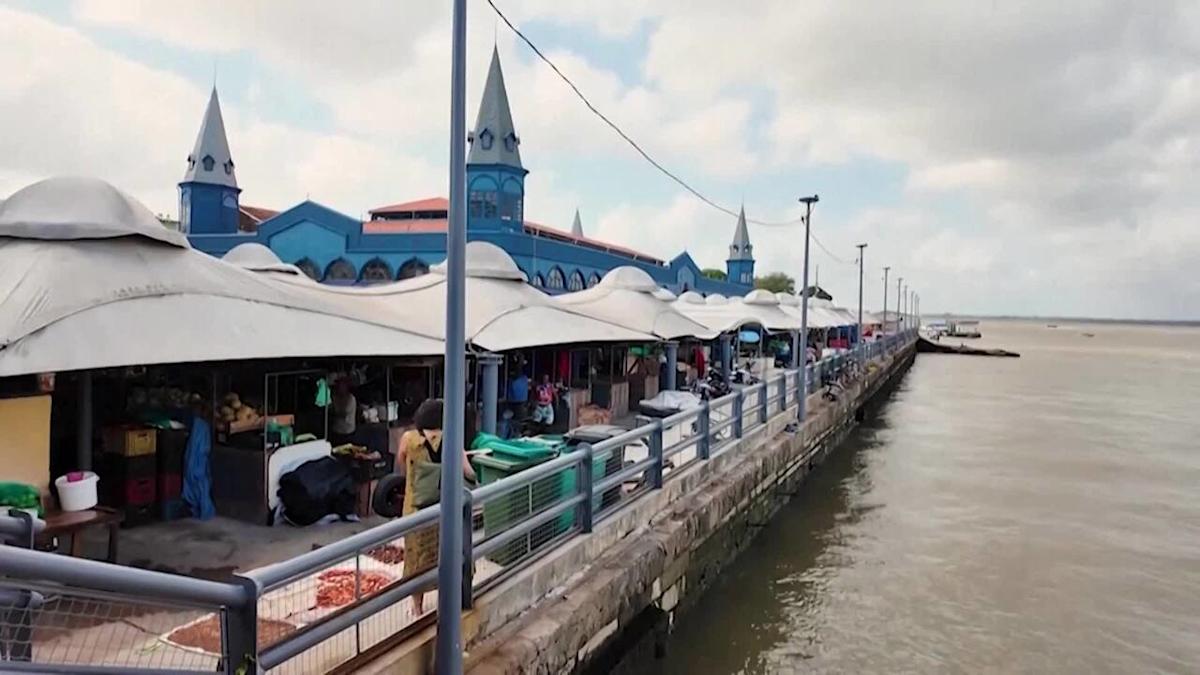
STORY: Inside this Belem warehouse, Brazilian entrepreneurs are experimenting with forest commodities to come up with new foods, scents and other products.It’s part of a new research and development program from the state government of Para. The goal is to help locals profit from their own backyard, the Amazon rainforest.Instead of clear-cutting trees for cattle and mines, Para’s government opened the $56 million Bioeconomy and Innovation Park in October – a new facility where vendors ideas come to life.Chef Leonardo Souza says he gets goosebumps talking about how the new park has helped him scale up production of his artisanal salt flavored with Amazonian herbs, from 60 jars per day to about 1,000.The idea of a robust bioeconomy is building on an already solid base in Para state.Down the river from the park is Belem’s open-air Ver-o-Peso market, where vendors have been selling rainforest products since 1901.During the day, you can find Bete Cheirosinha, a fifth-generation herb seller who sources plants from river communities and uses Indigenous knowledge to make tinctures.“Each of these herbs has a meaning. Each one is used to treat a specific problem. The Amazon is also very important to us here.”Every night, riverboats unload bushels of acai for shipment across Brazil and abroad.Acai is the country’s most ubiquitous Amazon product. The popularity of the antioxidant-rich berry has driven market growth projections from over $1 billion in 2024 to over $3 billion by 2032, according to Brazil’s government.Para’s new program is a small part of Brazil’s plan to show the world it can find a way to protect the Amazon rainforest and ensure jobs and money for its residents.