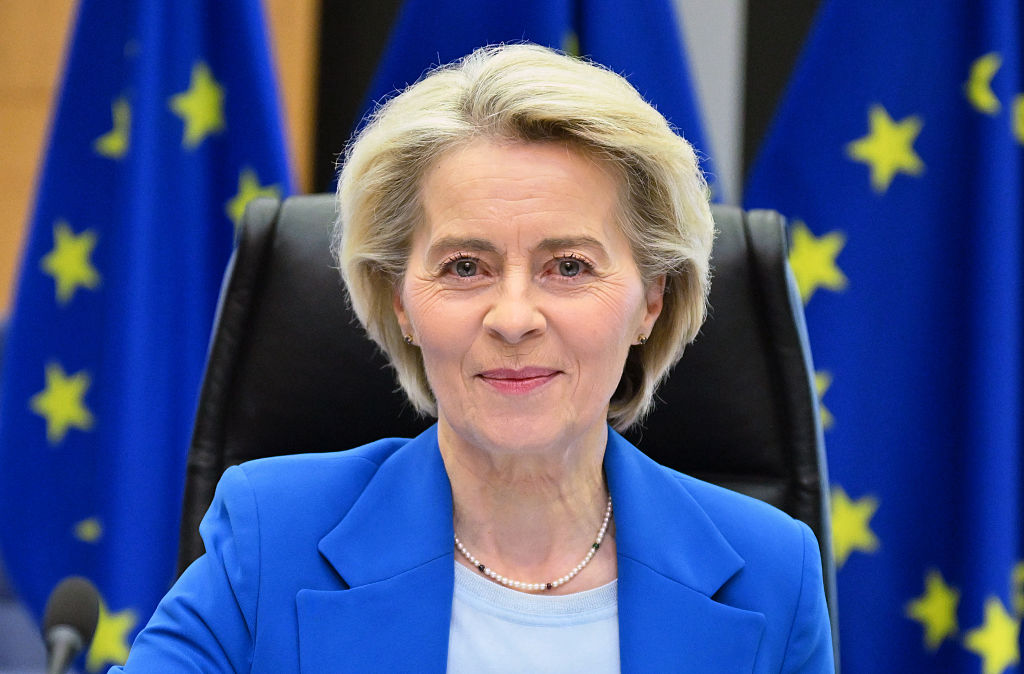
The EU isn’t fighting fossil fuels themselves, but the emissions they produce that fuel climate change, European Commission President Ursula von der Leyen said on Friday at a press conference in South Africa ahead of the G20 leaders’ meeting.
The distinction is likely to send shock waves all the way to Brazil, where the United Nations’ climate change conference, COP30, is about to wrap up.
In Brazil, negotiators are discussing whether to establish a roadmap to meet the pledge countries made two years ago to transition away from fossil fuels. That decision was seen as a major achievement for the European Union’s international climate diplomacy.
Any perceived weakening of Brussels’ position on fossil fuels could undermine the chances of ensuring bold global commitments to end their use. A draft COP30 deal, published Friday, dropped the proposal, mentioned in a previous draft, to convene a conference to help world governments set up roadmaps to end their dependence on fossil fuels.
Asked by Euractiv if the EU executive had changed its position, a European Commission spokesperson said that the EU remains “fully committed to the transition away from fossil fuels.”
“Fossil fuels are emission intensive sources of energy. By fighting emissions, we are de facto bringing down the share of fossil fuels,” the spokesperson said, adding that the bloc’s climate legislation is “based on targets for emission reductions.”
In her public comments in South Africa, von der Leyen stressed that EU participation in the G20 would bring “a message of hope and opportunity” on clean technologies and the clean transition.
“They open new ways to bring modern energy to the many millions that remain without access to energy, and they are a natural fit of course for many developing economies, as it is about the resources that these developing economies have in abundance,” she said.
“We’re speaking about not only solar, but also wind, geothermal, hydropower, and the new low-emission fuels,” she added.
Von der Leyen also stressed that it’s essential that the clean energy transition happens “everywhere.” She will co-host with South Africa an event later on Friday on scaling up the use of renewables in Africa.
The environmental NGO Greenpeace was quick to react to von der Leyen’s comments.
“The notion that you can separate oil, gas, and coal from their emissions is preposterous,” said John Hyland, a European press officer for the organisation.
“Fossil fuels are the single greatest cause of the climate crisis, and scientific consensus is that only a full phase-out will turn this around,” he added, insisting that every stage of their production and use harms human health and the environment “long before the carbon dioxide from burning them reaches the atmosphere.”
(cm)
UPDATE: This story has been updated to include the Commission’s response