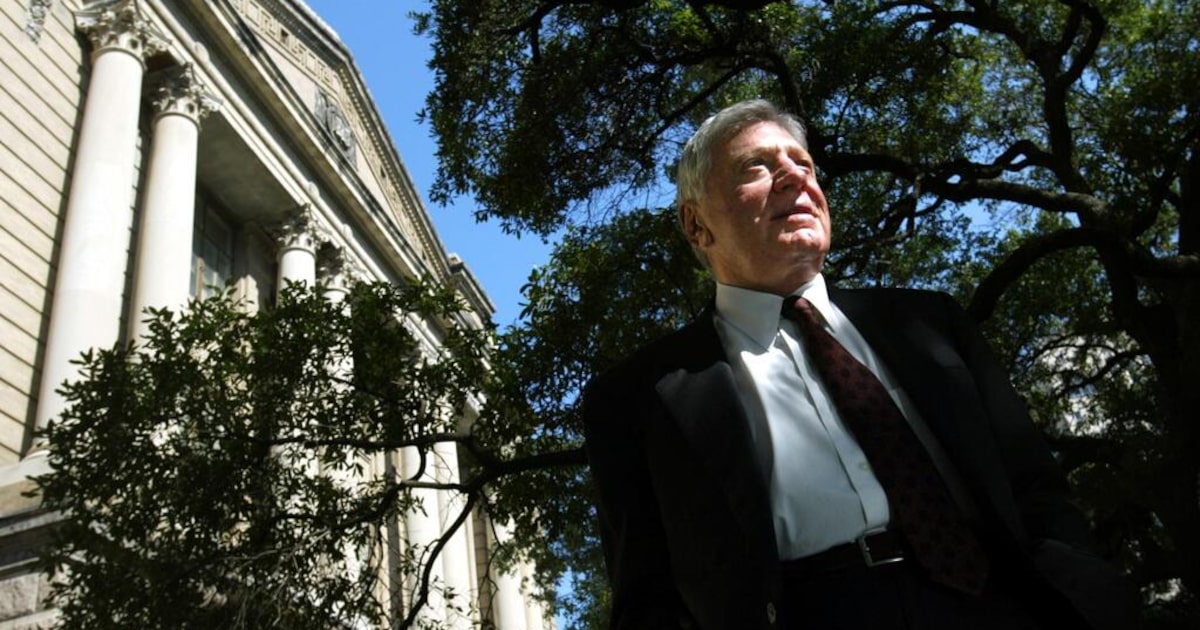
Forty years ago this past weekend, famed Houston trial lawyer Joe Jamail sat at his desk at home to handwrite his portion of the closing arguments in the multibillion-dollar trial of Pennzoil vs. Texaco.
“All of a sudden, I hear a car horn blowing outside my house,” Jamail told The Texas Lawbook in an interview five months before his 2015 death.
A white limousine pulled into Jamail’s driveway. Two of his best friends, singer Willie Nelson and former University of Texas football coach Darrell Royal, jumped out and started begging Jamail to go out drinking with them.
“I told them that I was working on the biggest closing argument of my life — hell, the biggest closing argument of anybody’s life — and that I needed to prepare,” he said. “But they weren’t having any part of it. They kept me up all f—ing night drinking. I could barely see the jury the next morning.”
Jamail and his co-counsel at Baker Botts did fine. They kept the basic argument simple for Pennzoil in a highly complex, four-month trial in which Houston-headquartered Pennzoil accused Texaco of tortiously interfering with its existing agreement to purchase Getty Oil in January 1984.
“We had a deal, and we shook hands on that deal. And in Texas, a deal is a deal,” Jamail said. “These New York Wall Street bankers and lawyers had been playing fast and loose with merger agreements for decades, and they thought they were smarter than the rest of us and could get away with it.”
The Houston jury deliberated over three days and returned a verdict that awarded Pennzoil $10.53 billion in damages — the largest civil jury verdict in history at the time, and still the largest actual damages ever upheld on appeal. That’s $30 billion in today’s dollars.
“When the jury award was read, there was stunned silence in the courtroom,” said retired Baker Botts partner Irv Terrell, one of the three lead trial lawyers for Pennzoil. “I was absolutely shocked. I thought maybe the jury would compromise and give us $1 billion.”
As Texas seeks to attract corporations with its new Texas Business Court to compete with Delaware’s Court of Chancery, Pennzoil vs. Texaco remains the single most important — and most memorable — corporate merger dispute of all time, according to legal experts. It has been cited as legal precedent by judges across the United States more than 10,700 times.
The 1984 Getty Oil and Texaco transaction was, at the time, the largest merger in U.S. history. And legal experts agree that the trial and subsequent appeal dramatically changed how merger agreements were negotiated.
“When it came to business litigation, Pennzoil vs. Texaco is the undisputed trial of the century,” said Dallas trial lawyer Frank Branson. “This case showed that no matter how big you are, you are still required to follow the law. And it introduced corporate America to the benefits of hiring trial lawyers — plaintiff’s lawyers — to lead their biggest bet-the-company cases.”
U.S. Magistrate Judge Andrew Edison, who teaches a class on the case at the University of Houston Law Center, said most people today “do not remember what the case was even about.”
“They just remember the $11 billion verdict,” he said. “The Pennzoil vs. Texaco case had everything: incredibly flamboyant and talented lawyers, enormous companies, fascinating legal and factual issues, and big money. It truly was a bet-the-company case in every sense of the word.”
The impact the case had on the Texas legal system was also monumental, including:
Caused the U.S. Chamber of Commerce to designate Texas as a judicial hellhole in 1986;Led to two decades of massive tort reform efforts that dramatically limited the rights of Texans to sue businesses, doctors and insurance companies for wrongdoing;Prompted the later sweeping election of Republican justices to the state’s supreme court; andPropelled Jamail, a highly successful personal injury and wrongful death attorney, into national stardom and led him to become the most successful and wealthiest trial lawyer in U.S. history.
“This was really the litigation Super Bowl,” said Norton Rose Fulbright partner Steve Dillard, who worked on the appeal for Texaco. “It was the biggest case with the best lawyers on the biggest stage with the most at stake. It just had a tremendous impact on M&A practice across the country.”
The transcript of the trial totaled 24,445 pages, and that did not include pretrial depositions, which accounted for another 15,000 pages.
“This is the case that made Joe the richest lawyer in the world,” said retired Texas Supreme Court Chief Justice Nathan Hecht, who was a Dallas County district judge at the time. “The verdict clearly started the whole tort reform movement in Texas. Pennzoil and Texaco became catchwords in judicial campaigns.”
The Pennzoil dispute with Texaco spawned more than two dozen related lawsuits filed before, during and after the jury trial in federal courts in New York, California and in the Delaware Court of Chancery, including 18 derivative actions and the largest corporate bankruptcy in history at the time.
The origins of the historic legal battle trace to December 1983 when Pennzoil executives announced their intention to purchase Getty Oil, the oil and gas company founded by billionaire J. Paul Getty, for $110 a share. Pennzoil founder Hugh Liedtke met with Gordon Getty, who controlled the trust that owned 40 percent of Getty Oil’s stock, and the two men shook on the deal on New Year’s Day 1984.
On Jan. 3, Getty Oil’s board of directors approved Pennzoil’s offer of about $110 per share and the two companies signed a five-page memorandum of agreement. The two oil and gas companies even issued a joint press release stating that they had an “agreement in principle.”
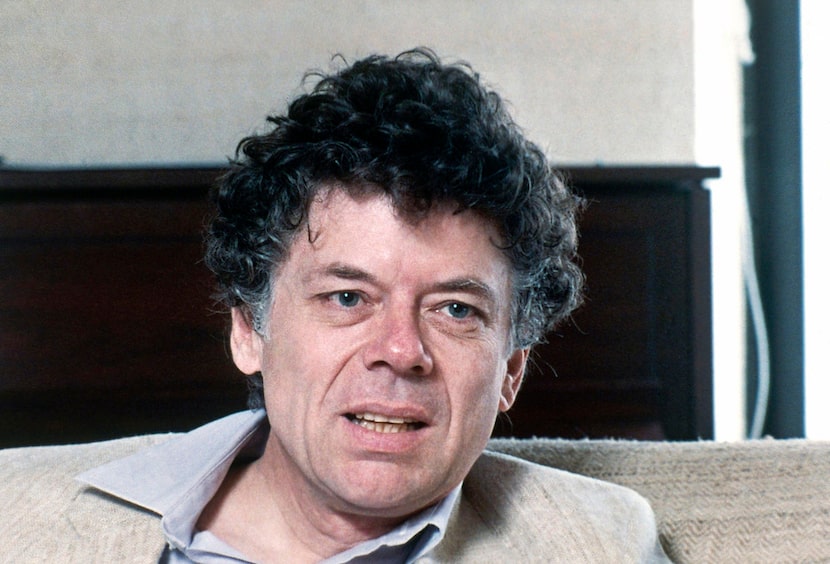
In this 1986 file photo, Gordon Getty, American composer and billionaire poses for a portrait. He sold Getty Oil to Texaco in 1986 for $10 billion.
Anonymous / AP
Two days later, bankers and lawyers working on behalf of Getty Oil obtained a better offer — $125 a share — from Texaco. On Jan. 6, the Getty Oil board of directors voted 15 to 1 to accept the Texaco offer.
Liedtke hired his good friend, Jamail, who had been a highly successful personal injury lawyer, and the prominent Texas corporate law firm Baker Botts, to sue Texaco for snaking his deal with Getty Oil.
The case went to trial in July 1985.
“This case for Pennzoil was the story of business ethics and oilfield honor, while Texaco made it about technicalities and legalities,” said Paul Yetter, who worked on the case as a rookie lawyer at Baker Botts. “The dollar number gets all the attention, but this case was much more. And it featured some of the best lawyers in Texas and across [the] U.S. doing some great lawyering.”
During the trial, Liedtke told jurors that “Pennzoil has been permanently and irrevocably damaged” by the merger of Texaco and Getty Oil.
“They used to say that the oil business was built upon a handshake,” Liedtke said. “Should it now require handcuffs?”
Texaco lawyers argued that the agreement Pennzoil reached with Getty Oil was not a definitive contract and that it was contingent on other factors.
“This case is about arrogance, power and money,” Terrell, the only remaining lead lawyer for either side still living, told jurors.
On the afternoon of Nov. 19, 1985, the jury issued its verdict, which remains one of the largest in Texas history. In an editorial, The Wall Street Journal called the verdict “The Texas Common Law Massacre.” Texaco eventually filed for bankruptcy and reached an out-of-court settlement with Pennzoil for more than $3 billion in December 1987.
Four decades later, Pennzoil vs. Texaco still has lasting implications for transactional lawyers and litigators.
“To this day, transactional lawyers have to make sure that they specifically indicate whether a binding agreement has been reached or just an unenforceable agreement-to-agree,” said Edison.
The Texas Lawbook is an online news publication focused on business law in Texas. For a longer version of this story, visit texaslawbook.net.
AT A GLANCE
Key dates
Jan. 3, 1984: The Getty Oil board voted 15-1 to approve Pennzoil’s offer to purchase at $112.50 per share.
Jan. 6, 1984: Just before midnight, Getty Oil bankers told Gordon Getty that Texaco was offering $125 per share. The Getty Oil board of directors later that day voted 15 to 1 to accept Texaco’s offer.
Feb. 8, 1984: Pennzoil filed its lawsuit against Texaco, alleging tortious interference in blocking Pennzoil’s acquisition of Getty Oil. The lawsuit demanded that their case be decided by a Texas jury and sought $7.5 billion in actual damages and $7.5 billion in punitive damages.
July 10, 1985: The trial officially began that Tuesday with jury selection.
Nov. 19, 1985: After 17 weeks of testimony and oral arguments, the jury deliberated for three days before awarding $7.53 billion in actual damages and $3 billion in punitive damages.
July 30, 1986: Texaco asked the Texas First Court of Appeals in Houston to overturn the $10.53 jury verdict, which had then grown to more than $13 billion because of interest.
April 6, 1987: U.S. Supreme Court ruled that Texaco must post a $13 billion bond to pursue its appeal against Pennzoil.
April 13, 1987: Texaco filed for Chapter 11 bankruptcy protection.
April 13, 1987: The Texas Court of appeals unanimously ruled in Pennzoil’s favor.
Dec. 20, 1987: Pennzoil and Texaco agree to settle their legal battle for $3 billion.