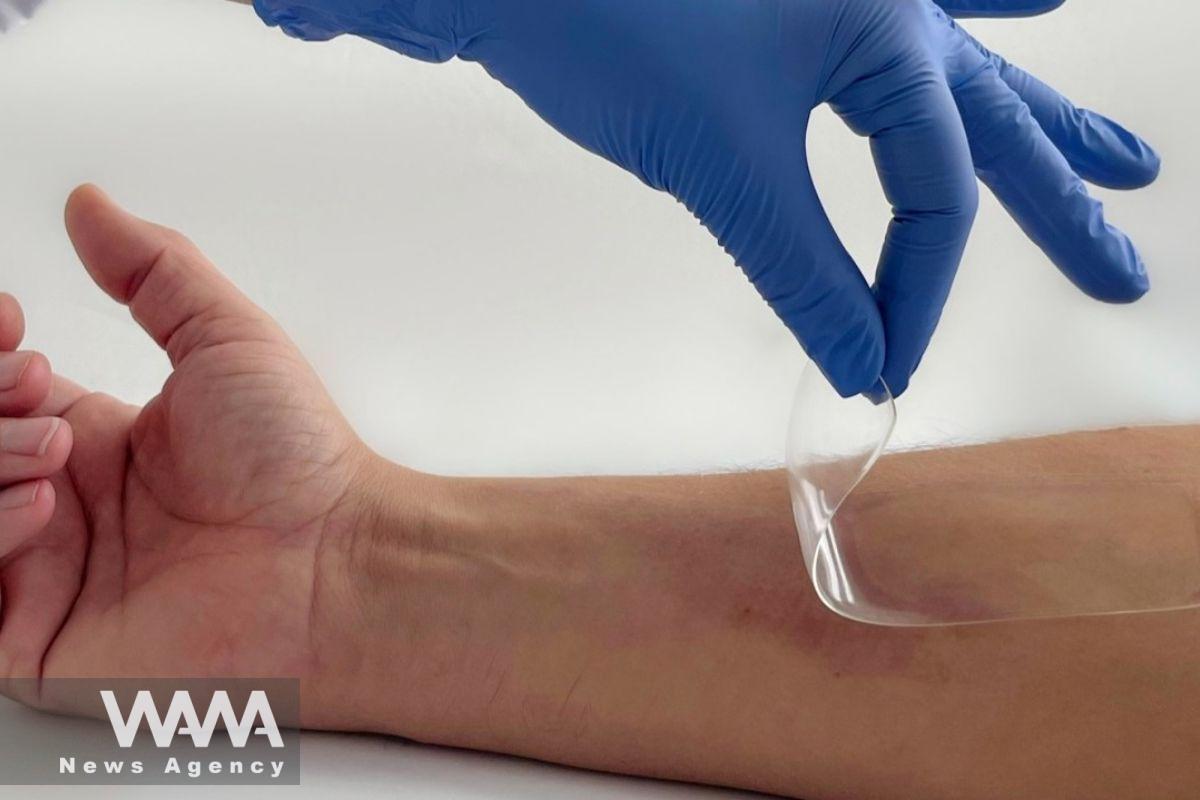
WANA (Nov 23) – The Vice President for Research and Technology at Royan Institute announced the development of a dry biological wound dressing, stating that the product is now ready not only for nationwide use but also for long-term storage and export.
Seyed Abolhassan Shahzadeh Fazeli explained in an interview that one of the main challenges in the early stages was the difficulty of storing and distributing wet wound dressings. “To make the product available in pharmacies and usable in extremely hot or cold regions, we decided to transform the dressing from a wet format into a dry one,” he said.
He added that the dry biological wound dressing is packaged and used like a conventional adhesive bandage, but its effectiveness is significantly higher, offering patients a faster and safer treatment option.
Technology Developed from Amniotic Membrane
Fazeli highlighted the innovation behind the product: “While collecting samples at Royan’s cord blood bank, we realized that the amniotic membrane—a byproduct of childbirth—contains substances with healing and skin-regenerative properties, which could form the basis for an effective wound dressing.”
Following animal studies and clinical trials, the product has been successfully applied to patients with severe burns, bedsores, and diabetic wounds, yielding promising results.
Commercialization Through Specialized Companies
Emphasizing that the institute’s main role is knowledge and technology development, Fazeli noted that commercialization should be handled by professional companies. Consequently, the technology has been transferred to the knowledge-based company Royan-Derived Technologies to accelerate industrial production and market entry.
Patent Registration and Global Context
The dry biological wound dressing has been patented, and few similar products exist worldwide. “Only one or two companies in developed countries, such as the United States, have been developing similar technologies. Biological dressings are a new frontier in advanced medical technology, and having this expertise in Iran demonstrates high scientific capability and the country’s strategic role in the field,” Fazeli said.
Significant Price Advantage Over Foreign Products
Fazeli also highlighted the economic benefit of domestic production: “Foreign versions of this product are 10 to 20 times more expensive, in addition to import and currency dependency issues. Producing it domestically not only dramatically reduces costs but also opens opportunities for export.”
Turning a Birth Byproduct into Therapeutic Technology
The vice president emphasized the scientific value of the amniotic membrane. “Products that emerge during childbirth can be transformed into valuable therapeutic technologies, and the amniotic membrane is a successful example. Its use in treating patients with severe burns or diabetic wounds can be highly effective.”
Proven Clinical Effectiveness
Concluding the interview, Fazeli noted that the efficacy of the amniotic wound dressing has been demonstrated in randomized clinical trials compared to standard treatments. “Market feedback also indicates that this product performs exceptionally well in managing complex wounds that do not respond to conventional therapies,” he said.