Photo: VCG
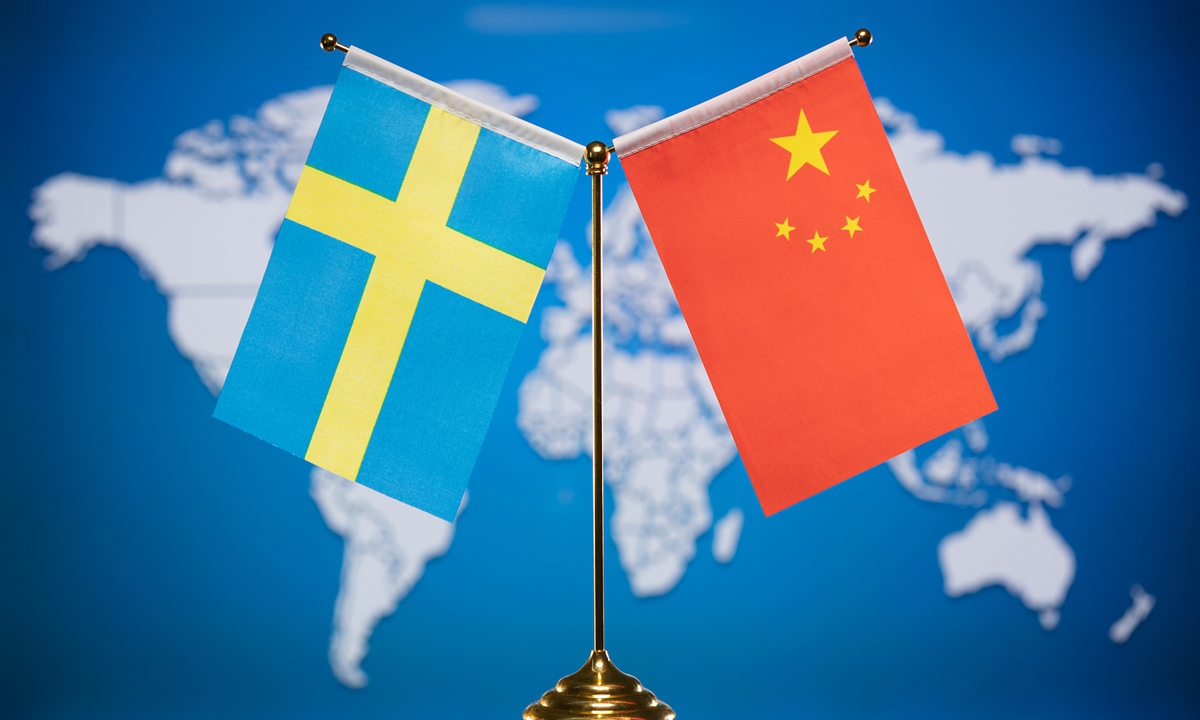
This year marks the 75th anniversary of diplomatic relations between China and Sweden. Sweden was among the first Western countries to establish diplomatic ties with the People’s Republic of China in 1950. Looking back, several characteristics define the evolution of the bilateral relationship over the decades.
The first is complementary. Several Swedish companies have been present in China for over a century, and many returned later as China opened up, with the focus on building telecommunications networks, as well as developing electrical systems and transmission lines.
Soon after, partnership emerged as another defining characteristic. As Swedish enterprises formed joint ventures with Chinese companies, relationships matured into long-term collaborations.
In some cases, these Chinese partners have become global suppliers – serving not only subsidiaries in China but operating worldwide. Dynamism stands out: Many of these businesses have grown remarkably over the years. Chinese partnerships have proven highly innovative, with many products first launched in China before becoming globally significant for Swedish firms.
A shared passion for technology forms a strong bond between the two countries. Both China and Sweden are engineering-oriented nations with a deep commitment to research and development, ranking among the world’s top investors in R&D.
At this year’s China International Import Expo, Sweden served as the Guest Country of Honor for the first time, with a record number of Swedish participants and notable exhibits from Swedish companies. Although major Swedish companies have long had a presence in China, a notable trend is the growing interest from small and medium-sized enterprises. At the same time, long-established Swedish companies are expanding into new areas, forming joint ventures or even acquiring Chinese companies to strengthen their local offerings.
Enterprises from both countries have long played a vital role in advancing bilateral relations, and their vibrant exchanges highlight that potential. Today, China and Sweden have been each other’s largest trading partners in Asia and Northern Europe respectively for many years.
A modern example is Chinese automaker Geely’s acquisition of Volvo, a remarkable success. By granting Volvo operational independence while integrating it into the Chinese market, Geely enabled the brand to significantly expand its production and global footprint. This case illustrates how Chinese and Swedish corporate strengths can be successfully combined. Beyond acquisitions, numerous joint ventures have allowed Swedish firms to enhance product quality and range while accessing new markets.
These dynamic business interactions underscore a deeply complementary and resilient partnership – one that continues to evolve with substantial future potential.
There are abundant opportunities for both countries to create new possibilities together in the future. Clean energy is a promising area, as sustainability becomes a shared value. While Chinese companies lead in solar panel production, both countries are advancing in wind power, electric vehicles and green transmission. Growing Chinese consumer preference for eco-friendly products aligns naturally with Swedish expertise. This synergy extends to urban planning: Initiatives such as the China-Sweden Hammarby Eco City Alliance offer scalable, replicable models for green urban development. Beyond the green transition, pharmaceuticals represent another area of deepening collaboration, exemplified by AstraZeneca’s $2.5 billion R&D center in Beijing.
With China’s recent introduction of a unilateral visa-free policy for Swedish citizens in November, the two countries can expect more vibrant people-to-people exchanges, and such exchanges strengthen ties across business, culture and other arenas. Visa-free access will allow more Swedes to experience China’s rich culture and dynamic society firsthand, boosting tourism and fostering deeper mutual understanding. For business, removing visa delays eliminates a major logistical barrier, enabling last-minute meetings and making cooperation more fluid and responsive. This policy will undoubtedly bring the two nations closer, helping Swedish visitors gain a comprehensive and authentic view of China.
The article was compiled by Global Times reporter Liu Xuandi based on an interview with Peter Ling-Vannerus, chief representative of Skandinaviska Enskilda Banken’s Beijing Office. opinion@globaltimes.com.cn