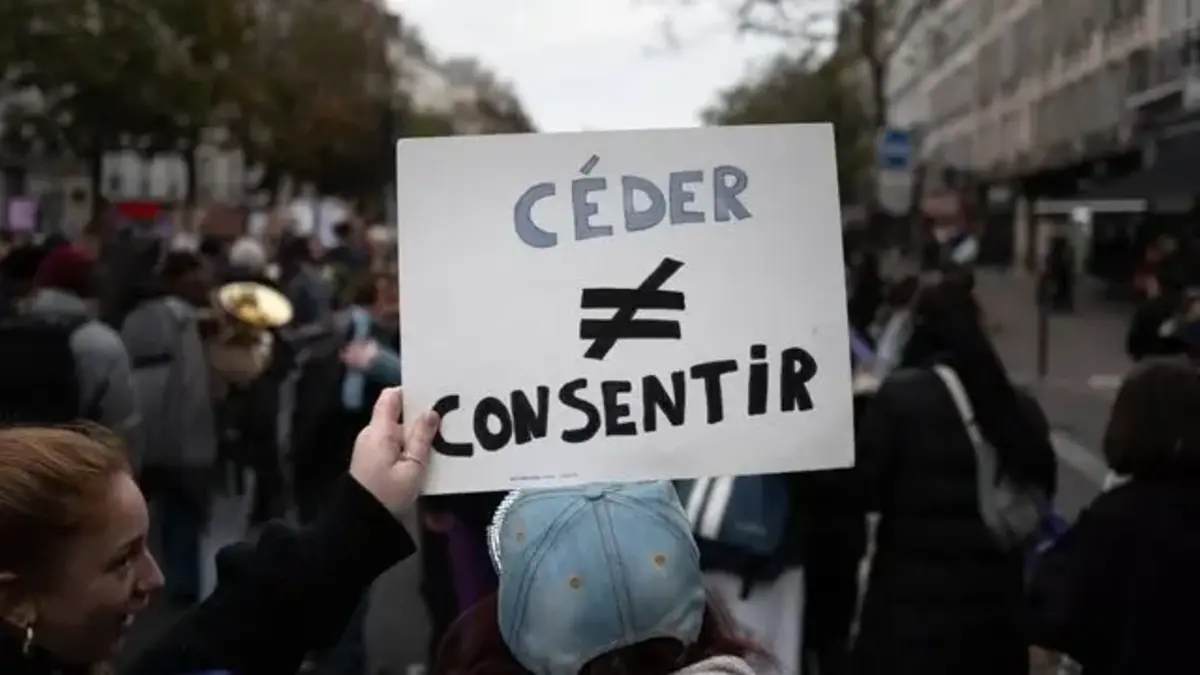
In France, according to a recent survey by pollsters IFOP (Institut français d’opinion publique), 57% of women said they have had marital sex without wanting to, compared with 39% of men. 10% of women say they have often had sex with their partner unwillingly. This figure rises to 16% among women under 35. And 14% of women say they have been victims of marital rape.
In Luxembourg, there are no statistics, which Ana Pinto, president of La Voix des Survivantes, (the voice of the survivors) association, finds disappointing.
“Unlike in France, where there are surveys like the one by IFOP, we in Luxembourg are cruelly lacking in data. I find that the absence of statistics really reinforces the taboo. However, as an association, we know from all the testimonies we receive that the phenomenon does exist in Luxembourg,” she said.
Also read:Luxembourg slow to adopt stricter measures to track domestic abusers
According to sexologist Fabienne Juncker-Quainon “Luxembourg is still a country where there is no culture of opening up the scope of an investigation,” Pinto said. “We know it’s a scourge, but we won’t have any figures. There’s a kind of modesty in Luxembourg.”
Marital rape has been recognised under the Luxembourg criminal code since 2003. “But in reality, very few complaints are made,” Pinto said. “Because many women don’t even know that it can be punishable by law. There are, for example, many married women and men who believe that, because they are married, it is not rape and that [marital rape] cannot exist.”
There’s the shame of not being believed, because violence happens between four walls
Ana Pinto
President of La Voix des Survivantes
This is largely due to the persistent belief that a form of ‘marital duty’ exists. “This mentality is still very deeply rooted. We had a case at the beginning of the year where our association’s lawyer accompanied a victim to the police. In front of our lawyer, the police officer said: ‘Wait a minute, madam, I don’t understand. Are you saying that you were raped by your husband?’ It was clear he didn’t understand.”
And when the perpetrator is your partner, it’s all the more complicated to get over the hurdle of talking about it… and to lodge a complaint. “There’s the shame of not being believed, because the violence takes place within your own four walls.”
Juncker-Quainon said that the idea that sexuality is the glue that binds a couple together needs to be deconstructed. “For a couple, both men and women need to understand that refusing a sexual act at any time, whatever it may be, does not mean that you don’t love the other person. It simply means that at that precise moment, one of the two partners doesn’t feel the desire to have sex, regardless of what love is being felt,” Pinto said.
Growing awareness since the Pélicot trial
The president of La Voix des Survivantes also noted that there has been an increase in awareness since the public trial of the husband and accomplices of French marital rape victim Gisèle Pélicot, and in particular her decision to refuse to hold the trial behind closed doors, so that the shame would be on the perpetrators.
“Since then, many women have learned what marital rape is really like,” said Pinto. “Some have even told me: ‘’I wasn’t even aware that it was rape’.”
We’re a million miles away from France, where there are quite a few televised campaigns. There’s no such thing here in Luxembourg
Ana Pinto
President of La Voix des Survivantes
Pinto said that the most important thing in Luxembourg would be to set up national campaigns to explain what marital rape is. “We’re a million miles away from France, where there are quite a few TV campaigns. Here in Luxembourg, it doesn’t exist. That’s one of the things we’d like to do as Voix des Survivantes. But it’s so expensive. We don’t have the resources to do it as a voluntary organisation,” she said.
The association also intervenes, particularly with the police. “We went to the judicial police to make videos with testimonies that will be included in specific training for every police officer, and this training will be compulsory.” Pinto said.
And, of course, sex education and education about consent are also important. To make people understand that consent requires “a yes, and a clear yes.”
(This article was first published by Virgule. Machine translated with editing by Duncan Roberts.)