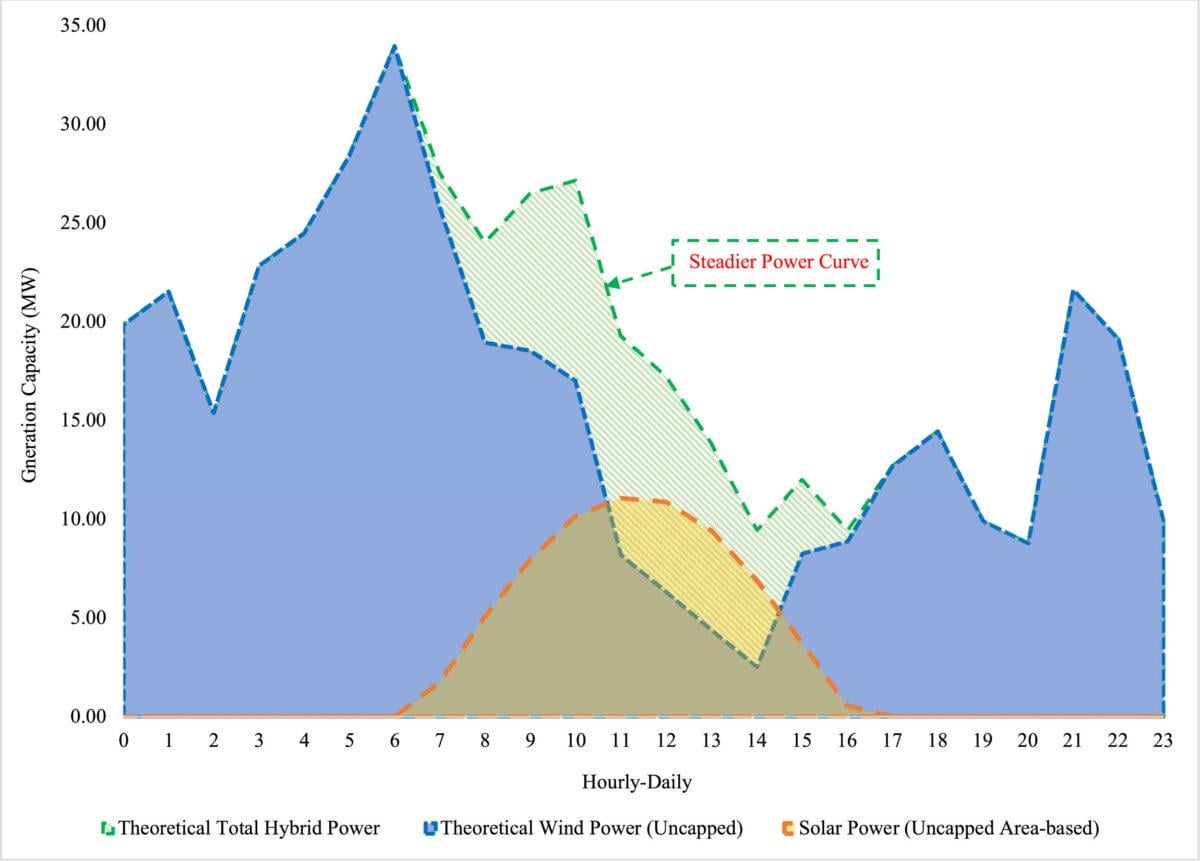
Variable solar and wind complement each other for a more stable grid. A study finds combining wind and solar leverages their alternating peak periods, providing a constant, predictable power curve critical for grid integration. This co-operation reduces the overall need for energy storage.
Intermittent solar and wind complement each other for a more stable grid
by mafco
3 comments
Who would have thunk it? They balance each other out…
Reduced BESS costs help keep power prices lower, for sure. I live in a coastal county that has plenty of wind most of the year, but still hasn’t invested in wind turbines. Also, because of a recent BESS fire, an old installation that would not be permitted today, there are a few vocal anti-BESS residents that are stifling investments in this area locally. The real science, environmental and health facts vs risks are not understood by these curmudgeons. One thing they hear that scares them and they threaten with fire and pitch forks. But they are ok with power outages, and really expensive electricity in the future.
I had a new engineer that asked how renewables should be dispatched in cases, so we went down this path of actually pulling years of hourly production data and charting it. Over several years of data, we consolidated each month into its average 24-hour day. Visually things stood out when it was presented like that. The following graphs are % of nameplate capacity. The 3rd graph assumes an Interconnection Service level of 200 MW.
[Generic Wind Farm](https://i.imgur.com/vzBWEPI.png)
[Generic Solar Farm](https://i.imgur.com/qxKTDAh.png)
[Solar, 100 MW + Wind, 200 MW hybrid facility; Combines the production profiles](https://i.imgur.com/XwPwUlM.png)
Comments are closed.