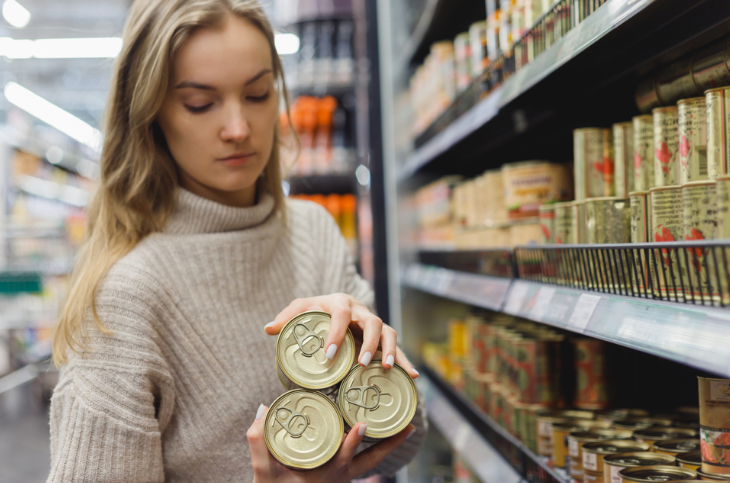
Packaging sits at the heart of Europe’s steel value chain, bringing together manufacturers, brands, and recyclers to deliver essentials including canned food, baby formula, coffee, pet food, and household items such as paints, aerosols and oils. These are products that millions of Europeans rely on every single day.
The European Commission’s proposed EU Steel Measure aims to protect the steel sector from unfair trade practices and strengthen the EU’s industrial base, goals we fully support. However, in its current form, it will harm key downstream industries such as steel packaging and slow progress toward a circular economy. Most importantly, it risks making everyday essentials more expensive.
Steel packaging sits at the centre of this concern. It moves through well-established recycling loops and maintains a direct and trusted connection with consumers. This successful circular model, which already achieves an 82 percent recycling rate in Europe, should be protected and strengthened, yet today it faces a serious threat.
Under the current proposal, quotas and tariffs would be imposed on tinplate, the thin steel sheet used in packaging such as food cans and aerosols. This measure will halve import volumes and significantly increase costs for thousands of small and medium-sized steel users, including packaging manufacturers. These extra costs will reach the supermarket shelf, increasing prices for consumers at a time when many are already struggling with a severe cost-of-living crisis. Recent surveys confirm that inflation and rising prices remain the top concerns for Europeans.
Europe’s tinplate supply
Eurostat data shows that Europe has long been a net exporter of tinplate, exporting about 1.19 million tonnes a year and importing 858,000 tonnes in 2024. Imports are vital to maintaining a balanced and competitive steel packaging market.
EU producers of tinplate and related steel products already have safeguards in place against unfair trade practices, with anti-dumping measures in place for China and Brazil.
The proposed new measures go far beyond what is necessary. They would shield upstream steelmakers while placing heavy burdens on the thousands of downstream companies that turn steel into high-value, consumer-facing products. In doing so, they risk disrupting a finely balanced market that supports millions of Europeans every day.
Protecting the entire value chain
Trade policy should protect the competitiveness of the entire steel value chain, not only its primary producers. Steel packaging manufacturers are already facing intense pressure, and the current proposal will make European production less viable and drive manufacturers to source finished products from outside the EU. Jobs are at risk. The metal packaging sector directly employs more than 60,000 people across the continent, with thousands more working in connected industries such as food production, logistics and recycling.
The consequences would reach far beyond employment. If European steel packaging becomes less competitive, it will be replaced by imports and plastic alternatives, undermining the EU’s Green Deal and its promise to build a truly circular economy.
Steel is a permanent material that can be recycled forever, without losing quality. It is central to Europe’s circular ambitions. Replacing it with plastics, which are far harder to recycle and often downgraded, would be a significant step backwards for Europe’s sustainability goals.
Many steel users call for a balanced solution
Europe’s steel value chain is ready to collaborate with policymakers to find a balanced solution. We believe it is possible to uphold fair trade in steel upstream while preserving the competitiveness and sustainability of the downstream sectors that depend on it.
This balanced approach is supported across Europe’s downstream manufacturing industries. Orgalim, representing Europe’s technology sectors, together with Associations for manufacturers of industrial goods, cookware, cutlery and household products, emphasise the importance of a steel policy that supports the entire value chain and ensures that the industries turning steel into high-value products for millions of consumers remain strong and competitive.
Ulrich Adam, Director General of Orgalim:
“In its current shape and form, the new steel measure will lead to deindustrialisation. It might succeed in safeguarding steel production at home, but Europe could end up with little or no downstream industries left to manufacture anything with that steel.
What we need instead is a comprehensive approach that works for the entire value chain. Our proposal for Europe is to pursue a plurilateral agreement on steel together with selected international partners. Such an agreement could make a real difference in creating the desired level playing field for both steel producers and steel users.”
Jan-Frederik Kremer, General Manager of the Industrieverband Schneidwaren und Haushaltswaren (IVSH) and Member of the Directors Committee of the Federation of European Cookware and Cutlery Manufacturers (FEC):
“IVSH and FEC acknowledge the European Commission’s intention to strengthen the steel-producing sector. However, the proposed adjustments to tariffs and quotas risk seriously undermining the entire value chain by neglecting downstream industries that transform steel into high-value consumer goods and that are, in terms of numbers, at least as important for the EU´s economy as raw material producers.
The lack of targeted support and measures for downstream goods compromises the long-term impact of these trade measures. Just as steel packaging delivers clear benefits to industry and society, so do cookware, cutlery and household goods. These products are essential for millions of consumers and represent sustainable, durable everyday solutions made in Europe and valued across the globe. Without immediate measures to support downstream sectors, the EU risks:
Cost escalation and loss of competitiveness for European downstream manufacturers, as increasing steel prices have to be expected.
Consumer price increases on everyday essentials such as cookware and kitchen tools.
Material substitution away from steel, contradicting EU sustainability and circular economy goals.
Our call to action:
Explicit inclusion of downstream goods in support measures, not as an afterthought but as a priority.
Flexible quota management to prevent shortages and price spikes.
Alignment with CBAM and export compensation to maintain global competitiveness and regulatory coherence.
Europe must support its entire industrial value chain, not just raw material producers. Without targeted support for important downstream sectors like ours, these measures risk weakening industries that deliver sustainability and value to consumers every day.”
Europe’s ambition to lead in green, sustainable industry depends on pragmatic, evidence-based policymaking. The new EU Steel Measure should not become an obstacle to that vision. With the right adjustments to its scope and parameters, the EU can support both its steel producers and the many sectors that rely on steel.
There is a real opportunity to ensure Europe remains a global leader not only in steel production, but also in innovative, future-proof manufacturing and a truly circular economy.
Krassimira Kazashka is the CEO of Metal Packaging Europe.