
The Bank of Israel’s Monetary Committee, led by Governor Amir Yaron, announced Monday a 25-basis-point reduction in the benchmark interest rate, bringing the rate from 4.5% to 4.25%. The move marks the central bank’s first interest rate cut in nearly two years, a significant shift following a prolonged period of holding rates steady to combat inflation and manage geopolitical uncertainty.
The decision was largely anticipated by market analysts, as recent economic data indicated a continued moderation in inflation and mounting pressure on the real estate sector. The last time the Bank of Israel lowered its rate was in January 2024, when it reduced the rate by 25 basis points from 4.75% to 4.50% Since that time, the rate had been held constant for 14 consecutive meetings.
The Bank of Israel’s monetary policy over the past two years was dominated by two primary factors: high domestic inflation and the geopolitical instability arising from the war that began in late 2023.
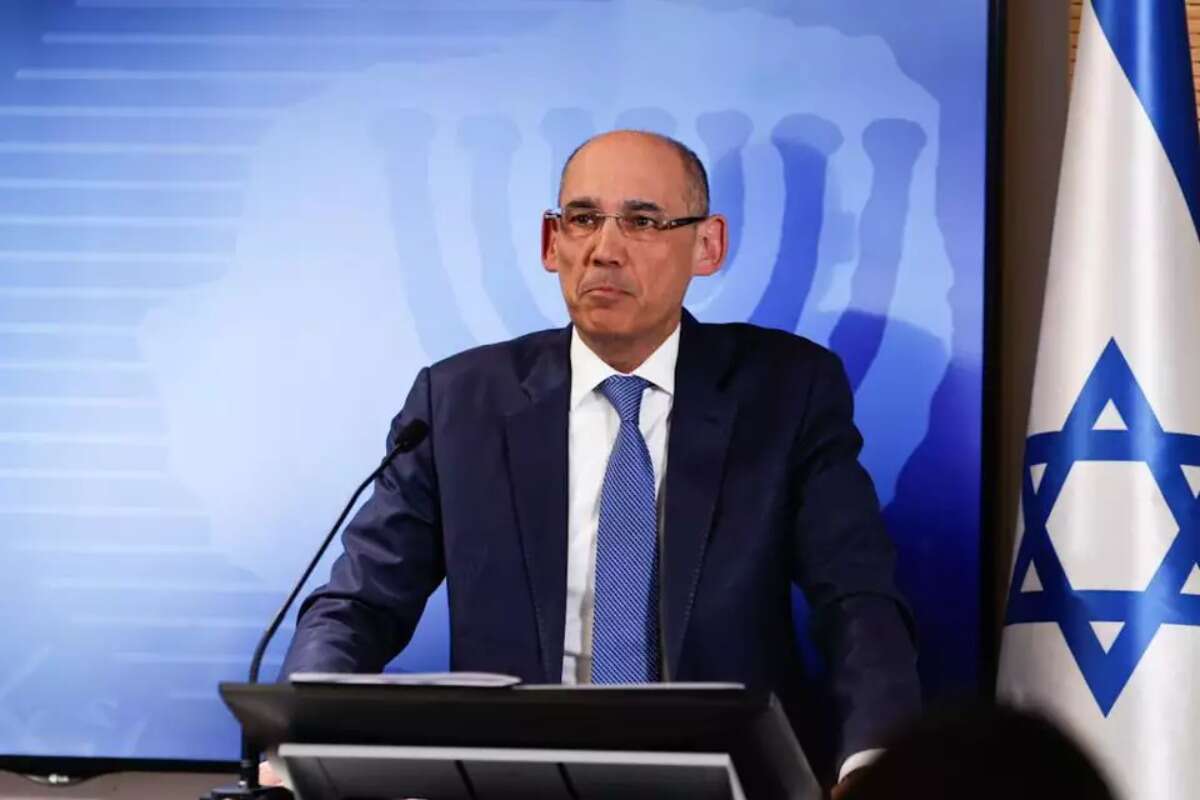 BOI Governor Amir Yaron (Oren Ben Hakoon)
The Bank of Israel’s decision to finally cut the interest rate by 25 basis points was predicated on a new, more favorable balance of economic risks, allowing the central bank to pivot toward supporting growth. The primary factor was the successful moderation of inflation, which at 2.5% has returned to the government’s 1%−3% target range, freeing up monetary policy space. Meanwhile, the high cost of borrowing was creating economic headwinds, particularly severely impacting the real estate sector, and the rate cut is intended to inject life into the housing market – which has seen a sharp decline in purchasing homes – and ease financing burdens on businesses. Furthermore, the move helps manage the differential with easing US interest rates, preventing the shekel from appreciating too sharply and harming exports.
Aggressive tightening cycle, then war
From 2022 into 2023, the central bank engaged in an aggressive tightening cycle, raising the interest rate from a near-zero level to a peak of 4.75% by May 2023. This was a direct response to global and domestic inflationary pressures, which saw Israel’s annual inflation peak above 5 in early 2023.
Following the January 2024 cut to 4.5%, the Monetary Committee adopted a cautious “wait-and-see” approach. Throughout 2024 and most of 2025, the rate remained at 4.5%. The rationale for this prolonged hold was a need to maintain financial stability and reduce uncertainty amid the ongoing conflict.