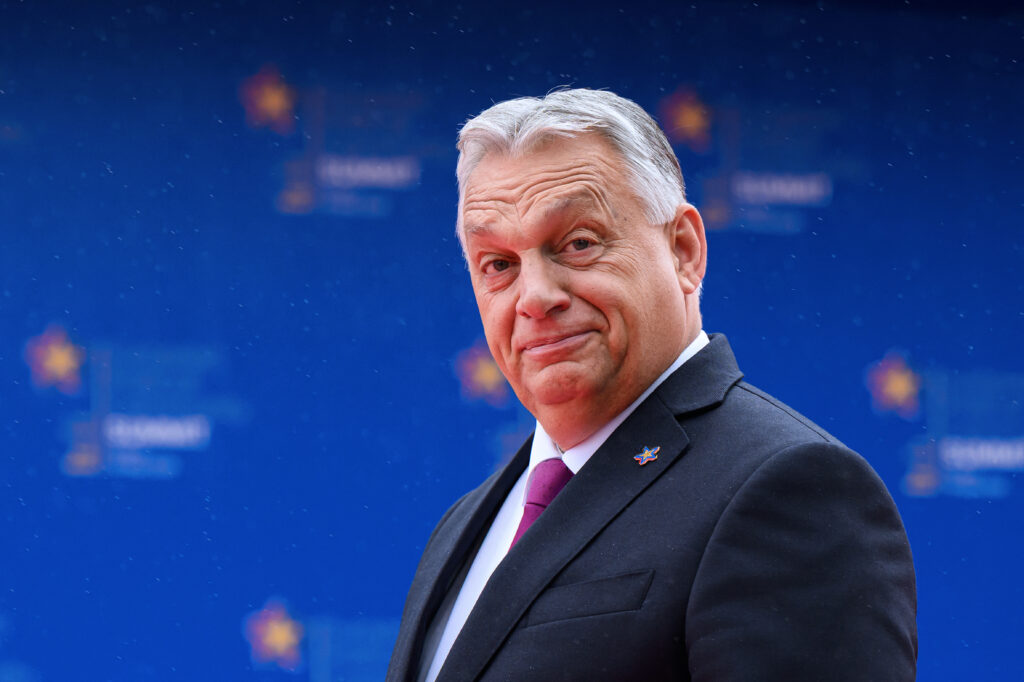
From the correspondent in Strasbourg – The dispute between the European Parliament and Viktor Orbán has been ongoing for years, ever since the Strasbourg chamber asked in 2018 to start the procedure to suspend Hungary’s EU membership rights due to serious and continuous violations of European values. Today (25 November), MEPs accused Budapest of having transformed into a “hybrid regime of electoral autocracy” and again called for sanctions against Hungary.
It is a different parliament, with a centre of gravity shifted to the right and a group—the Patriots for Europe—founded by the Hungarian prime minister himself. Yet, the tough report on the Hungarian situation was approved by a very large majority: 415 votes in favour, 193 against, and 28 abstentions. The far-right wing, consisting of the Conservatives and Reformists (ECR) and the Patriots and Sovereignists (ESN), opposed it. However, the European People’s Party, which in 2021 put Fidesz, Orbán’s party, at the door, remained united (except for some 20 or so dissenters) with the pro-European majority.
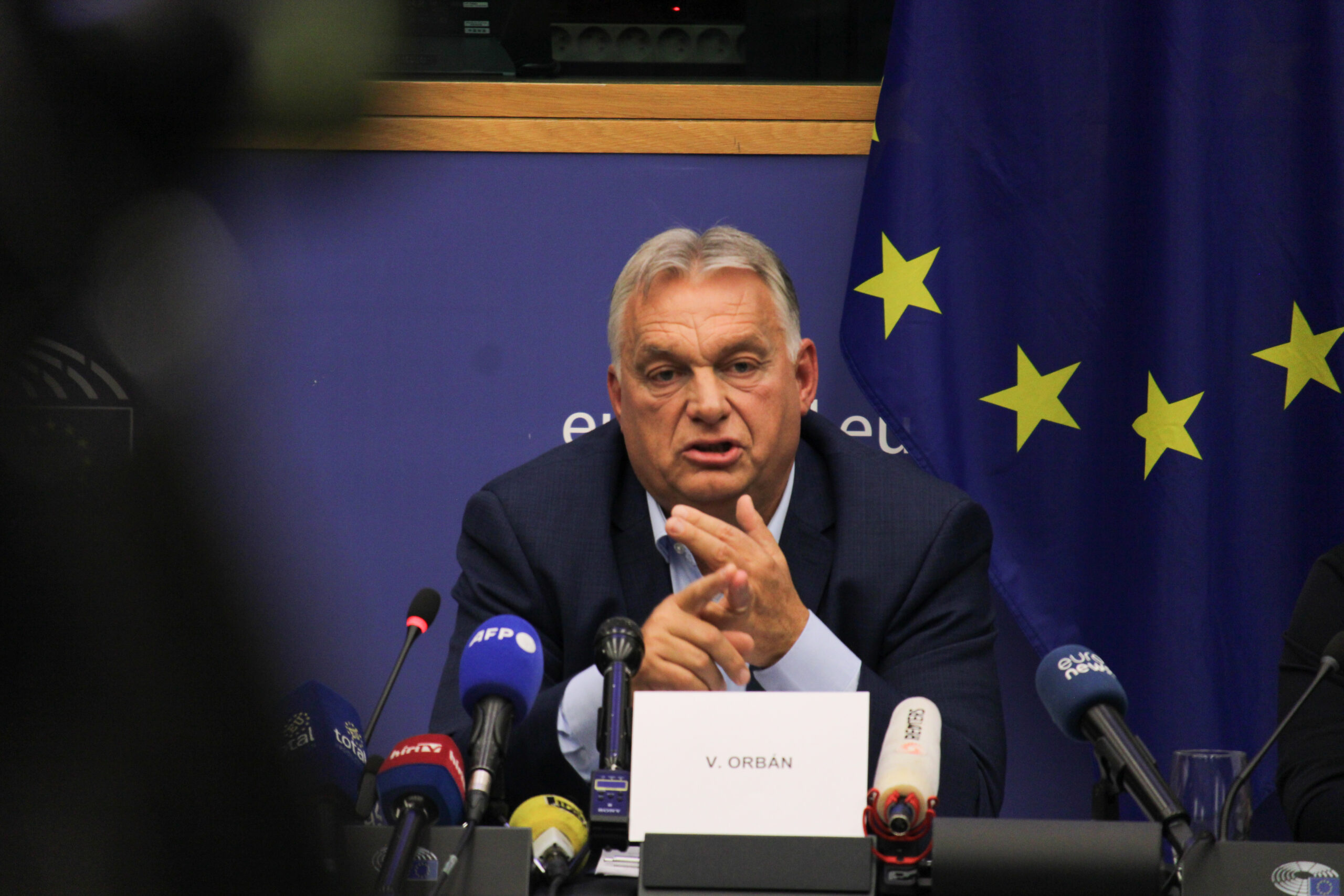 Hungarian Prime Minister Viktor Orbán at the European Parliament, 8/10/25 (photo: Simone De La Feld)
Already in October 2024, Orbán’s speech in the Strasbourg hemicycle turned into a fierce clash between the pro-European and the sovereignist groups. A year later, the situation in Budapest has only worsened: domestically, with the further clampdown on the rights of the LGBTQI+ community, laws to silence dissidents, threats to judicial independence, clientelistic networks, and in Brussels, with Budapest’s constant blackmail in foreign policy, where the 27 decide unanimously, and with the pro-Russian premier’s forging ahead (or towards Moscow).
For the EU Parliament, the EU is not blameless either. “The lack of decisive action by the Commission and the Council has allowed a continuous erosion of democracy and the rule of law,” said Tineke Strik, Green MEP and rapporteur of the report. The European Parliament’s request to activate the procedure under Article 7 of the Treaty on European Union has been stuck in the Council (which should adopt the sanctions unanimously, except for the country concerned) for years, and the Commission’s decision to unfreeze part of the frozen funds in Budapest has been challenged by the EU Parliament before the EU Court of Justice.
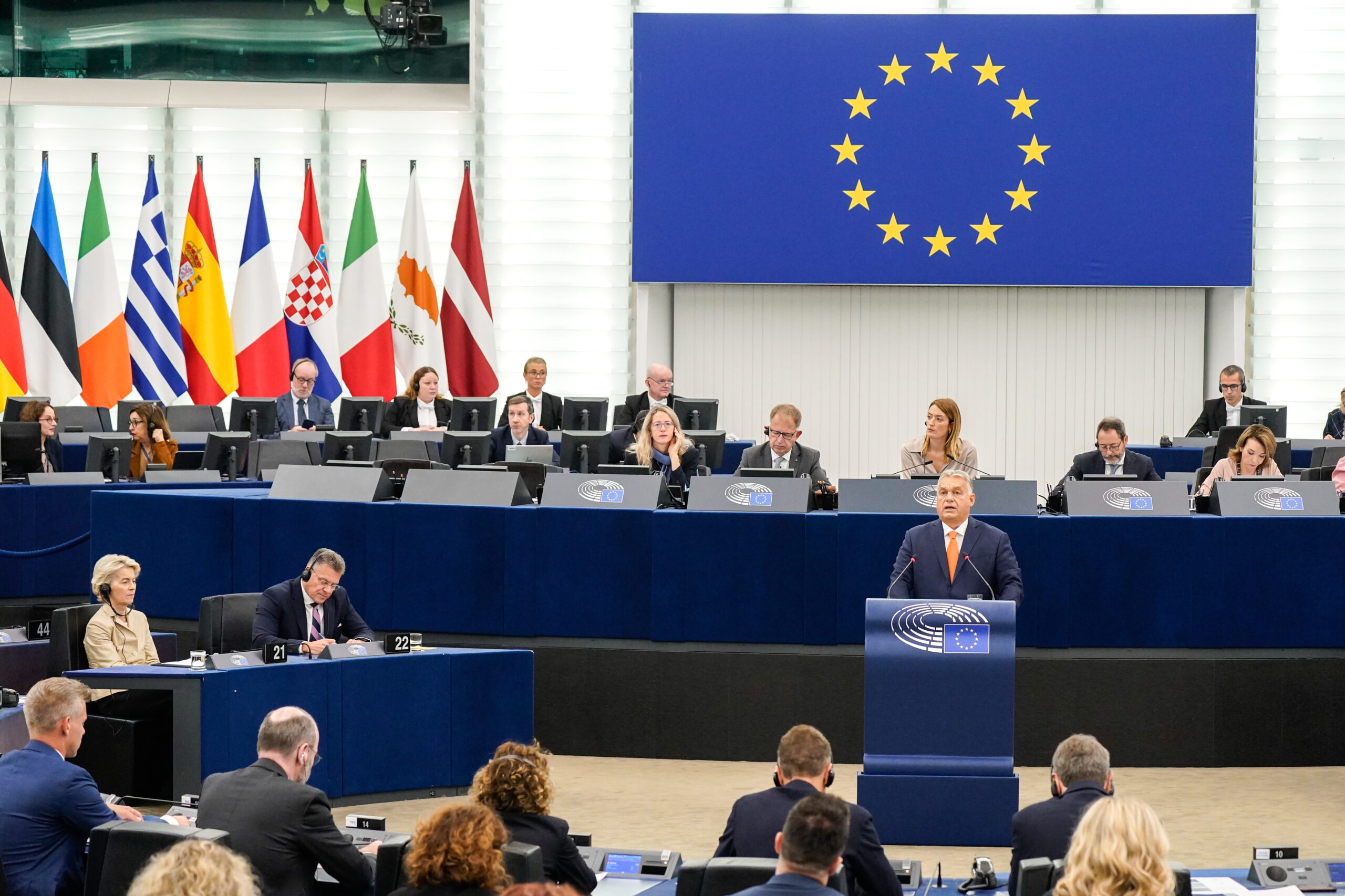 Viktor Orbán and Ursula von der Leyen (left) at the European Parliament, October 2024
“The EU cannot allow Hungary’s autocratic drift to continue. Any further delay by the Council would violate the very values it claims to defend,” Strik insisted. In the report, MEPs denounced the Hungarian Supreme Court’s review of EU Court of Justice rulings before they are implemented, the systematic refusal to implement the rulings of the European Court of Human Rights, the “link between corruption and electoral integrity, including patronage networks,” the systematic weakening of the National Judicial Council, the failure to protect citizens’ rights, threats to academic freedom, the allocation of state advertising to pro-government media, and the de facto ban on Pride marches.
Orbán did not miss a thing, not even attempting to target some MEPs, such as the Italian Ilaria Salis, but above all, Peter Magyar, an EPP member and the main political opponent in Budapest. Just a few months before the parliamentary elections—scheduled for next April—the EU Parliament highlighted “the increasing use of artificial intelligence-generated and unlabelled political content” in Hungary, and in particular “the intentional dissemination of deepfake videos on social channels closely linked to the party and the prime minister’s campaign.” The Fidesz propaganda machine—Strasbourg attacks—deliberately uses AI-generated content to “deceive voters and discredit opponents.”
As if this were not enough, recently, some media revealed an alleged spying network orchestrated by Budapest within the EU institutions. The European Commission has announced an investigation into the case: the European Parliament has called for it to be “presented as soon as possible” and for “any conclusions to have concrete consequences.” There may already be a further development confirming the EU Parliament’s harsh theses: according to various media, Orbán will travel to the Kremlin on Friday, 28 November, to meet—for the third time since the start of the war in Ukraine—Vladimir Putin. A “very dangerous” trip, Strik immediately responded, stressing that “the EU should not allow itself to be blackmailed because our common security policy is at stake.”
English version by the Translation Service of Withub