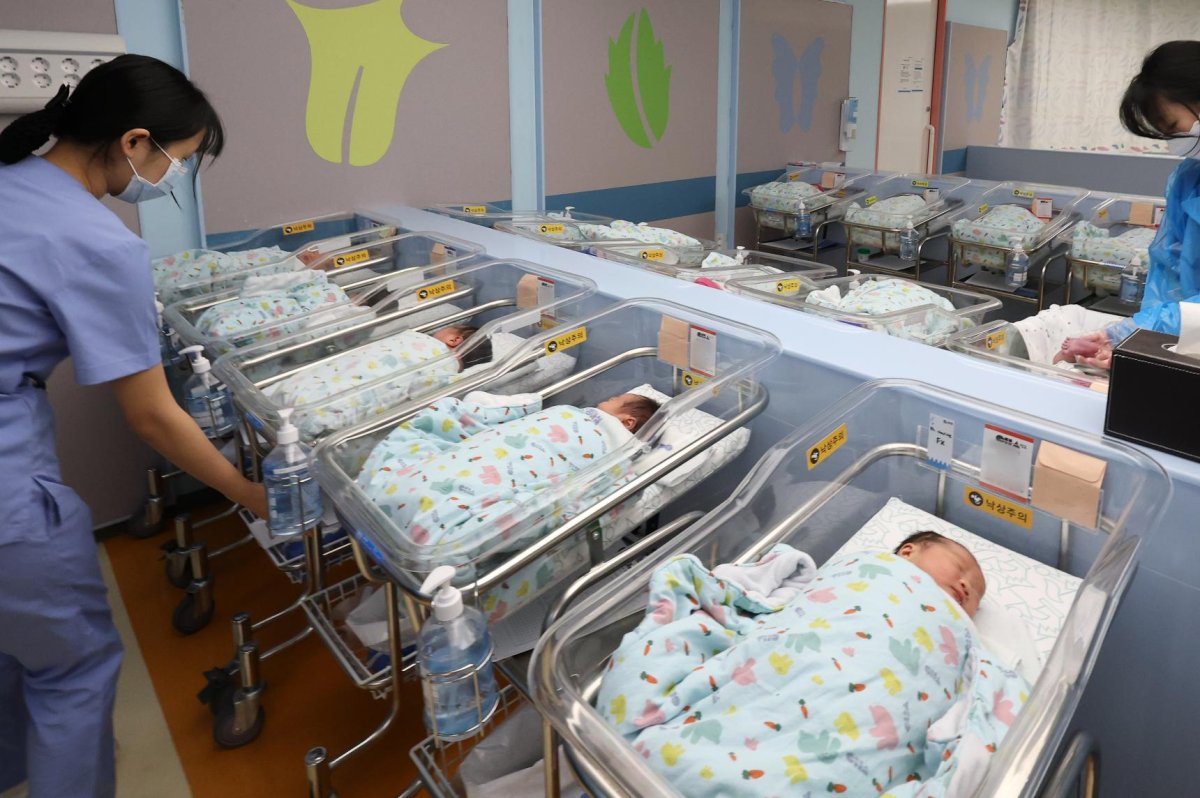
Nurses take care of newborns at a hospital in Goyang, near Seoul. The number of babies born in South Korea increased for the 15th month in a row, the Ministry of Data and Statistics said Wednesday. Photo by Yonhap
SEOUL, Nov. 26 (UPI) — The number of babies born in South Korea rose for the 15th straight month, the Ministry of Data and Statistics reported Wednesday, marking a continued respite from the country’s looming demographic crisis.
A total of 22,369 babies were born in September, an 8.6% year-on-year increase and the highest number of September births since 2020, the ministry said.
The number of newborns has been on an upward trend since July 2024. September’s fertility rate was 0.85, up 0.06 from a year earlier.
Over the first three quarters of the year, 191,040 babies were born, an increase of 12,488 from the same period last year — the largest on-year gain for the first nine months since 2007.
Officials have credited the rebound to several factors, including a continued boom in postponed marriages following the end of the COVID-19 pandemic.
The number of marriages in September jumped 20.1% from a year earlier to 18,462, marking the 18th consecutive month of growth and the highest total ever recorded for any September.
Experts have also cited government incentives and demographic trends, noting that the number of people in their early 30s — a key childbearing age group — has risen.
With births and marriages continuing to climb, the total number of newborns this year is on track to surpass last year’s total of 238,317.
Despite the recent uptick, South Korea’s birth rate remains the lowest in the world. Its 2024 fertility rate was 0.75, meaning that for every 100 women, just 75 babies are expected to be born over their lifetimes.
A fertility rate of 2.1 is generally considered the level needed to maintain a stable population.
According to a March report by the Organization for Economic Cooperation and Development, South Korea’s population is “expected to halve over the next six decades,” with people aged 65 or older projected to make up around 58% of the population by 2082.
Asia’s fourth-largest economy has long struggled with a declining birth rate as many young people delay or forgo marriage and parenthood due to soaring housing costs, job insecurity and gender inequality in the workplace.
“When gender-unequal norms and a large gender wage gap meet long hours and inflexible working practices, many Korean mothers are constrained to choose family over career,” the OECD report said.
To counter the trend, the government has introduced a range of policies to encourage marriage and support child-rearing, including financial incentives for new parents and expanded parental leave and childcare assistance.
South Korea’s demographic squeeze mirrors a broader decline across East Asia, where fertility rates have also fallen significantly below replacement levels. Many Western economies are likewise contending with shrinking workforces and rapidly aging populations, and experts warn of a looming global demographic inflection point.
At the Asia-Pacific Economic Cooperation leaders’ summit held in Gyeongju earlier this month, South Korea led an initiative to adopt the first-ever framework on demographic change in the meeting’s final Gyeongju Declaration.