Moldova and neighbouring Romania have both accused Russia of trying to hack their democracies with sophisticated disinformation campaigns; the Baltic states, including Estonia, where NATO’s ‘Centre of Excellence’ in cyber defence is located, have also complained of cyber threats coming from over their eastern borders.
In Chisinau, the aim is to train roughly 100 specialists from across eastern Europe by 2027.
The programme is set to run for two years with a total of 465,000 euros in EU funding from Estonia and Germany.
“Cybersecurity today is about the independence of countries,” said Andres Aaremaa, Programme Manager for e-governance and cybersecurity at the Estonian development agency, the Centre for International Development, ESTDEV.
“States rely on digital data; being able to detect intrusions and defend systems is crucial not only for IT, but for a country’s ability to exist independently,” he said.
Marius Dumitrascu, head of training at CyberCor, told BIRN: “Students would know the theory, but froze when a ransomware alert popped up on a live system.”
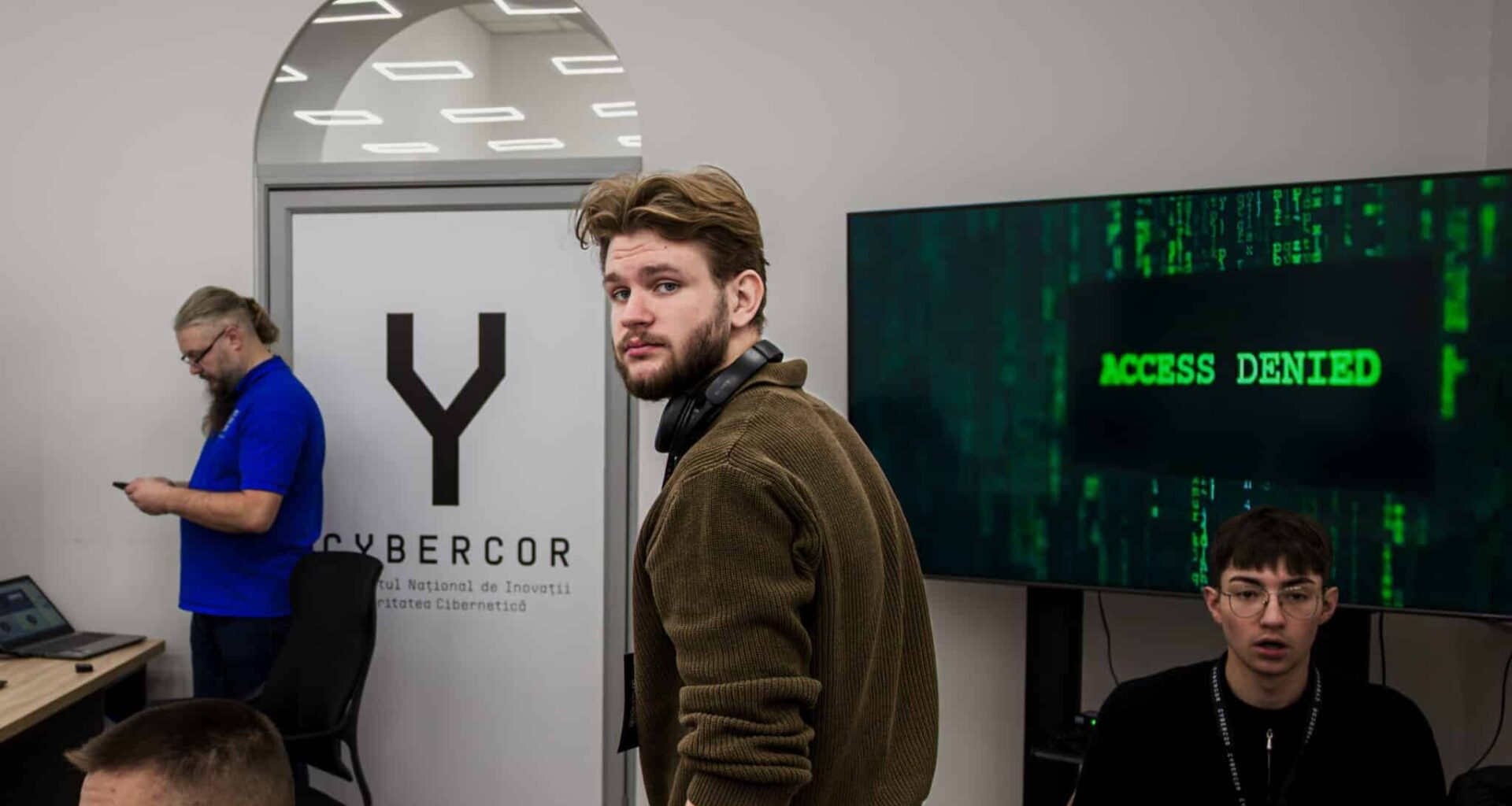
The tension in the training room was palpable, as the timer on the big screen counted down.
“Some tasks were frustrating at first, but that’s what makes you push your logic,” said Denisa, a student at Epoka University in Albania who gave only her first name. “It’s rewarding when a team fights for a flag and finally gets it.”
Birgy Lorenz, Senior Scientist and Vice Dean at TalTech, said the scenario was set in Europe, 20 years from now.
“We wanted to let students think ahead about what needs defending,” she said. “We even masked country names to keep the focus on methods and systems, not politics.”
Arturas Matsenas, International e-Governance Projects Manager at ESTDEV, said that building cyberdefence capabilities is vital, as security considerations in the region grow in complexity and digital systems advance.
“We build capacity for students, government employees and critical-infrastructure operators,” Matsenas said. “Beyond technical drills, exercises teach how to communicate, exchange information and work under pressure. Those are the soft skills you need when something happens in a ministry or a control room.”
Kikas, from TalTech, put it simply: “We are learning to protect the modern world: payments, cars, medicine, agriculture, everything depends on IT systems. Someone has to protect them, or it’s chaos.”