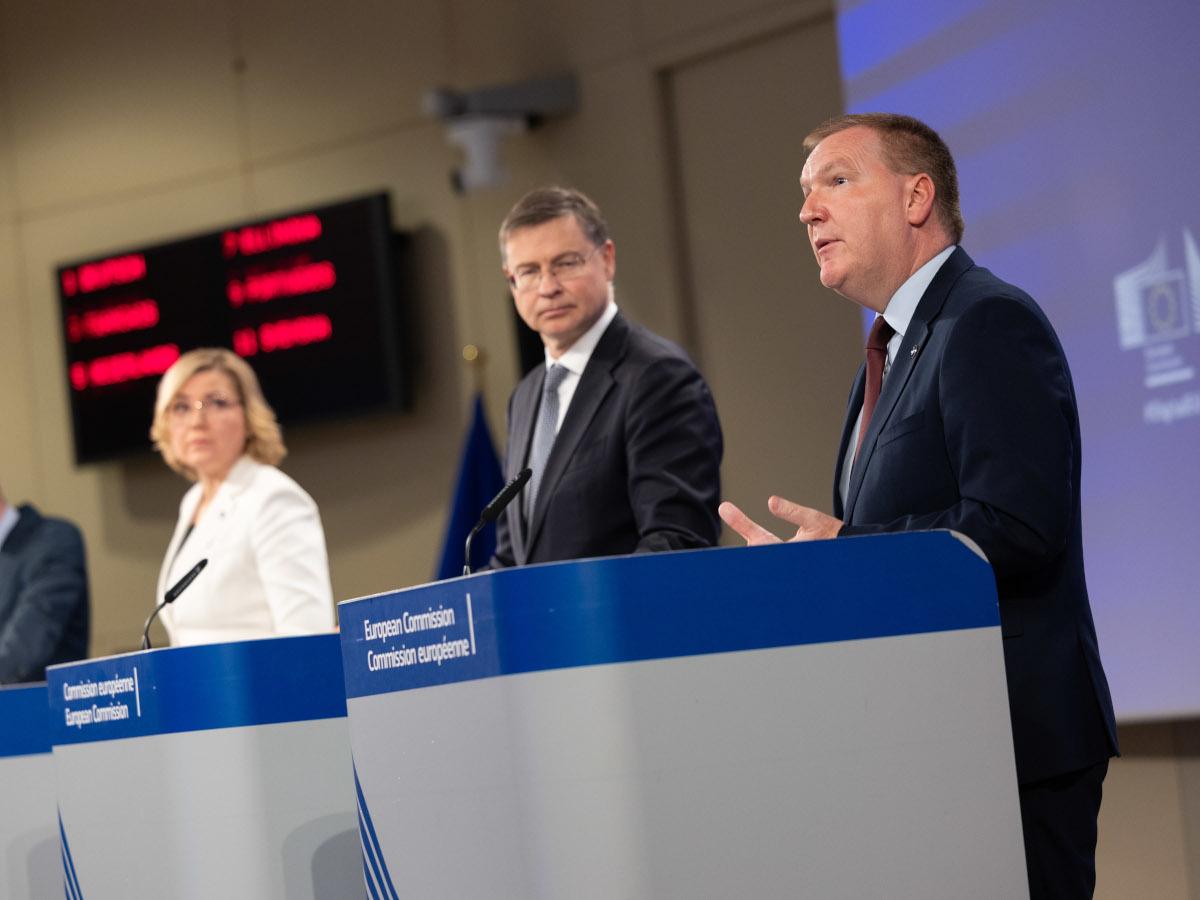
Partsol founder Dr Darryl Williams explains why he thinks the EU’s new proposals to soften the AI Act could harm Ireland’s hard-won tech leadership.
There’s a sense of unease across Europe’s tech community at the moment, and it isn’t hard to understand why.
After positioning itself for years as the global leader on AI governance, the European Commission is now planning to pause or soften parts of the EU AI Act. Grace periods, delayed transparency rules, enforcement pushed out by years – none of this resembles the confident stance Europe took when it first introduced the legislation.
We’re told this is about competitiveness and it’s a pragmatic adjustment to keep Europe in the race with the US and China. However, if you look closely, the pressure behind this shift isn’t coming from emerging innovators or research groups. It’s coming from the companies that benefit most when the rules stay vague, and from political voices urging Brussels not to push too hard or too fast.
This matters for Europe as a whole. But it matters even more for Ireland.
There’s a persistent myth that regulation is the enemy of technological progress. In the world of high-trust AI, healthcare, finance, law, national security, it’s the opposite. The biggest constraint isn’t bureaucracy, it’s a lack of certainty.
Teams trying to build AI systems that must be reliable under pressure can’t work using guesswork. They need to know what evidence they will have to provide, how their systems will be evaluated and what standards they must hit long before bringing anything to market. A delayed rulebook doesn’t open the path forward. It just fogs the headlights.
Here’s the irony – the Big Tech giants shouting loudest about slowing the EU AI Act are the only ones who can absorb endless uncertainty. They have the resources, the legal firepower, the political reach. Smaller innovators – the kind Ireland depends on – don’t. When the rules wobble, they are the first to stall or relocate to an area where innovation can incubate and thrive.
When I wrote in July that Ireland had a strategic opening because of the EU AI Act, it wasn’t a hopeful slogan. It was a practical reading of how AI ecosystems form. Countries like Ireland win when the rules are clear, the standards are credible and the market for trustworthy systems expands.
Ireland leads on trust and stability
Ireland doesn’t compete through industrial-scale compute or the largest model labs. Ireland competes on trust, talent, stability and being a gateway between US innovation and EU governance. That balance gives us leverage, but only when the governance side holds firm.
If the EU now steps back, it cuts across the very advantage Ireland was poised to build. Irish AI companies that have already invested in robust documentation, transparency and safety practices suddenly have no guarantee those standards will matter. Meanwhile, the giants with global reach, the ones lobbying hardest for flexibility, continue unaffected.
For Ireland, a pause in Brussels isn’t a minor delay. It lands like a destabiliser.
Europe is not competing to build the biggest model. That race is already being run elsewhere. What Europe, and Ireland, can lead on is trust. The AI that diagnoses patients, approves mortgages, analyses legal evidence, national defence or manages critical infrastructure doesn’t need to be the flashiest. It needs to be reliable. It needs to be accountable, and it needs to be built in places where oversight isn’t optional.
If Europe waters down the EU AI Act now, it risks sending a signal that principles bend when pushed. Investors notice it. Regulators notice it. Markets notice it. Ireland, because of its position at the intersection of US and EU systems, feels the consequences almost immediately. Softening the Act doesn’t make Europe bolder. It makes Europe blurrier.
Ireland has earned a reputation for balancing innovation with responsible governance. Multinationals choose Ireland because of its talent, but also because of its stability. Local AI start-ups succeed because the markets they sell into trust Irish-built systems.
Watering down EU regulation means it could lose its credibility as a hub for trustworthy AI and Ireland’s innovators will lose the clarity they need to build for high-impact sectors. That combination is far more dangerous for a small, open economy than it is for a global platform company that can wait out regulatory confusion.
The European Commission insists that it still believes in the EU AI Act, but belief isn’t what matters. Follow-through is what matters. Europe had a head start on the rest of the world, not because it moved fastest, but because it moved with intent. That intent is now being tested.
If Europe steps back under pressure, it sends an unmistakable message, which is that the biggest players in tech will dictate the pace. That is not leadership. It is capitulation dressed as pragmatism.
If the EU wants to lead on trustworthy AI, it has to stand its ground because countries like Ireland built their strategy on the assumption that Europe meant what it said. Retreat now, and the cost won’t be abstract.
Dr Darryl Williams is the founder, CEO and chief scientist of Partsol, a global leader in cognitive AI and forensic decision intelligence. A retired US Air Force electronic officer, he has more than 30 years of experience supporting the US government and Fortune 500 companies. Under his leadership, Partsol developed Atai, the world’s first AI stem cell-based reasoning engine.
Don’t miss out on the knowledge you need to succeed. Sign up for the Daily Brief, Silicon Republic’s digest of need-to-know sci-tech news.