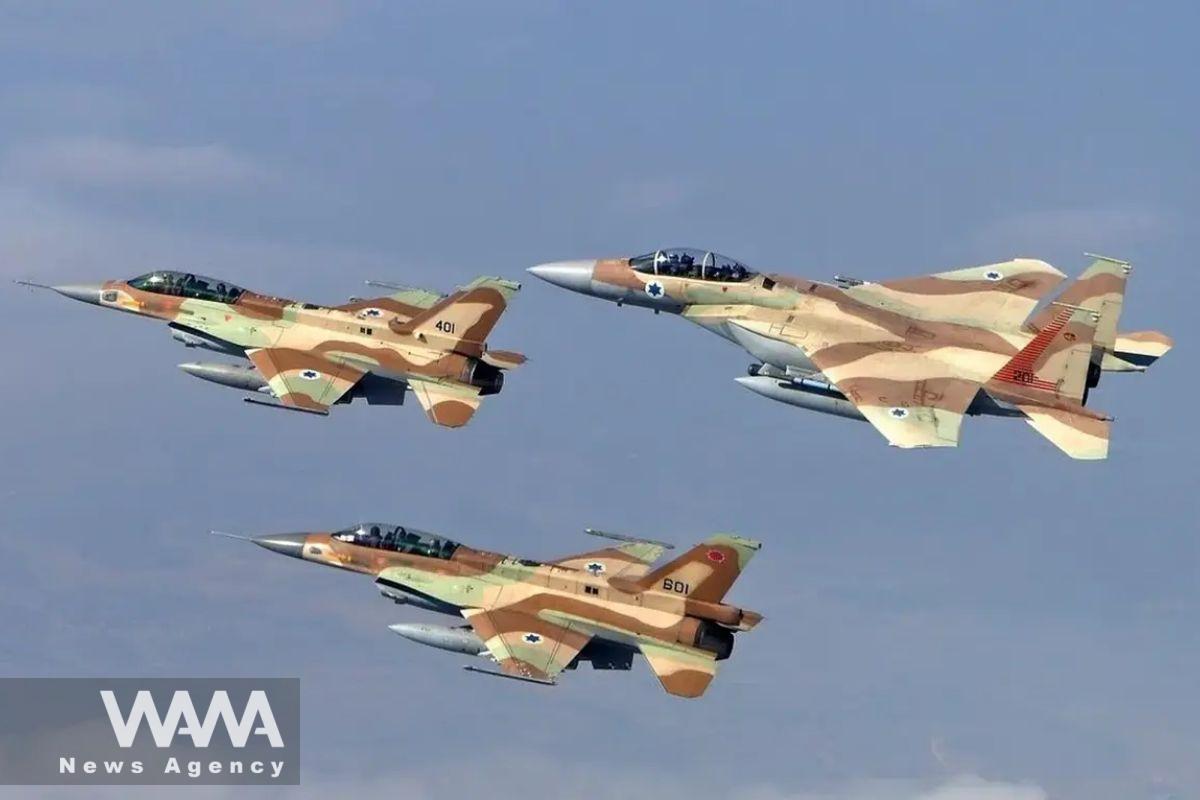
WANA (Nov 26) – Last midnight, the region once again witnessed movements that many described as a “mutual testing” between Iran and Israel. Some Iraqi and Hebrew-language media outlets claimed that Israeli fighter jets briefly entered Iraqi airspace and flew near Iran’s borders.
Reports even mentioned ‘simulated launch maneuvers’; an action that, if true, would be regarded less as an operation and more as a clear message: showcasing capability and gauging Iran’s restored defensive readiness and reaction.
Simultaneously with these flights, two KC-135 refueling aircraft belonging to the U.S. Air Force also passed along the Iraqi–Iranian border route and then returned to the Al-Udeid base in Qatar. The presence of these aircraft—whose role is critical in long-range operations—intensified speculation about possible future tensions.
In the midst of this uncertain atmosphere, an Instagram page attributed to Iran’s Supreme National Security Council secretary, Ali Larijani, posted a short message: “Our patience also has limits…” This brief sentence quickly spread across social media channels and provoked wide reactions, as many interpreted it as an indirect response to Israel’s recent movements.
But after an announcement by the Secretariat of Iran’s National Security Council, it became clear that the page did not belong to Ali Larijani.

An Instagram page attributed to Iran’s Supreme National Security Council secretary, Ali Larijani, posted a short message: “Our patience also has limits…”. Social media/ WANA News Agency
Meanwhile, Hebrew-language media such as Israel’s Channel 14, as well as Persian-language opposition network to the Islamic Republic, “Iran International”—highlighted a different narrative.
According to these reports, following Israel’s series of attacks in Lebanon, Syria, and Yemen, Tehran has begun “rebuilding the lost capabilities of the Axis of Resistance” and is transferring advanced equipment to Lebanon, Iraq, Yemen, and even parts of Africa. These sources say the killing of Haitham Ali Tabatabaei—Hezbollah’s number two —has placed Iran before “a strategic test.”
A part of Channel 14’s report, cited by Iran International, explicitly claimed: “Alongside transferring equipment, Tehran has accelerated the rebuilding of facilities, strengthening intelligence networks, and planning for external operations.”
After the assassination of Tabatabaei and several companions, Ali Larijani posted condolences in Arabic on X, writing: “They (the fallen Hezbollah members) achieved their wish, but Netanyahu continues his adventurism so everyone understands that no path remains except confrontation with this illegitimate entity.” However, the form of such confrontation—direct or indirect—remains unclear.
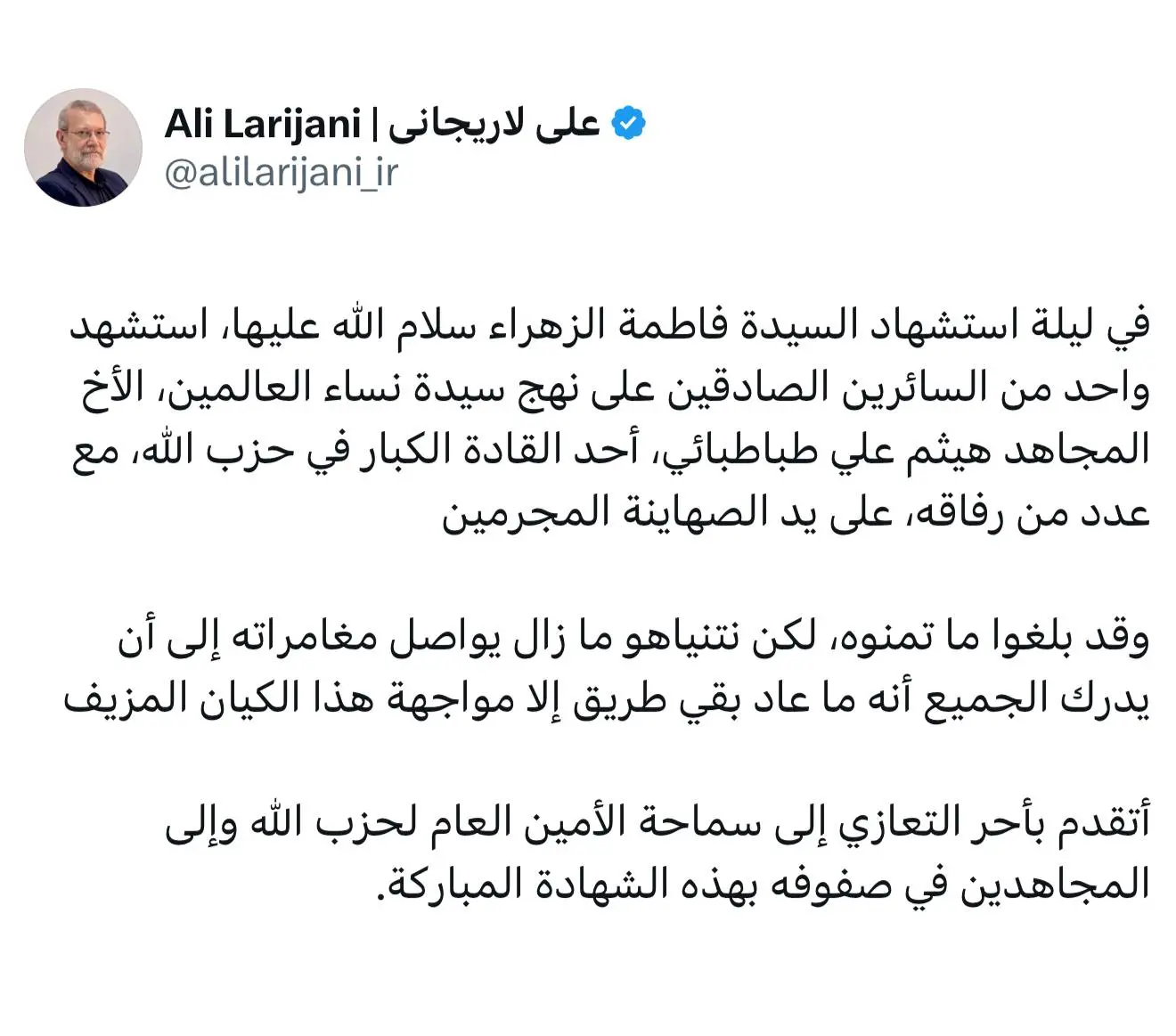
Ali Larijani posted condolences in Arabic on X for Haitham Ali Tabatabaei. Social media/ WANA News Agency
Signs of readiness in the airspace have also appeared in Tehran. Some Persian-language media reported the sound of flying jets over the capital. No officials commented, but the Iranian Army, regarding the sounds heard and the jet seen, stated that the flight was part of routine air force duties, including reconnaissance.
The jet seen over Tehran was a MiG-29. This has raised a further question: were these flights a response to reported movements in Iraq, or simply standard defensive activity?
On the Israeli side, the cancellation of Prime Minister Netanyahu’s trip to India for “security reasons” has drawn analysts’ attention. Many viewed it as part of the anxiety caused by regional tensions in Tel Aviv, while others linked it to Israel’s potential need for his presence in a near-future confrontation with Iran.

WANA (Nov 26) – Following reports of a military aircraft passing over Tehran, the Public Relations Office of Iran’s Air Force issued a statement clarifying the incident. On Wednesday morning, December 5, a MiG-29 fighter jet belonging to the Islamic Republic of Iran Air Force conducted a routine flight over Tehran as part of […]
Meanwhile, Iranian public opinion is divided. Some believe Tehran should strike preemptively and “finish Israel off,” while others warn that any direct war could plunge Iran into a crisis with decades-long consequences. Historically, Iran has acted under a “conditional defense” approach: it does not initiate war, but responds if its territory or security is threatened.
The key question now: do suspicious flights, unannounced maneuvers, and ambiguous messages from Tehran and Tel Aviv signal a new phase of confrontation?
There is still no definitive answer. What is clear, however, is that the region has once again entered a state of “no war, no peace” — a condition that brings neither stability nor full deterrence. In such an environment, even a small miscalculation could push events out of control.
As long as both sides maintain official silence, these movements will appear more like posturing, reaction-testing, pressuring the opponent, or even psychological operations. Nevertheless, recent activities show how close both sides are to the ignition point — a point where a single mistake could cross the line.