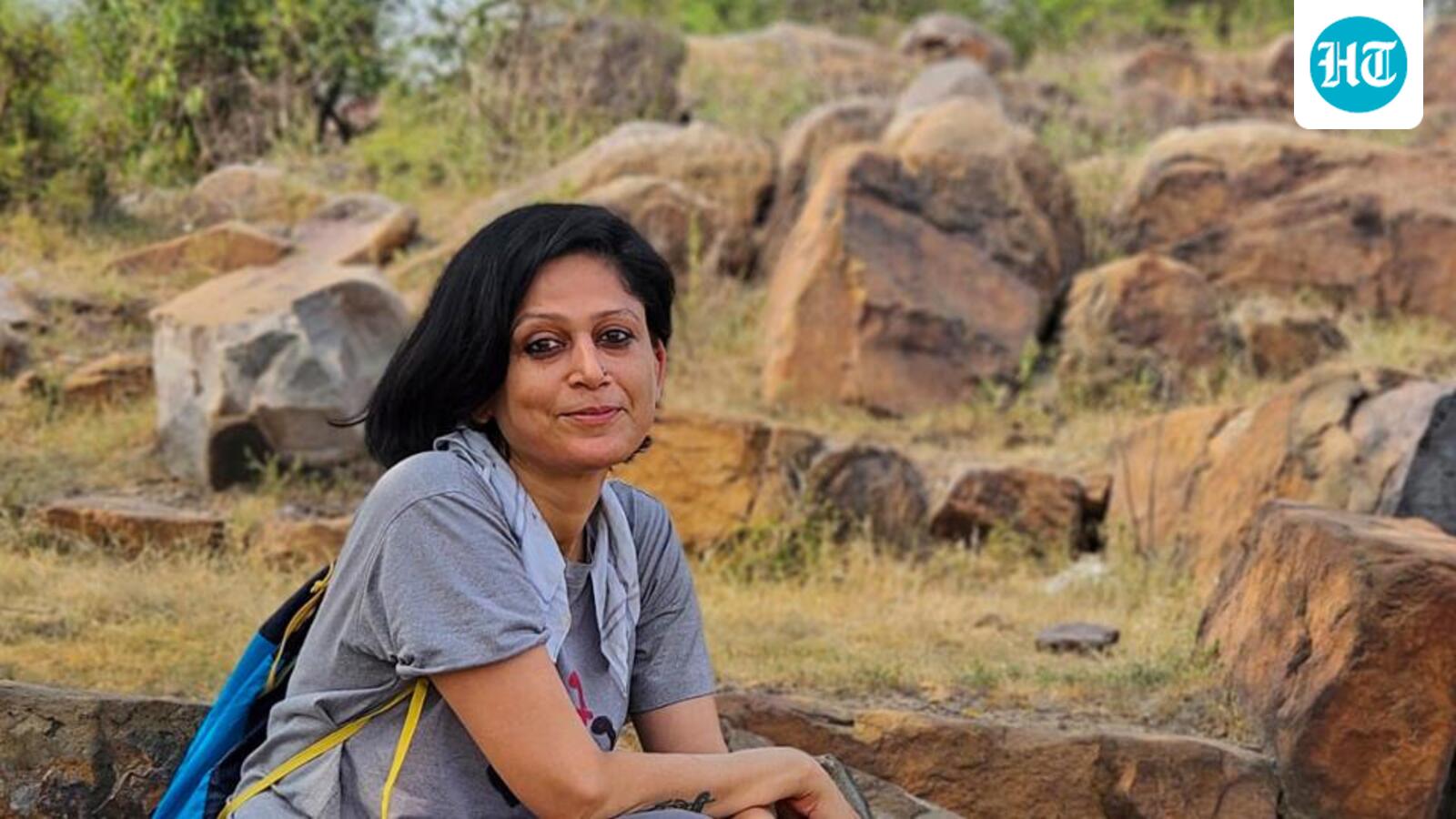
When Vaishali Rana moved to Gurugram in 2011 from Mumbai, she said she had no idea that the city would change her life’s purpose. Rana, 50 now, is among the region’s most active voices for the environment whose work has shaped public policy and forced authorities to recognise ecological rights.
 (Vaishali Rana)
Born to a family in Himachal Pradesh, Rana is a former Air India (earlier Indian Airlines) crew member who flew for 16 years out of Mumbai with a postgraduate in Heritage Conservation Management from Indraprastha University, Delhi. Raised by a retired Indian Army officer, and now a mother to a college-going son, she said that her environmental activism is guided by her compassion.
She said her path into public-interest issues began in 2013, when she confronted a builder who had encroached on the Badshahpur Nala – a natural stormwater channel vital to Gurugram’s flood management and ecological stability. The developer was constructing a 28-storeyed tower directly the riverbed.
Rana filed her first public interest litigation (PIL) in NGT, and the court not only halted the project but ordered demolition of three floors which were already constructed.That ruling, she said, made her believe for the first time that a committed citizen could correct harms to the environment and people.
In the subsequent 12 years, Rana has approached the National Green Tribunal (NGT), Supreme Court, and multiple government agencies to challenge violations involving land, water, forests, wildlife, and waste.
Among her most impactful interventions is the Bandhwari landfill case – an ongoing seven-to-eight year legal fight against one of North India’s largest waste dumps. Located inside the Aravalli forest, Bandhwari has long been in an ecological crisis, leaching toxins into groundwater and devastating the surrounding forests.
Rana was among the first in Gurugram to raise the alarm. For years, she worked when no one was listening, filing petitions, gathering data, mobilising citizens, and demanding decentralised waste management.
Today, Bandhwari is a citywide concern, debated and acknowledged as a prime issue of environmental concern.Her second major litigation is in the Supreme Court, where she has challenged the proposed Aravalli Jungle Safari – a project that sought to open nearly 10,000 acres of fragile forest land for tourism and commercial use in 2023. Through sustained advocacy and legal pressure, the area was eventually decreased to 2,500 acres.
Rana, who also serves as a trustee of the Aravalli Bachao Citizens Movement, said that in an era of climate extremes, the Aravallis are indispensable for biodiversity, air quality, and groundwater recharge. Commercialising them, she said, is “not just unsustainable, but irreversible harm.”
She also works closely with abandoned cows, calves, horses, donkeys, and other draught animals on Gurugram’s streets, ensuring their rescue, medical care, feeding, and intervention in cruelty cases.Her long-term dream, she said, is to create at least 100-acre sanctuaries for elderly draught animals who have served human beings all their lives. Dogs, she believes, must be cared for in community-based systems, not confined to shelters.
Rana is almost fully vegan because she believes dietary change is among the strongest tools against climate change. She said the surge in meat consumption in metropolitan cities is accelerating ecological destruction through intensive farming and resource depletion.Her work stands as a reminder that change does not always come from institutions. Sometimes it comes from one determined citizen who refuses to look away.
(Vaishali Rana is an environmentalist and a resident of Valley View Estate on Gurugram-Faridabad Road)