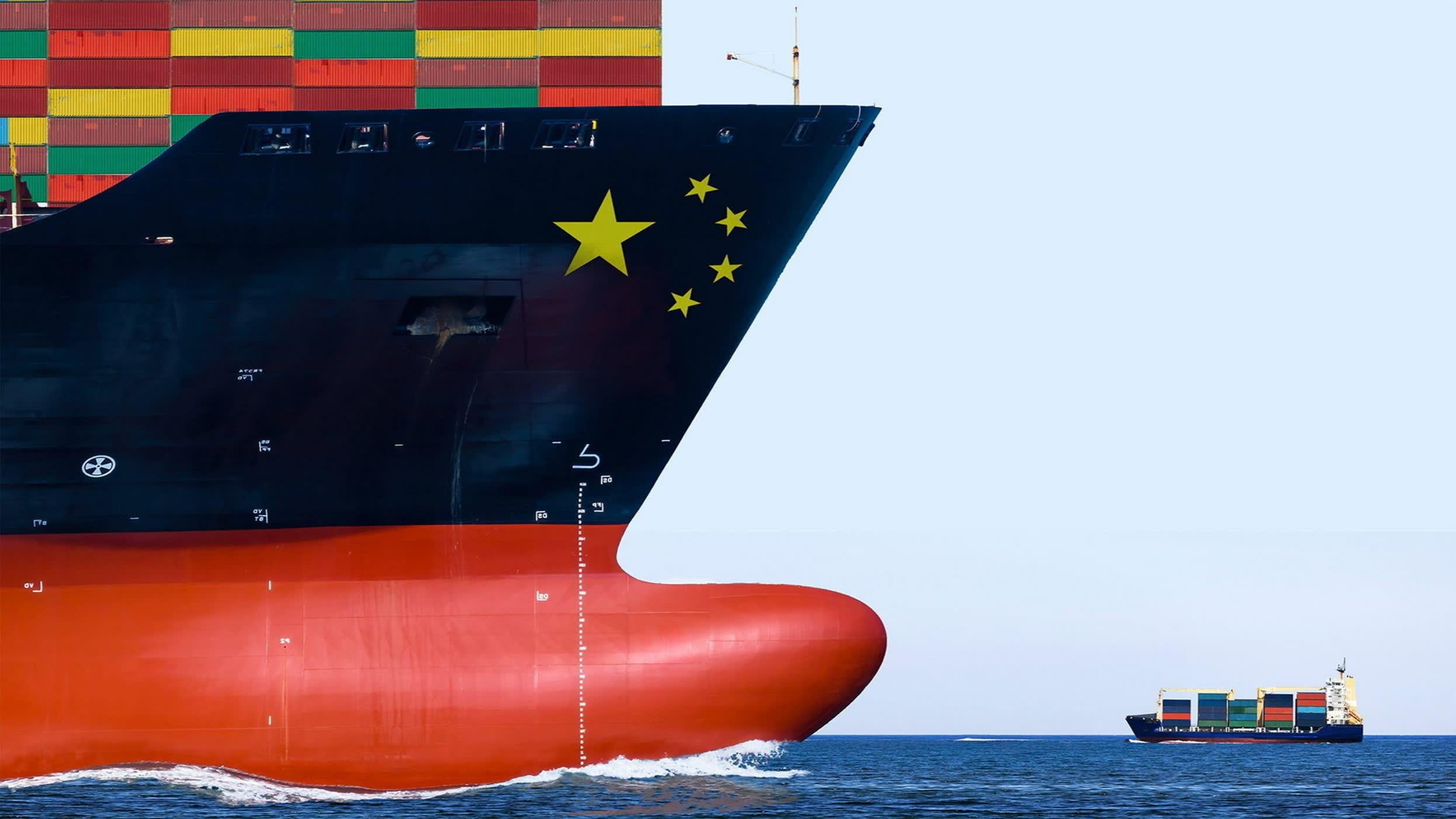
China is making trade impossible
https://www.ft.com/content/f294be55-98c4-48f0-abce-9041ed236a44
Posted by BlueEmma25
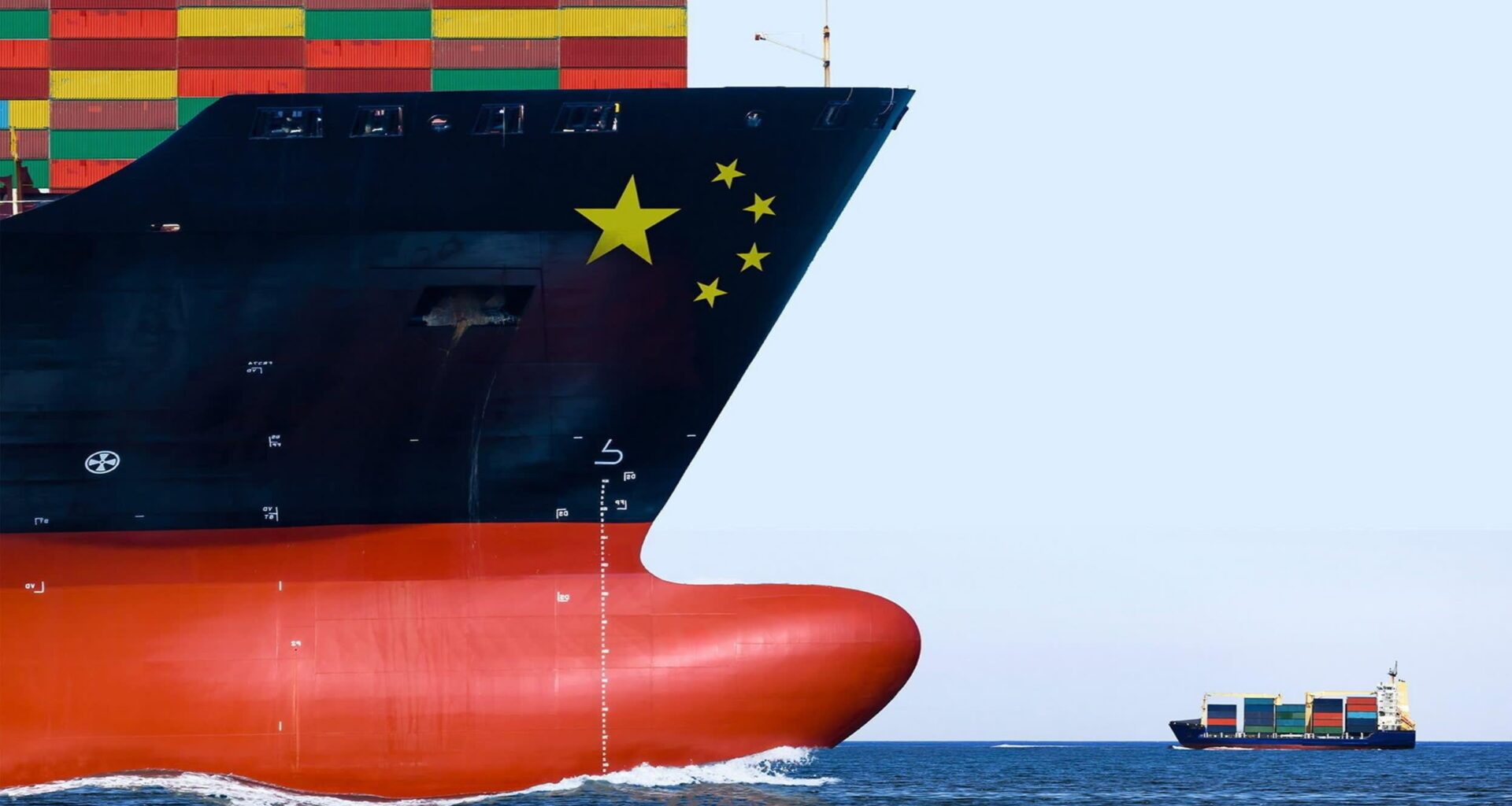
China is making trade impossible
https://www.ft.com/content/f294be55-98c4-48f0-abce-9041ed236a44
Posted by BlueEmma25
10 comments
[Unpaywalled Link](https://www.removepaywall.com/search?url=https://www.ft.com/content/f294be55-98c4-48f0-abce-9041ed236a44)
Submission Statement:
We are through the looking glass here, people.
If you read only one article on international trade this year make it this one, because it succinctly explains how and why the international trade regime instituted in the 1980s is failing, how countries are likely to adapt to this failure, and the central role that China’s trade policy has played in bringing about these events.
In this opinion piece Financial Times Asia editor Robin Harding comes to the heart of the malaise that is afflicting the global trading system: China’s neo mercantilist trade policies are making trade impossible.
As Harding explains:
> On a recent trip to mainland China, I found myself posing the same question, again and again, to the economists, technologists and business leaders who I met with. “Trade is an exchange. You provide something of value to me, and in return, I must offer something of value to you. So what is the product, in the future, that China would like to buy from the rest of the world?”
> The answers were revealing. A few said “soyabeans and iron ore” before realising this was not much help to a European. Some observed that Louis Vuitton handbags are popular and then went on to talk about the export prospects for fast-rising Chinese luxury brands. “Higher education” was another common answer, qualified sometimes with the observation that Peking University and Tsinghua are harder to get into, and more academically rigorous, than anything on offer in the west [gotta love that irrepressible Chinese chauvinism]…
> It is a train of thought that gives away the real answer to the question. Which is: nothing.
China’s trade policy is to minimize imports and maximize exports, so as to generate as large a trade surplus as possible. As Harding points out, China’s imports are largely limited to commodities like iron ore and soybeans it cannot sufficiently source from domestic suppliers, and certain technology like semiconductors and advanced machine tools where it currently lags, although it is investing heavily in catching up, with the stated goal of replacing imports with domestic production.
As Harding succinctly states:
> There is nothing that China wants to import, nothing it does not believe it can make better and cheaper, nothing for which it wants to rely on foreigners a single day longer than it has to.
A world in which China’s exports greatly exceed imports has created unsustainable imbalances in global trade: if countries cannot offset the cost of imports with countervailing exports, the imports must be paid for by transferring wealth from the importer’s economy to the exporter’s, which often results in unemployment, de industrialization, and a declining standard of living for the importer.
Thing is, this was well understood in the golden age of Keynesianism (1945-1971), and the Bretton Woods system incorporated measures to restrict the kind of “beggar thy neighbour” trade policies that China employs.
In the subsequent era of neoliberalism (c. 1975 – 2010) however, when neo classical economics displaced Keynesianism as the flavour du jour in mainstream economics, the old orthodoxy was discarded in favour of a new one: that free trade was going to increase aggregate wealth for (almost) everyone. Instead of trade liberalization potentially creating win / lose scenarios, it was assumed to more or less always produce win / win ones, allowing for some unfortunate transition costs (shame about all those unemployed blue collar workers, but it’s their own fault for not investing in education).
Well, now we have run the experiment and seen the results, and Keynes has swept all before him.
(There is an important question here about how mainstream economists got it so wrong, and for so long, but that’s another topic).
Harding then elucidates the key conclusion:
> Even that, however, will not be enough in a world where China offers everything cheaply for export and has no appetite for imports itself. There will simply be no alternative but to rely on domestic demand. Which leads to the bad solution: protectionism. It is now increasingly hard to see how Europe, in particular, can avoid large-scale protection if it is to retain any industry at all.
> This path is so damaging and so fraught it is hard to recommend it…Yet when the good options are gone, the bad are all that is left. China is making trade impossible. If it will buy nothing from others but commodities and consumer goods [I think he actually means “luxury goods”], they must prepare to do the same.
In other words, absent a major course change in China’s trade strategy, which is highly unlikely, the consequences of that strategy are inevitably going to force decoupling of the West from China, because the former can no longer bear the costs.
That this is now being openly said in one of the world’s leading financial papers is an index of how much and how quickly many of the most sacred orthodoxies of the last forty years have been overturned.
The litany of broken promises, unintended consequences, self serving arguments, and policy failure has become far too great to ignore.
Chinese here.
It’s not wrong. China is in a state where it produces everything, but has very little demand. It’s not just on the macro level but also micro level.
The owner of the Chinese shop or restaurant will sell to everyone but won’t consume himself.
Somehow in the psyche of Chinese.
Trade is still possible in many cases. Chinese will still import certain goods. but on a global level it will be harder and harder to have a halfway neutral trade balance with china.
I understand why mercantilism is harmful to other countries, but I don’t understand what is necessarily wrong with their goal of having high-value added industries and importing luxury goods and inputs. Isn’t that precisely how the U.S. and Europe have operated in the past few centuries?
Two thought experiments:
If China were to remove structural barriers to consumption, but the Chinese ultimately prefer Chinese goods and China captures more high-value added industries, is this still a problem? Essentially is the problem a practical one or a structural one?
If China were to get stuck in the middle income trap, is it just not the reverse? Where they don’t really gain anything and may even have economic backsliding from trade? Is this a problem? Essentially, is this a problem with principles or a problem with practical outcomes with the European/western economy?
And at its core, why is their answer problematic? Isn’t it just how many other western countries operate? Wanting inputs for their industries, and wanting things they cannot make.
What is the difference between the U.S. wanting to trade for PCBs and copper wires from China, and lithography equipment from ASML and advanced chips from Taiwan (that it can’t make currently) different from China wanting inputs for their soybeans and unprocessed rare earth ore from the U.S. and things chips from Taiwan and jet engines from the U.S.? Is there something wrong with the Chinese’s aspirations?
[removed]
If China manages to automate it’s economy faster than other countries, which seems likely given that the west is composed of democracies where mass unemployment is not liked and any amount of automation is resisted
Then China will dominate much much more, not just on industrial goods
The future belongs to those who wield technology the best, and the Chinese are both more optimistic about AI as a society, and their government can automate its economy faster than other countries
Complaining about AI in your nation will only lead to falling further behind, the Chinese advantage is poised to grow exponentially
This isn’t just about cheap Chinese goods flooding the market it’s proof that globalization without structural defense breaks the working class’s spine. You can’t treat trade as altruistic exchange when one side only offers competition and buys nothing of value in return. If Europe doesn’t rebuild its industrial core it’s not going to matter how smart your politicians sound the economic foundation collapses.
Anyone who thinks Chinese people don’t consume simply doesn’t understand how currency dynamics work. China is already the world’s second largest consumer market and will become the largest soon.
The CCP’s idea of trade is to sell your stuffs back to you, to it self, and then to the world for it’s own profit. It is more than willing to lie, scam, and steal to do so, joining orgs like WTO just to see who would be dumb enough to believe it, to cuff others with rules while it does things behind the scenes that practically render the rules meaningless to it self. It is also comical enough to play victim when it gets a long overdue response to its unrepentant ways, as well as guilttrip you about how “1.4 billion people are being deprived” if they were to be deprived of the opportunity to lie, scam, and steal by being denied access to WTO/ western markets.
When a country can stop trade overnight without so much as a public announcement, and more than willing to look with best fake smiles when inquired, you can use your imagination on what else have been done, are being done, and will be done to the detriment of those who, by the nature of their gov’t/society, cannot do the same.
So they are winning in a capitalist market? Isn’t capitalism the only way?
Do we need money or goods?
We want goods and we get them from china. All we have to give China in exchange is dollars.
Thats a win for the west.
Eventually, china will find out that it is better to take goods instead of paper money and will start importing goods.
Comments are closed.