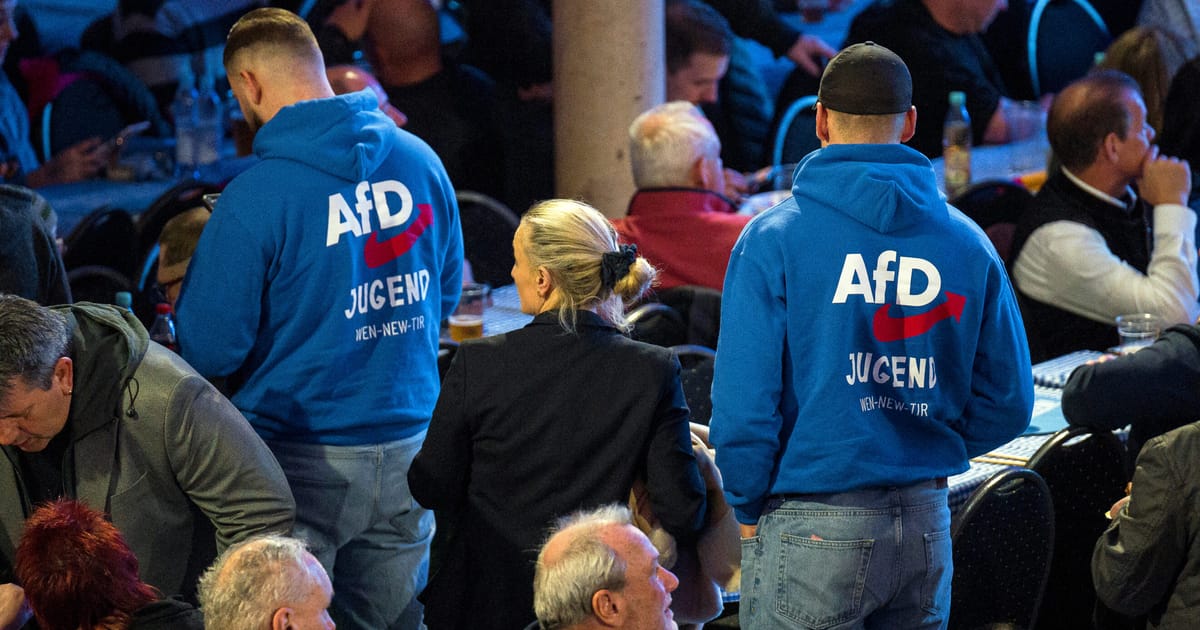
In 2017, Hohm lost his job as an aide for the AfD parliamentary group in the eastern state of Brandenburg after he was spotted at a soccer game for FC Energie Cottbus, a team in Germany’s third division that at the time attracted right-wing extremist hooligans known for chanting Nazi slogans and performing Hitler salutes in the stands. Hohm was seen at one game among the hooligans sitting beside a then-leader of Germany’s Identitarian Movement, which was eventually designated a right-wing extremist group by the federal domestic intelligence agency.
But his exclusion from the AfD didn’t last long, and Hohm soon got a job as an assistant to an AfD national parliamentarian. Last year he himself was elected to the Brandenburg state parliament.
When asked about his connections to Identitarian figures, Hohm took issue with their classification as extremist.
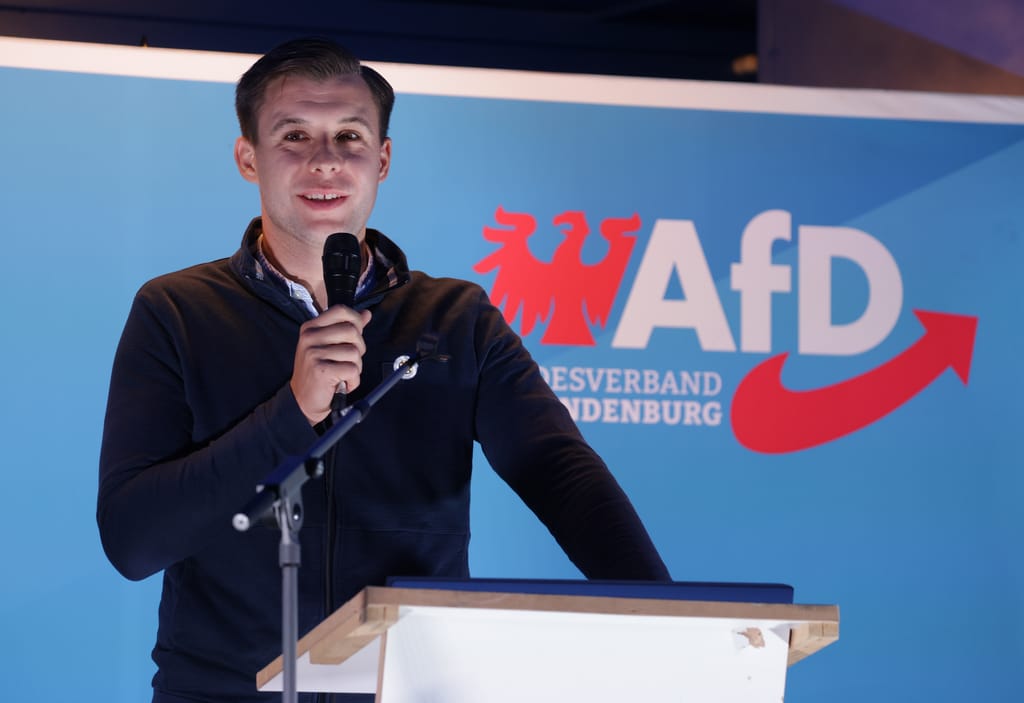 “We will need new blood,” Jean-Pascal Hohm, the 28-year-old who is set to lead the AfD’s new youth organization, told POLITICO as families gathered to bowl nearby. | Sean Gallup/Getty Images
“The question is always: How do you define extremism?” Hohm said. “There is the definition used by the media or domestic intelligence service, which says that the Identitarian Movement, for example, is right-wing extremist. But they also say that the AfD is right-wing extremist. And I don’t believe that either.”
Hohm and others now see the new youth wing as a recruitment engine that can equip the AfD leaders of tomorrow with the political savvy they’ll need to take power and keep it — in part by making such ideological views palatable to mainstream voters.
What would grandma think?
AfD youth activists have become increasingly influential in recent years, attracting young voters with online campaigns that have made once-fringe ideas mainstream. Last year, for instance, some activists created a viral AI-generated video for “Remigration Hit,” a far-right dance track that calls for the deportation of migrants from Germany.