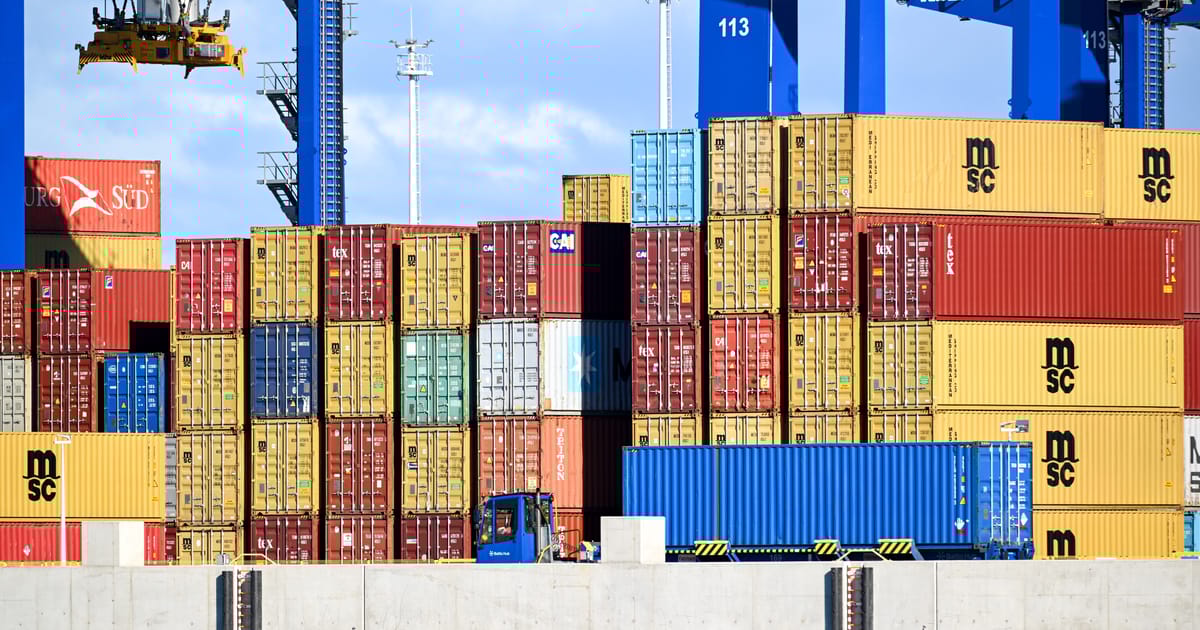
It’s also a worry in Poland, Austria and inside EU institutions — all of which are rushing to put in safeguards to block, or at least monitor, third-country investment in key tech and transport infrastructure.
What accelerated Sweden’s move was a recent EU court ruling involving Turkish and Chinese companies bidding on two railway projects. Judges concluded that suppliers from countries without a free-trade agreement with the EU do not enjoy the same rights as EU firms — a reading Stockholm took as both a green light and a warning signal.
Sweden’s new rules are due to take effect in 2027. No specific cases were cited, but the investigation repeatedly pointed to China — which also sits at the center of very similar concerns in Poland.
Warsaw has long been uneasy about the scale of Chinese involvement in its ports. A new draft bill put forward by the country’s president would “adapt the existing regulations concerning the operation of ports, and in particular the ownership of real estate located within the boundaries of ports.”
The president argued that the current model — state-owned port authorities holding land and infrastructure and leasing it long-term to terminal operators — needs tightening if the country wants to maintain control over assets of “fundamental importance to the national economy.”
Gen. Dariusz Łuczak, former head of Poland’s Internal Security Agency and now adviser to the Special Services Commission, told Polish media late last month that “the most important provisions are those concerning the early termination of perpetual use agreements.”