 The Giant Slalom podium at Copper: Stefan Brennsteiner (1st), Henrik Kristoffersen (2nd), and Filip Zubcic (3rd). | Image: FIS Alpine IG
Austria’s Stefan Brennsteiner claimed the first World Cup victory of his career on Friday, November 28, at Copper Mountain, Colorado, topping a veteran podium ahead of Henrik Kristoffersen in second and Filip Zubčić in third. The 34-year-old Austrian handled increasingly soft conditions better than anyone, capping a chaotic day that saw 14 DNFs, course trouble throughout, and major shake-ups across both runs.
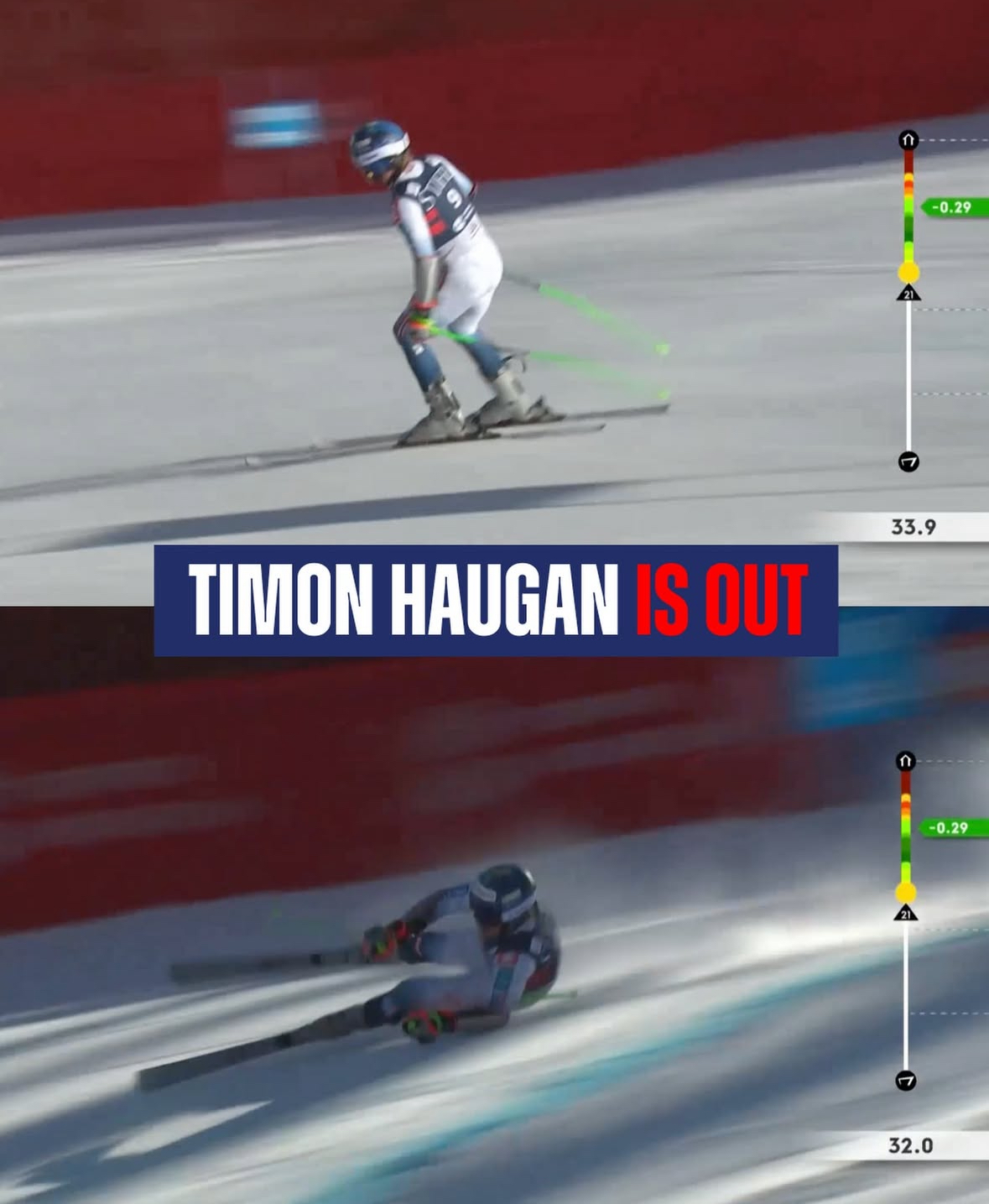 Several favorites struggled, including Norway’s Timon Haugan. | Image: FIS Alpine IG
Run 1: Few Surprises on Soft Snow
It was a difficult morning from the start. Many skiers struggled with the course setting, including Marco Odermatt—fresh off a Super-G win the day before—who went out after losing his inside edge in the mid-section. He was one of 13 athletes who failed to finish run 1.
Early starters briefly held stable positions: Austria’s Stefan Brennsteiner in bib 1 led with a time of 1:13.27 minutes, followed by Slovenia’s Žan Kranjec in second and Switzerland’s Thomas Tumler in third. Henrik Kristoffersen slotted into fourth, Loïc Meillard into fifth, and then came Odermatt’s DNF, which shifted the entire rhythm of the race.
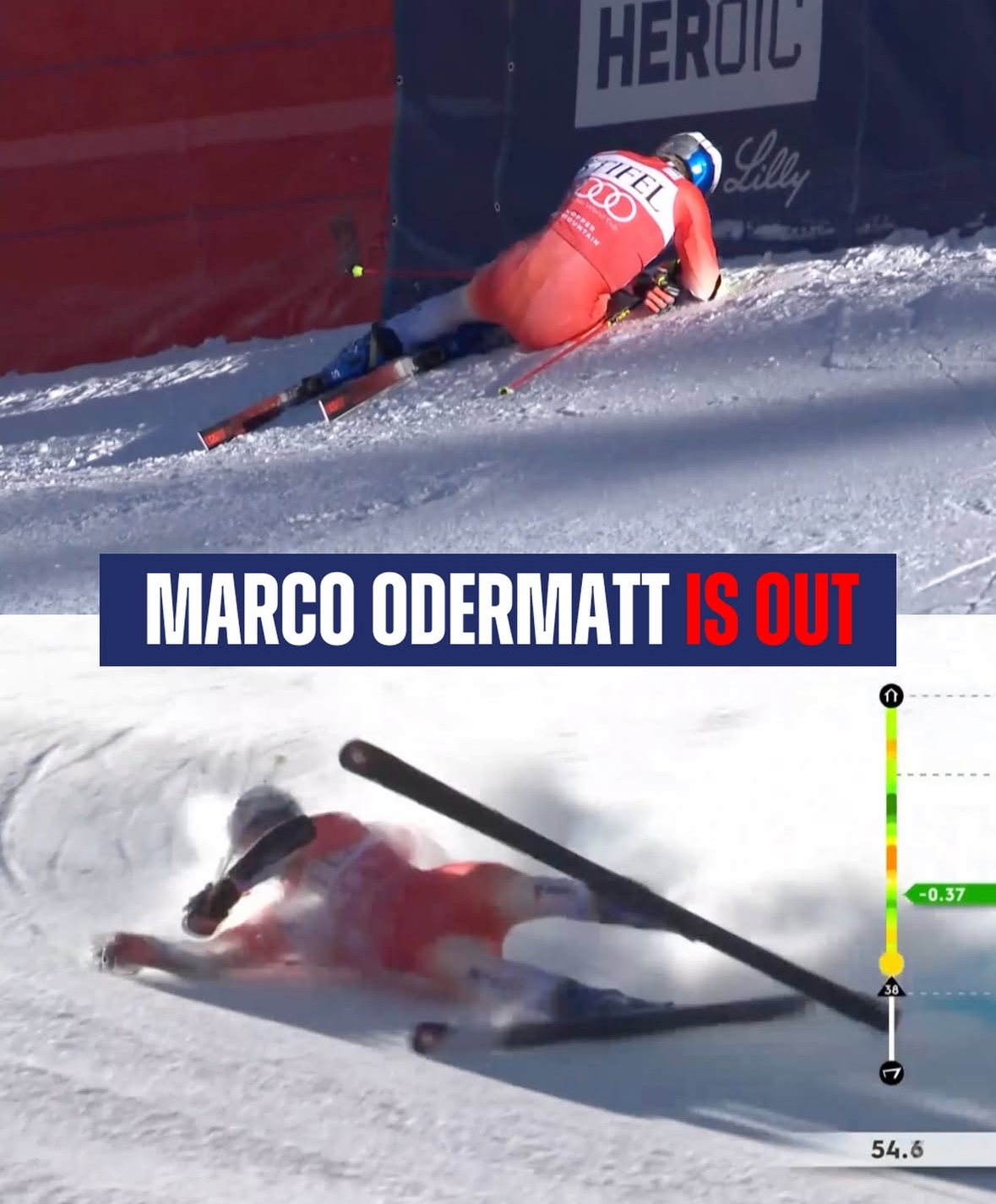 2024-25 Giant Slalom season winner Marco Odermatt slid out on run 1. | Image: FIS Alpine IG
Norway’s Lucas Braathen, starting seventh, jumped into fourth, knocking his former teammate Kristoffersen into fifth. More movement followed: Austria’s Raphael Haaser climbed to sixth from bib 13, teammate Patrick Feuerstein went ninth from bib 16, only for Germany’s Anton Grammel (bib 19) to wedge himself into eighth. By the end of run 1, Austria once again dominated with four skiers in the top 10—mirroring their strong showing the day before—while Switzerland placed only two in the top 10 and was left without Odermatt.
Team USA placed only one skier into the second run: River Radamus, who started strong but bled time mid-course and into the flats, finishing 14th. No other American qualified: Isaiah Nelson (35th), Patrick Kenney (37th), Ryder Sarchett (38th), George Steffey (47th), while Bridger Gile recorded a DNF. Canada, meanwhile, had Erik Read qualify in 26th place.
Run 2: Rising Temperatures Create a Fight to the Finish
Estonia’s Tormis Laine, who scraped in 30th, set the pace for run 2 with a time of 1:18.12—an early indicator that the course was slowing down dramatically as temperatures rose. Run 2 quickly became a battle of survival rather than speed.
Radamus couldn’t improve on his first-run standing, giving up time again in the middle and lower sections and finishing in what was ultimately 15th place. Italy’s Alex Vinatzer had the fastest run 2 of the day with a time of 1:16.96 and held the lead for six racers before Croatia’s Filip Zubčić—18th after run 1—produced an aggressive, attacking run that put him solidly into the top spot, making up for his somewhat disappointing first run.
Feuerstein, Schwarz, Grammel, Meillard, and Haaser all tried but failed to unseat the Croatian, each losing considerable time as the lower section deteriorated. With five skiers remaining and the course deteriorating, it looked increasingly unlikely anyone could beat Zubčić’s benchmark.
Kristoffersen, however, proved it was still possible. Carrying a 0.64-second advantage from run 1, he held onto most of it early but made a costly mistake in the soft lower section. Even so, he somehow clawed back time in the final gates, edging Zubčić by 0.05 seconds. Kristoffersen was bent over still in the finish, trying desperately to suck in enough oxygen to properly process what had just happened.
All eyes were then on his former teammate Braathen, skiing fourth-to-last, but he suffered mistakes and fell well back—0.67 behind Kristoffersen. Tumler attacked the top half with precision, carrying a narrow lead early, but the lower section again proved decisive, and he finished 0.63 adrift.
Kranjec, second after run 1, had a sizeable buffer but faced a completely different course from what he’d skied earlier in the day. He held time into the mid-section, but mistakes in the steep cost him dearly, dropping him to fifth and guaranteeing Zubčić a podium.
Last out of the gate, Brennsteiner started with a commanding 0.80-second lead from run 1. Unlike nearly everyone before him, he looked completely unfazed by the soft snow and rutted lower section. Extending his advantage past a full second, he produced a smooth, composed run that made the deteriorating conditions appear irrelevant. He lost a smidgen of time into the finish but still crossed 0.95 seconds ahead of Kristoffersen. The 34-year-old let out a giant roar in the finish—his first-ever World Cup victory, and one that makes him the fourth-oldest male World Cup race winner in history. It also capped a giant weekend for the Austrian men, who have now claimed first, second, and third across the two races at Copper.
In a race defined by soft snow, veterans 34-year-old Brennsteiner, 31-year-old Kristoffersen, and 32-year-old Zubčić showed that experience still matters on the World Cup. And for Brennsteiner, Copper Mountain became the stage for a long-awaited and well-earned breakthrough.
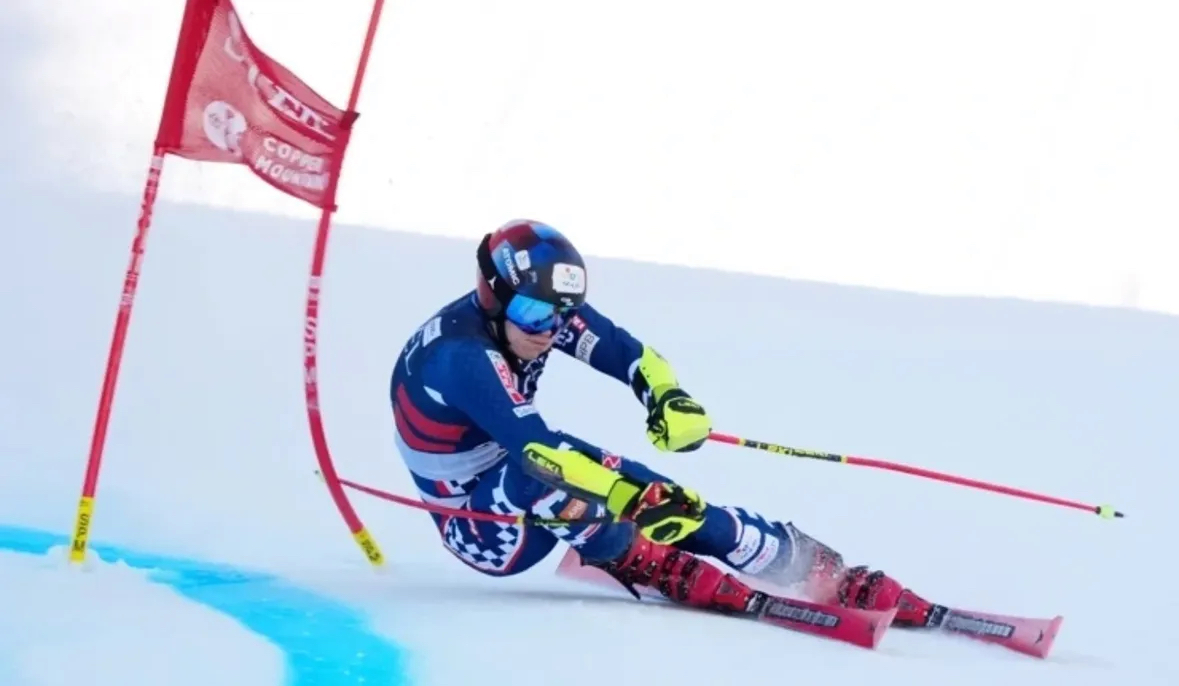 Filip Zubcic on course at Copper Mountain. n 1. | Image: Croatian Ski Association IG