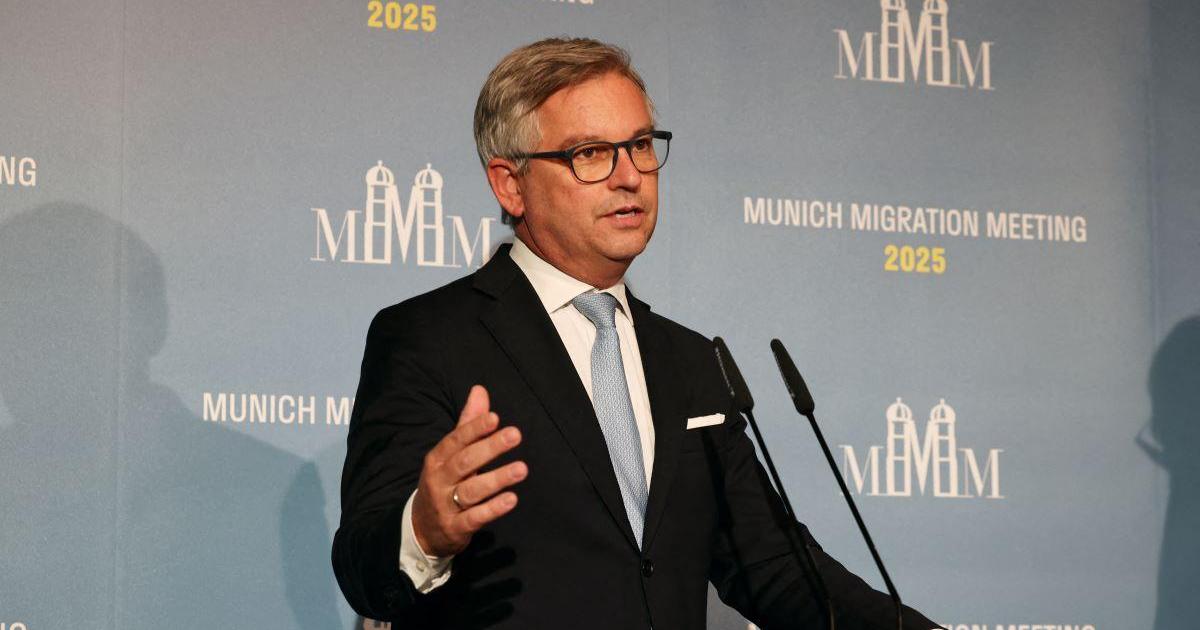
Malta’s relationship with Libya is key to European Union building a stronger relationship with Libya in order to reduce irregular migrant crossings, European Migration Commissioner Magnus Brunner said.
The commissioner acknowledged criticism of Libya’s coastguard over alleged human rights abuses but admitted that Europe “doesn’t have an alternative”.
“If we want to improve the situation for the European citizens, we need to talk to Libya. That is key and that’s where Malta helps us a lot… we are always ready to get engaged and to also support member states when they do it,” Brunner said.
The commissioner was speaking to Times of Malta ahead of the ninth MED5 summit, where ministers responsible for migration from Cyprus, Greece, Italy, Malta and Spain are set to convene in Cottonera today to discuss irregular migration challenges.
The five frontline member states are expected to discuss the EU Migration Pact that is set to be implemented in June 2026. The pact aims to introduce an annual solidarity pool, which allows member states under migratory pressure to receive aid from other EU countries to share the burden.
In a recent report by the European Commission, Cyprus, Greece, Italy and Spain will be eligible for this aid as they were classified as being under immediate migratory pressure. Malta is not.
The pact is not perfect, Brunner said, but it will help give Europe more control to “restore trust” across Europe. He recalled how Europe had taken a lot of responsibility during the 2015 migration crisis but Europe did not have control as it did not have the right system in place.
“We have to show that we are the ones who decide who comes into the EU and who leaves the EU, not smugglers and human traffickers,” he said.
Europe had takena lot of responsibility during the 2015 migration crisisbut Europe did not have control
An important aspect of this pact is to build relationships with third countries to reduce the number of “illegal” crossings.
“Malta has very good contacts with third countries and that’s one point where we work very closely [with Malta],” he said, further praising Malta for reducing its arrivals.
The number of irregular migrant sea arrivals dropped from 2,281 in 2020 to 238 in 2024, approximately a 90 per cent decrease. This happened after Malta signed a secretive migration coordination deal with Libya five years ago.
Data also show that interceptions by the Libyan coastguard have surged by 230 per cent.
The coastguard is a collection of militias, sanctioned by the Libyan government, that have long been accused of human rights abuses.
Relations between the EU and Libya were strained in July, when an EU delegation was ordered to leave eastern Libya. Home Affairs Minister Byron Camilleri was among the delegation but insisted that the diplomatic incident did not affect Malta’s relationship with Libya.
On this topic, the commissioner insisted that the EU must speak with and build a stronger relationship with Libya.
When asked whether Europe is comfortable working with Libya despite these accusations, the commissioner responded: “We don’t have an alternative.”
“We have to look into all these accusations and that’s what we do, while stressing the importance of sticking to the rules. But not getting engaged is not an option; that’s why we have to do it,” he said.