Icelandic President Halla Tomasdottir has envisioned the bright prospects of complementary cooperation with China on green energy and innovations.
In an interview with China Media Group (CMG) aired on Friday, Tomasdottir, who attended the Global Leaders’ Meeting on Women in Beijing last month, said China’s ability to scale and implement technological knowhow can help bring Iceland’s clean-energy innovations to the world.
“Well, I think the obvious opportunity is in geothermal and taking that to scale in China and beyond. And there is a willingness and a memorandum to do so ahead. But I think there’s also interesting opportunities around, for example, carbon capture, which is something that Iceland has also been pioneering,” she said.
The Icelandic president expressed the hope that Iceland’s partnership with China would help expand its innovation economy to the world.
“And I think there are increasingly coming about sustainable solutions in the innovation economy in Iceland, ranging from we are rethinking plastics in the algae or seaweed revolution; we’re rethinking livestock feed and even food for humans through that seaweed revolution. Iceland is rich of this. It’s a pioneering country that can pilot solutions but really is not equipped to take things to the world. China is. So I see lots of opportunities to work on innovations,” she said.
Iceland, located in the mid-North Atlantic, is the second largest island in Europe boasting abundant fisheries, hydropower, and geothermal resources.
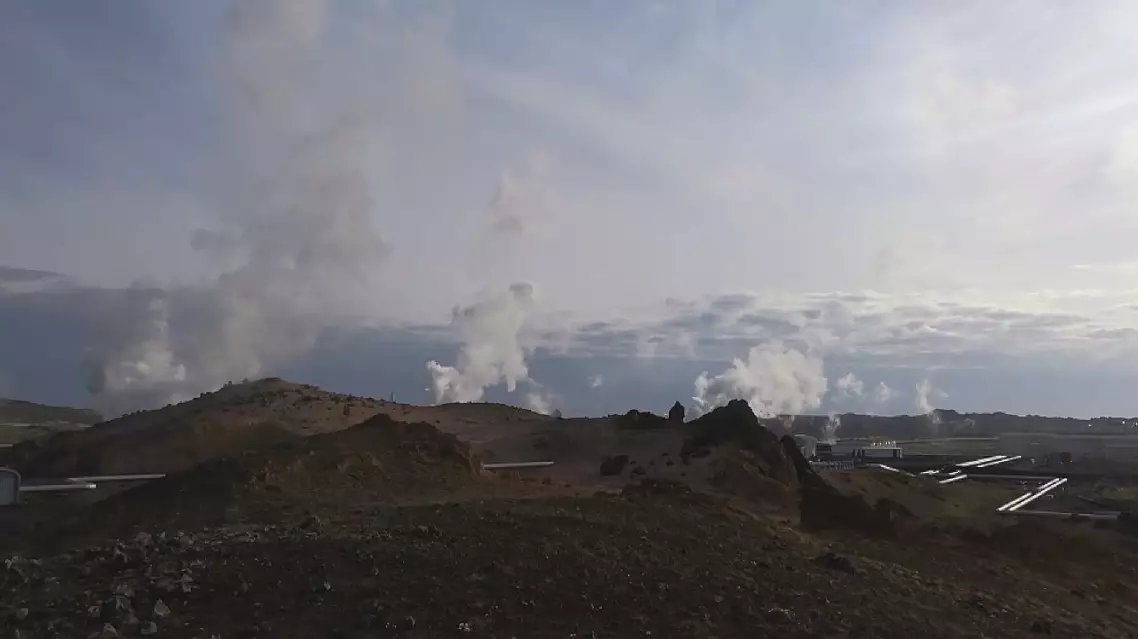
Icelandic president sees bright prospects of complementary cooperation with China on energy, innovation
China’s Internet of Things (IoT) connections are expected to exceed 3.5 billion this year, data released at an industrial conference showed on Friday.
The first Conference on Sustainable Development of Global Intelligently Interconnected Digital Economy and World Internet of Things Convention 2025 opened in Beijing on Friday.
Themed “Intelligently Interconnected New Economy, Smart Society in the New Era,” the two-day event has brought together officials, experts, scholars and business representatives from over 80 countries to discuss the role of IoT in advancing a common and sustainable digital transformation of the global economy.
IoT connects everyday devices to the internet, enabling them to collect data, communicate with each other and operate automatically. From household appliances to industrial equipment, IoT facilitates remote monitoring and control, delivering smarter and more efficient performance.
China’s IoT infrastructure development has continued to accelerate. The country has launched a commercial trial of satellite IoT services, and the number of 5G base stations supporting IoT is expected to exceed 4.8 million across China. “China’s traditional digital economy is expected to achieve an annual output value of over 80 trillion yuan (over 11.28 trillion U.S. dollars) this year. Notably, more than 1.2 million enterprises now meet the criteria for advanced IoT-empowered digital economy, positioning China as a global innovation powerhouse driven by new quality productive forces,” said He Xuming, chairman of the World Internet of Things Conference Executive Committee.
China has invested over 8 billion yuan (over 1.13 billion U.S. dollars) in the IoT sector and released 86 national standards for IoT. Boosted by these preferable policies, China’s IoT communication technologies are rapidly evolving from 5G toward 6G, satellite constellations and quantum communication, with new networks, models, and business formats emerging continuously.
“It is estimated that the scale of China’s digital economy supported by IoT will maintain a strong growth rate of 10 percent in coming years,” said Ni Jianzhong, chairman of the China Mobile Communications Association.
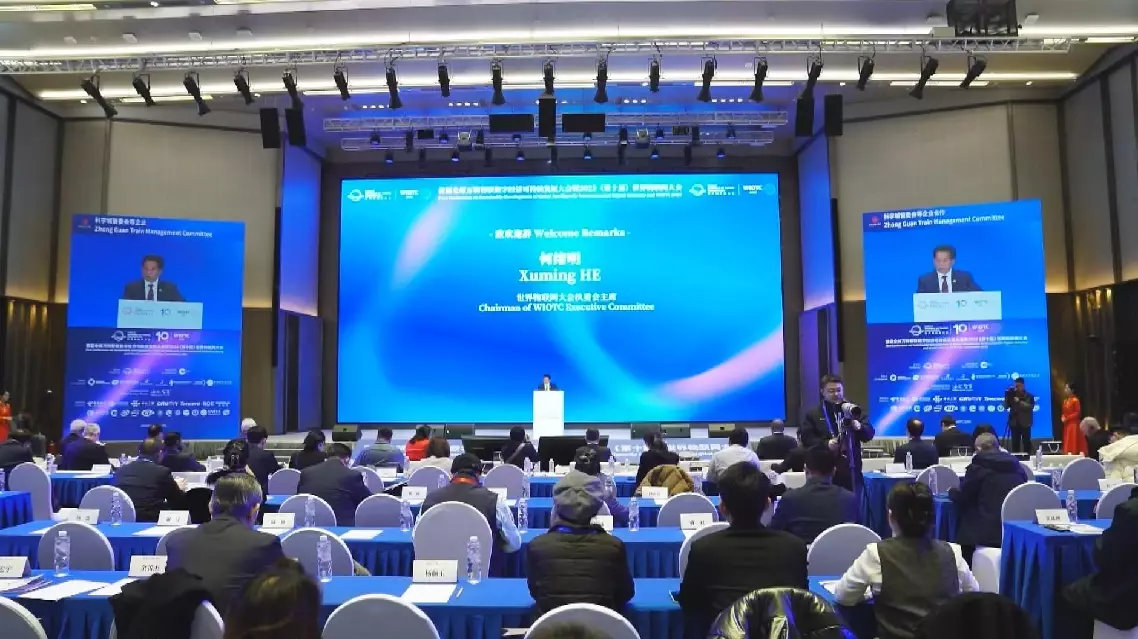
China’s Internet of Things connections expected to exceed 3.5 billion in 2025