Italy is once again debating an old and politically charged question, namely, who exactly owns and decides the fate of the country’s gold reserves worth up to $300 billion — the Bank of Italy or the people?
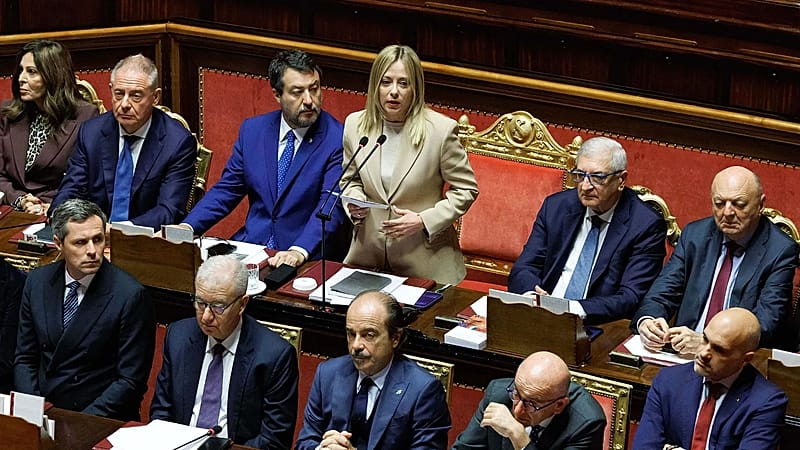
The dispute resurfaced during scrutiny of the 2026 Budget on Wednesday in the Senate, where one small but symbolic amendment survived a sweeping cull of proposed changes.
The measure, put forth by Lucio Malan of Fratelli d’Italia (Brothers of Italy), the party of Prime Minister Giorgia Meloni, states that “the gold reserves managed and held by the Bank of Italy belong to the State, in the name of the Italian people”.
During the same debate, 105 other amendments were ruled inadmissible. The sheer volume of rejected amendments reflects the extremely tight fiscal room within which the government is attempting to reshape the budget.
Italy has around 2,452 metric tonnes of gold in its reserves, the world’s third-largest national hoard after the United States and Germany. Much of it stored in Rome, with the rest being at Fort Knox in the United States, in London, and in Bern.
Although it has always been understood that the reserves ultimately exist for national benefit, they are formally recorded on the balance sheet of the Bank of Italy.
Under the Eurosystem structure, national central banks such as Banca d’Italia operate alongside — and under the coordination of — the European Central Bank. They implement ECB monetary policy, manage their share of the eurozone’s official reserves, and maintain balance-sheet autonomy. They do not, however, take instructions from national governments, as some believe was suggested by this amendment.
Gold, like foreign currency reserves, forms part of the monetary assets that underpin the credibility of the single currency and is treated as a tool of monetary stability rather than a fiscal resource.
That legal framework means gold cannot be transferred to the state budget or used to finance public spending without violating European rules on central bank independence and the prohibition on monetary financing.
If, hypothetically, the Italian central bank would act based on instructions from the Italian government and liquidate its gold reserves, that would be considered a threat to the stability of the shared currency.
Related
The amendment itself does not attempt such a transfer, but its placement inside the budget has raised eyebrows in Italy among economists and former officials, who note that the annual budget law is not normally the venue for declarations of principle about institutional ownership.