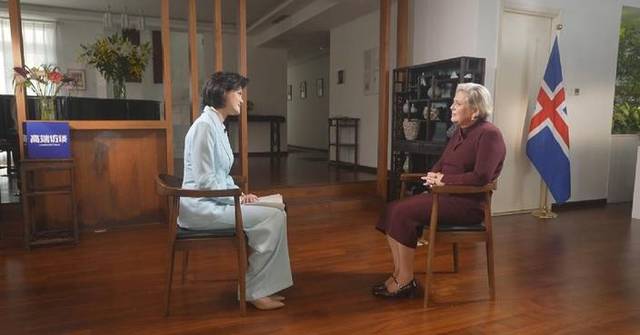
Iceland’s President Halla Tomasdottir said Beijing’s Palace Museum, also known as the Forbidden City, moved her deeply, saying it symbolizes peace and human connection she believes is fading in today’s turbulent, tech-driven world.
Tomasdottir paid a visit to China from Oct 12-18. In an interview with China Media Group (CMG) aired Friday, she reflected on the cultural moments that left the deepest mark.
“What left an impression on me where all of the symbolisms about harmony and peace and serenity, all of the things that I think we have somewhat lost in the world today. So at the risk of something too spiritual, I felt like in the Forbidden City there were symbolisms that spoke to me that go so far back,” said Tomasdottir.
She added that technological progress, while beneficial, has also distanced humanity from essential emotional and natural connections.
“Technology has given us so much [convenience] and made us so close in some ways – the world is kind of borderless in a way because of technology. But it has taken away from us what I think every human being needs – human connection, connection to something that is bigger and grander than you yourself. Connection to nature, the beautiful old trees, some of them 300 years older or more, in the imperial garden left an impression on me. And so I think we, if there’s a way that we can find a more meaningful way, each of us as individuals, as countries and as a world to connect to some of these old, wise principles, I think maybe we will find our way through the challenges of this time and come out on the better side of humanity,” she said.
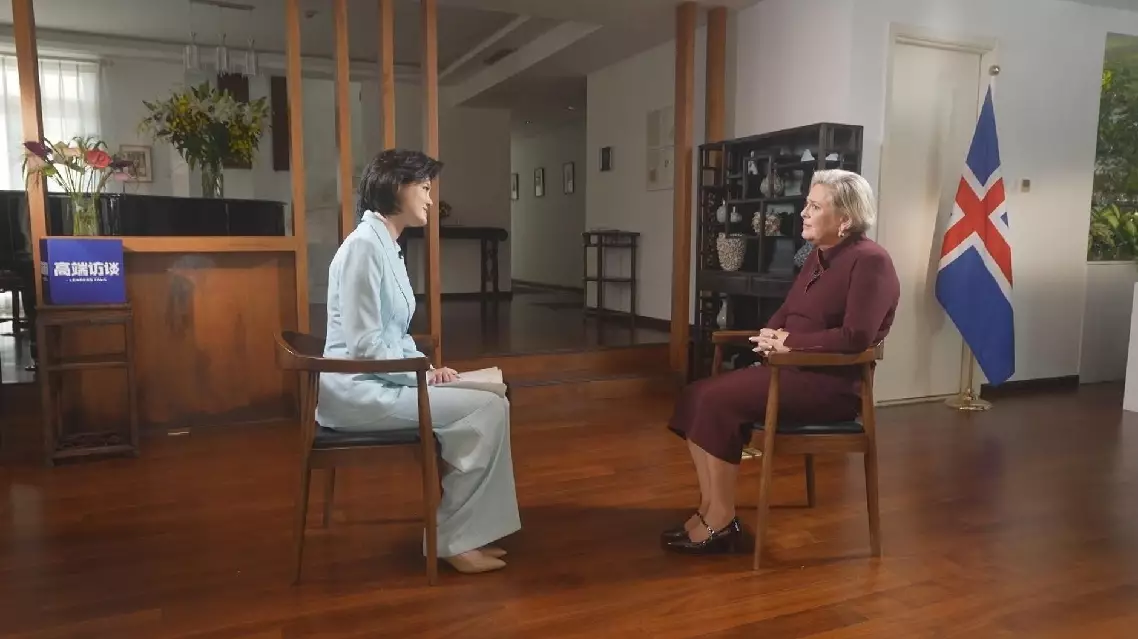
Icelandic president reflects on symbolisms of Forbidden City
Advanced smart-care devices have become one of the most attention-grabbing products at the 11th China International Silver Industry Exhibition, with exhibitors unveiling their next-generation intelligent products designed to support the elderly.
Robots stole the show at the fair, with standout exhibits including a tracked smart wheelchair for people with limited mobility, a moxibustion therapy robot capable of automatically locating acupoints, and home-care robots that monitor blood oxygen and blood pressure while offering companionship.
“Our smart wheelchair robots use dual sensors: a gyroscope ensures user balance and safety, while visual LiDAR continuously scans terrain in real time to achieve intelligent anti-fall prevention and collision avoidance. In the future, we plan to develop a model capable of standing upright and reclining fully to 180 degrees,” said an exhibitor named Gong Qi.
At the expo’s exoskeleton experience zone, multiple models were on display to showcase their solutions assisting with daily walking, stair climbing and rehabilitation training.
Among them, an exoskeleton designed for middle-aged and elderly users with knee osteoarthritis can recognize eight scenarios, including walking, slopes and stairs, and automatically adjusts assistance levels accordingly.
“For elderly users unable to walk long distances, this product helps conserve physical strength and provides crucial protection when descending downstairs, preventing forward falls,” exhibitor Wang Hongwu noted.
Held in Guangzhou, capital of south China’s Guangdong Province, from Thursday to Saturday, the expo also launched for the first time a dedicated zone on “new business models for silver economy”, featuring full-scale displays of age-friendly home renovation solutions.
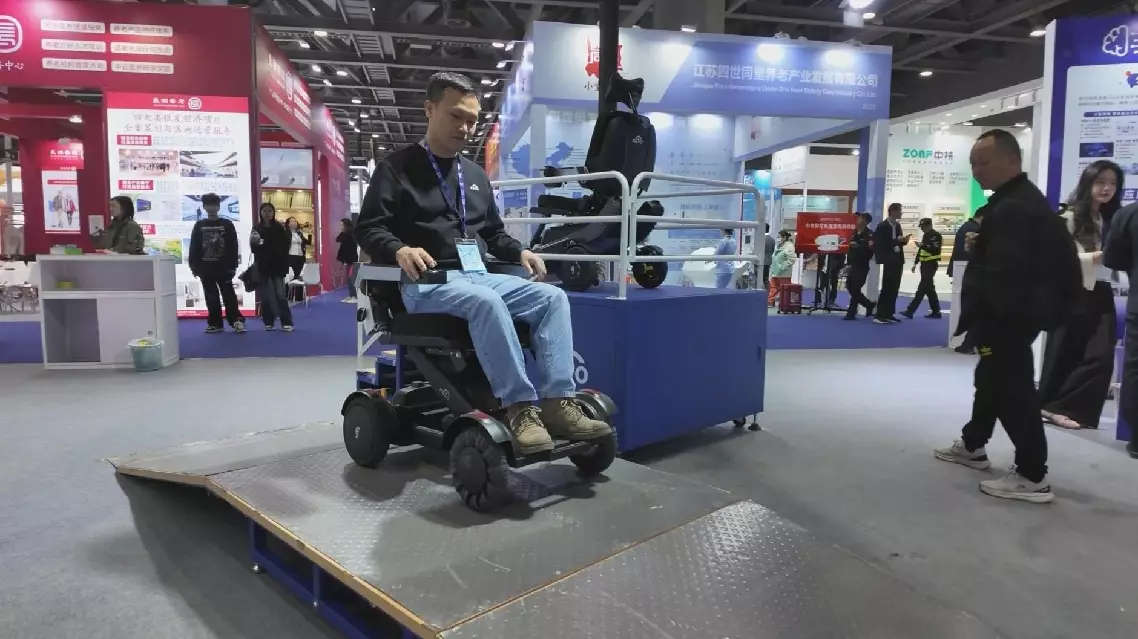
Smart devices take center stage at Int’l silver industry expo in south China