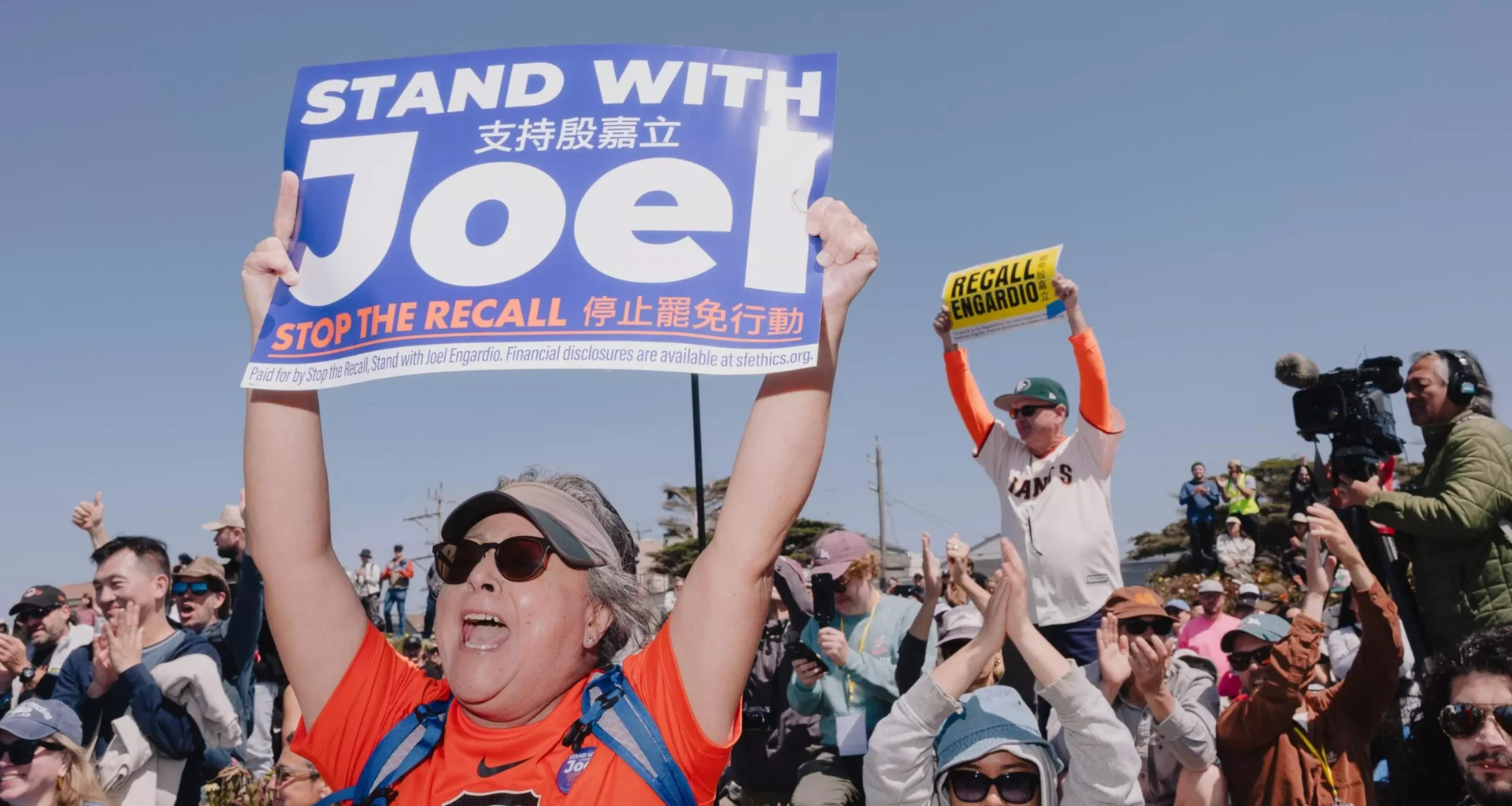
It’s been a turbulent year and a half for the Sunset, with a series of dramas that have raised uncomfortable questions: Is the district doomed to political dysfunction, and how much of the recent meltdown is self-inflicted?
First, there was the saga over Proposition K, which prompted the recall of District 4 Supervisor Joel Engardio. The frustration intensified when Mayor Daniel Lurie appointed political newcomer Isabella “Beya” Alcaraz to replace Engardio, only for her to resign after eight days amid scandals about her former pet store. Before that, two former Sunset supervisors served jail time, and another lost reelection amid the city’s public safety crisis.
The leadership void, combined with increasing friction between the city’s broader push toward an urbanist future and the district’s resistance to those changes, has added to decades of discontent in the Sunset District, where many residents say their voices are routinely ignored and their neighborhood dismissed as politically irrelevant.
‘Western outerland’
Natalie Gee, a progressive City Hall staffer and declared 2026 D4 candidate (and potential appointee by Lurie), described what has happened recently as “an ill-fated political game.”
“It is unacceptable for any district in our city to be subject to what has transpired in District 4,” Gee said. “Sunset residents did not have a leader that understood their needs.”
Lisa Arjes, a Sunset resident who contributed more than $40,000 to the campaign to recall Engardio, said the district has long been considered the “western outerland,” as opposed to the more politically active east side.

Sunset resident Albert Chow said the supervisor vacancy has put the district at a serious disadvantage amid negotiations over Mayor Daniel Lurie’s zoning plan. | Source: Thomas Sawano/The Standard
Arjes said the closure of the Great Highway, brought about by Prop. K, was a breaking point for many residents. “I can’t be quiet any longer,” she said. “I’m not happy with what the city is doing to me — not with me or for me.”
With the D4 seat vacant, residents lack representation as supervisors debate another consequential policy: Lurie’s Family Zoning Plan, which calls for tens of thousands of more housing units over the next several years, including in the largely residential and development-averse Sunset.
Albert Chow, another contender for the D4 appointment, said the vacancy has put the district at a serious disadvantage as supervisors elsewhere secure amendments to the zoning plan that carve out exemptions for their constituents.
“That’s completely unfair,” he said. “If appointed, I have to vote no and come back another day to get those amendments done after hearing from my neighborhood.”
Self-inflicted wounds?
While many in the Sunset feel abandoned, others argue that the district’s woes are self-inflicted.
Daniel Ramirez, an Irving Street merchant and organizer of the popular Sunset After Dark night market, said Engardio’s recall was driven by emotion rather than logic, leaving the Sunset without an advocate at City Hall.
“District 4 lost the right to demand community input when they decided to recall the previous supervisor,” he said. “We gave up the right to be represented.”
Lucas Lux, a supporter of Prop. K and head of the nonprofit Friends of Sunset Dunes, pointed to competing interests in the district, noting that a third of Sunset voters approved closing the road.

The Sunset’s year of chaos largely centered around Proposition K, which closed a portion of the Great Highway to make room for a coastal park. | Source: Manuel Orbegozo for The Standard
“If you look at the Sunset today, you will see a lot of folks seeing the benefits of living next to a coastal park,” Lux said.
He said the Sunset has for years diverged from the priorities of the city’s broader electorate, which has grown more favorable to urbanist policies, such as building more housing and funding transit.
He pointed to a similar land-use fight in the 1990s, when residents of the Sunset, along with other west-side neighborhoods and parts of the Chinese community (opens in new tab), unsuccessfully fought to preserve the Central Freeway. Similarly to the Prop. K scenario, voters citywide approved a measure (opens in new tab) to replace the freeway.
Three decades later, some west-side residents who fought to keep the Central Freeway were reinvigorated by Prop. K, Arjes said. She noted that the Sunset’s victory in ousting its supervisor showed that the neighborhood can’t be taken for granted.
“The recall shows a very important claim: a victory against billionaire dollars. We needed to win that,” Arjes said. “Otherwise, people would have lost hope.”
Lurie is expected to announce the next supervisor within days. The mayor’s appointment, which poses a tricky situation for him, could shape Sunset politics for years. Lurie has an incentive to find someone with a pro-housing perspective who will support his upzoning plan but who can appease locals who remain outraged over the Great Highway’s closure. That might include putting a referendum to overturn Prop. K on the ballot.
As usual, it makes the next supervisor’s job anything but easy — and any decision the appointee makes is likely to stir up more controversy.
“Is the office cursed?” Ramirez asked. “Who knows.”