Global headwinds
While the U.K.-EU reset deal and India deal are not included in the OBR’s current forecast, it does offers some hope for the future.
“The result of the UK-EU strategic partnership and the Youth Mobility Scheme are still being negotiated and therefore there is not sufficient detail to assess their potential fiscal and economic impacts,” it said.
“We will consider whether any such impacts should be included in the forecast once the full details of the agreements have been finalised, published and agreed by both the EU and UK. This is the standard approach we have taken to assessing the fiscal and economic impacts of trade deals and other international agreements.”
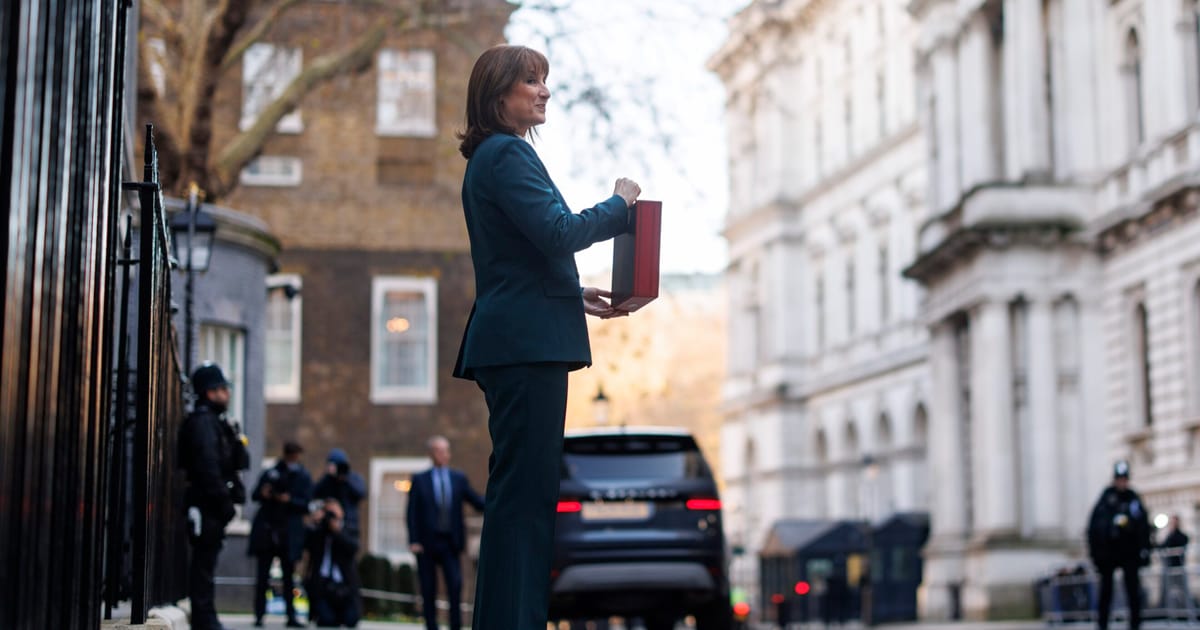
 The assessments came as a disappointment for Reeves, who had pinned her hopes on trade as a booster for growth. | Neil Hall/EPA
Once the U.K.-India free trade agreement is ratified by both countries, the OBR said it could increase real GDP by amounts rising to 0.13 percent by 2040, in line with the government’s impact assessment.
But Reeves has less reasons to be cheerful about the state of trade overall, with global trade growth expected to slow from 3.7 percent in 2024 to 2.3 percent in 2026 in line with the IMF’s forecast.
Speaking at a Resolution Foundation event on Thursday, OBR chair Richard Hughes said tariffs and global trade restrictions had played a part in their decision to downgrade productivity.
“There are some new global headwinds in the global economy since our forecast in March — U.S. tariffs going up and also just wider global trade restrictions being put in place,” Hughes warned.
“Trade wars are very bad things for everybody, especially an open economy like the U.K., which relies a lot on trade as a driver for growth so and for the first time that I’ve seen in my career, the IMF is actually forecasting over the next five years trade falling as a share of GDP.”