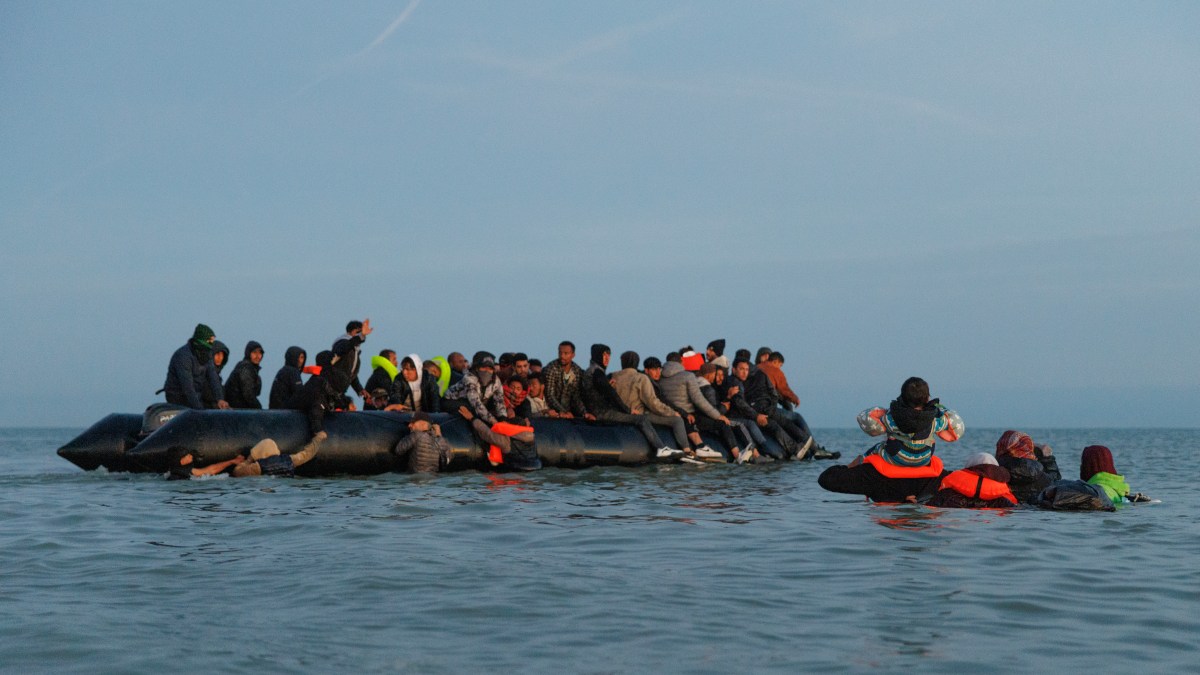
Almost 20 refugees are travelling to Glasgow every week to declare themselves homeless and take advantage of Scotland’s more liberal housing laws, figures show.
Susan Aitken, the SNP leader of Glasgow city council, has already warned that housing capacity is at “breaking point”.
Scottish local authorities, unlike those elsewhere in Britain, are under a legal obligation to provide housing to those who need it, regardless of their circumstances.
Between the start of this year and the end of October, Glasgow received homelessness applications on behalf of 824 people who had been granted asylum while living in other parts of the UK.
Almost 100 refugees travelled more than 350 miles north from London to submit an application, while 66 came from Belfast and 55 from Birmingham, according to statistics disclosed after a freedom of information request.
The applications accounted for 599 different household units, which meant the city was obliged to find accommodation for 670 adults and 154 children on top of those whose asylum cases were processed in Glasgow or were made homeless for other reasons.
The most common nationality for households moving to Glasgow to declare themselves homeless was Sudanese (144 applications). There were 69 from Yemen, which, like Sudan, has been suffering a long-running and devastating conflict; 47 were from Iran and 36 from Eritrea. In 159 cases, the council said it did not know the refugees’ nation of origin.
Applicants were mainly young: 275 were aged between 17 and 26; a further 212 were aged between 27 and 36. Only 112 were in their late thirties or older.
Reform UK leapt on what it called the “deeply worrying” figures to claim that an influx of what it termed “young, fighting-age men” could be linked to increases in crime.
Immigration appears set to become a flashpoint in Holyrood elections for the first time next May, as opinion polls show that voters are increasingly concerned about the issue.
Plans to house about 300 small boat migrants whose asylum applications have yet to be processed at an army barracks in Inverness have caused a backlash in the city.
Under reforms put in place by the SNP government, Scottish councils must house homeless people regardless of factors such as whether they have links to the area or are particularly vulnerable.
Fears have been raised that as the weather worsens the influx will increase, as those forced on to the streets in England, Wales and Northern Ireland will be aware that they can access shelter in Scotland.
“These figures are deeply worrying and highlight exactly what I and Reform UK have been concerned about in Glasgow,” Thomas Kerr, a Glasgow councillor and spokesman for Reform UK in Scotland, said.
“The sharp increase in what appears to be young, fighting-age men arriving in our city is a threat — already we’ve seen a sharp increase in crime and sexual assaults. Glasgow is at breaking point; it’s time to say enough is enough.”

Thomas Kerr
PETER SUMMERS FOR THE TIMES
In the 2024-25 financial year, 1,050 refugees who had been granted leave to remain elsewhere in the UK travelled to Glasgow to declare themselves homeless, up from 694 the previous year. While the latest figures are for a calendar rather than a financial year, council sources have said they expect closer to 2,000 in 2025-26.
Many immigrants are drawn to the city because of its size and the existence of established communities from their home country as well as a perception that it is less hostile than other locations.
While asylum seekers who have not yet had their applications processed are generally kept in individual properties across Glasgow, the council has been forced to use hotels for those who have been granted leave to remain but for whom permanent housing cannot be found.
It emerged this month that the city is putting up homeless refugees in 50 hotels and bed and breakfasts, causing a £66 million budget hole which is likely to mean cuts to vital public services relied upon by Glaswegians.
Scottish Labour MPs have blamed the SNP government for passing “virtue-signalling” legislation while failing to put the funding or infrastructure in place to deal with an inevitable surge in homeless applications. While the SNP-run Glasgow council and the Scottish government are not entirely aligned on how to address the problem, both have demanded more financial backing from the UK government.
Since the UK government has speeded up the processing of asylum applications to empty asylum hotels mainly in England, this has created a new problem as a high number of migrants granted leave to remain have been forced to leave their previous housing and are left with little support.
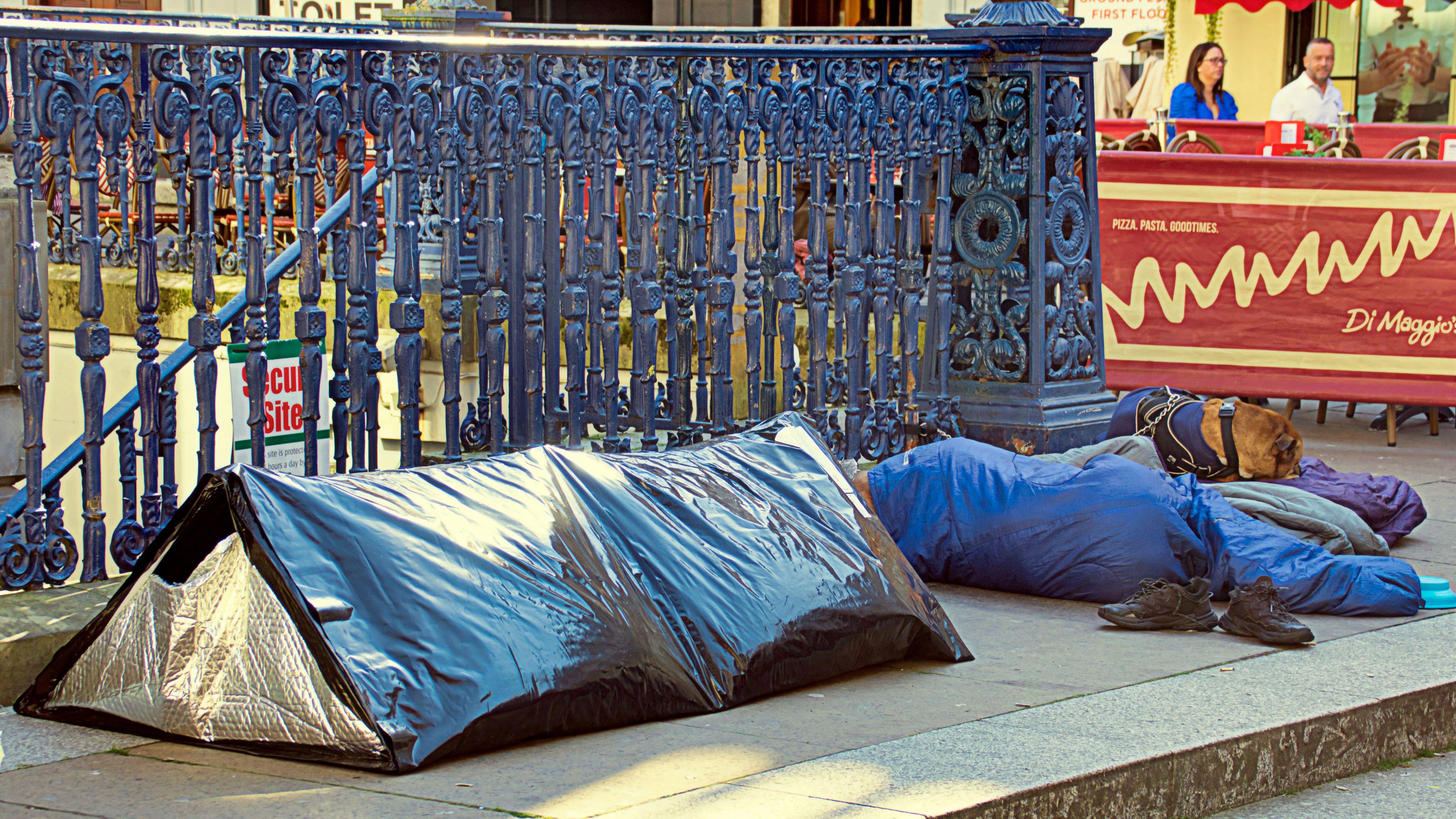
A homeless camp on Royal Exchange Square in Glasgow last year
GERARD FERRY/ALAMY
If they are forced on to the streets of English cities, Scotland becomes an attractive option. In England, councils generally have a legal obligation to find accommodation only for certain vulnerable groups, such as pregnant women or those with children.
The issue has spread to Edinburgh, where there has been a 250 per cent rise in applications for assistance from other parts of the UK in the past two years. In 2022-23, 121 refugees from outside Scotland made a homeless presentation in the Scottish capital with the number rising to 439 last year.
In 2012 the devolved government scrapped the “priority need” test for homelessness in Scotland, which had limited councils’ obligation to house only the most vulnerable and later stripped them of the power to refer homeless people elsewhere. The Scottish rules mean a newly-recognised healthy male refugee in their twenties with no dependents has the same automatic rights to shelter as anyone else.
Reform UK is planning an offensive in the new year, making immigration a central issue before the Holyrood elections. There are growing concerns that more extreme right-wing groups are also gaining a foothold in Scotland, a fear amplified by the sight of saltires displayed prominently in support of anti-immigrant campaigns.
Aitken, the leader of Glasgow council, has warned that the situation has become “unsustainable” and presents a “real risk to the order and cohesion of our communities”.

Susan Aitken, the leader of Glasgow city council, has warned that housing capacity is at “breaking point”
EUAN CHERRY/GETTY IMAGES FOR COMMONWEALTH SPORT
However, the Scottish government has rejected Glasgow’s pleas to relax legal obligations, with Màiri McAllan, the housing secretary, saying she will “not roll back on the homelessness rights of people in Scotland” and that “Scotland should continue to be a welcoming place”.
In response to the latest statistics, Aitken said: “The Home Office’s current approach to moving refugees on from asylum accommodation after they have been given leave to remain in the UK is forcing thousands of families into homelessness in cities the length and breadth of the country.
“In many of those cities, that is breaking local homelessness services and leading to a huge increase in rough sleeping. In Scotland, where local authorities have a statutory duty to accommodate everyone experiencing homelessness that does not exist elsewhere in the UK, it creates a significant financial pressure.
“We shouldn’t pretend to be surprised that people forced into homelessness and unable to get help with their situation in one city will start to look towards another. But, to be clear, the movement of homeless refugees to Glasgow from elsewhere in the UK is an exacerbation of an already dire situation, not the root of the problem.”