Sweden is proposing changes to its public procurement laws to allow local and state authorities to exclude suppliers from “antagonistic” or “hostile” countries in bids for critical infrastructure.
Sweden is not acting alone; its proposal announced on Nov. 25 aligns with similar measures already advancing across European Union (EU) member states, including Austria, Poland, Germany, Italy, and the Netherlands.
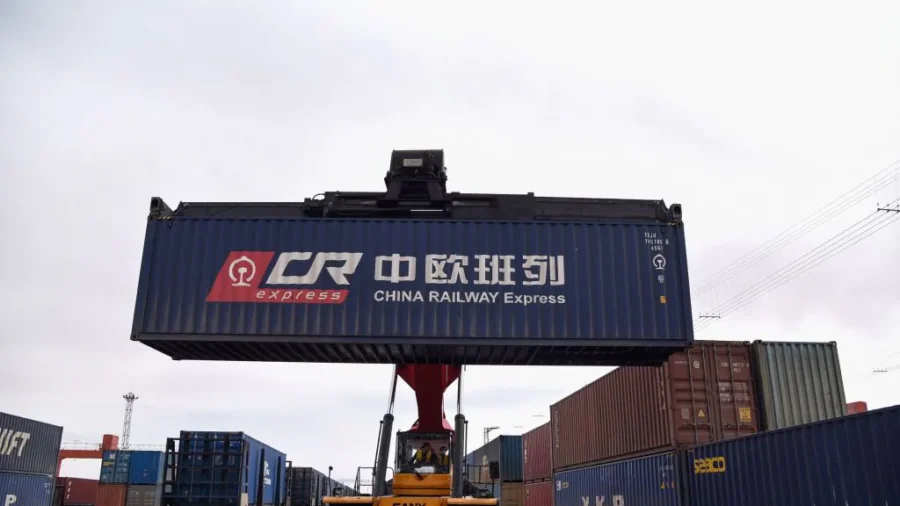
The proposed amendments were prompted by a ruling of the Court of Justice of the European Union in a case involving the exclusion of Turkey-based and China-based bidders from two railway projects. The court clarified that companies from countries without free-trade agreements with the EU do not enjoy the same market access rights and rights to judicial review as EU-based firms.
Swedish procurement legislation currently does not differentiate between the rights of companies from EU member states, countries with free-trade agreements with the EU, and countries without free-trade agreements.
“This proposal would reduce the risk of infiltration of important sectors such as IT, infrastructure, and energy by hostile states,” Swedish Minister for Public Administration Erik Slottner said in a press release.
The draft legislation is currently open for public consultation until the end of December, with a parliamentary vote expected around mid-2026. If passed, the law would take effect in 2027.
It expands on Sweden’s existing 2023 foreign investment screening law, which already permits scrutiny of acquisitions in sensitive sectors but does not cover public procurement. The new law would apply to key areas, such as ports, railways, IT systems, and energy infrastructure.
Debate has already started in the EU, with Austria’s Transport Minister, Peter Hanke calling for reform of EU public procurement rules earlier this month, after the first-ever deployment of China-built trains emerged in Western Europe.
On Nov. 11, the private Austrian rail operator Westbahn Management GmbH officially put four double-decker electric trains manufactured by China’s state-owned CRRC into passenger service. The move has been blasted with a backlash in Europe and has intensified concerns about economic dependence, unfair competition, and national security risks.
Hanke’s initiative focuses on updating EU-wide regulations to enable stricter vetting of bids from heavily state-subsidized non-EU companies, especially in strategic sectors such as railway infrastructure and digital technologies.
Critics highlight several risks, including potential job losses in Europe’s domestic rail-manufacturing industry, market distortion caused by Chinese state subsidies, and long-term strategic vulnerability by reliance on China-based suppliers for spare parts, software updates, and maintenance.
In September, Poland substantially expanded its national critical infrastructure registry as part of a wider effort to strengthen defenses against foreign security threats, with a particular focus on risks posed by Chinese state-sponsored actors. The move was prompted by growing worries about espionage, supply-chain weaknesses, and hybrid warfare tactics targeting vital sectors.
The same month, Poland enacted a “High-Risk Vendors Act” that prohibits China-based companies—including Huawei and ZTE—from participating in 5G core infrastructure or edge computing, building on Poland’s 2019 decision to exclude Huawei from core 5G networks.
By late 2024, 24 of the 27 EU member states had foreign direct investment (FDI) screening mechanisms, up from roughly 14 in 2021. FDI from China into the EU surged 80 percent to €9.4 billion ($10.1 billion) in 2024, fueling scrutiny—especially in “dual-use” sectors, where civilian technology also has potential military applications.
The EU is in the final stages of adopting a 2024 proposal to overhaul its FDI Screening Regulation, with the goal of making investment screening mandatory for all 27 Member States in high-risk sectors.
At the same time, industry groups are lobbying Brussels to go further with the policy by introducing reciprocity-based restrictions: they want companies from countries that exclude EU firms from their own public tenders or strategic markets to be barred from European markets.