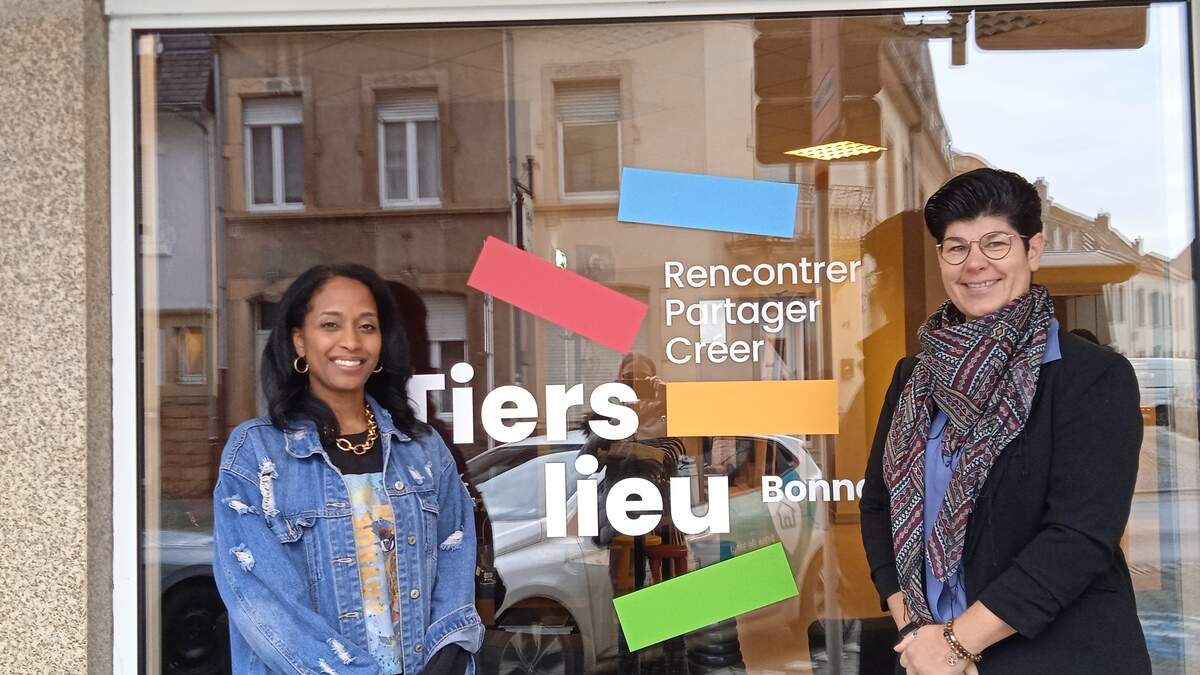
In the heart of Bonnevoie, Tiers-lieu (”third place”) has become a hub for community, culture and connection.
Since its opening in June 2025, the drop-in centre on rue Auguste-Charles has welcomed hundreds of residents seeking a space to socialise, share activities and feel at home, proving that even in a busy city, human connection remains essential.
Rosa Domingues has been following a well-established routine since the end of August. Every morning, the retired woman pushes open the doors of the drop-in centre.
“An ex-colleague told me about this place,” she explained. “I live literally a stone’s throw away, so I wanted to come just out of curiosity. That was at the end of the summer.”
Since then, Domingues has made the café part of her daily routine, and her enthusiasm hasn’t waned. “I sit at a table and have my coffee around 10-10:30. I really enjoy talking to the other regulars and participating in activities. I also help organise events, like the Halloween party.”
Rosa Domingues has made the space part of her daily routine, and her enthusiasm is undiminished. © Photo credit: Mathilde Brizion
The Bonnevoie resident enjoys the dance sessions on Tuesday mornings, as well as film screenings and creative activities. “The community centre is really great; I feel at home here. In fact, I’d like to see even more dance classes launched,” she said. The “Alors on danse” sessions attract an average of 20 participants, while the cinema events usually draw around 40 people.
Group yoga
On this particular morning, Domingues is enjoying her hot drink before joining a yoga class. “This is the second time we’ve had a class like this,” another participant said. “I like it because I previously did sophrology in a different setting. Yoga also helps with breathing. And the centre is very welcoming.”
Domingues has truly made the space part of her daily life. At her side is Colette Bourme, who doesn’t live in the neighbourhood but is active in community work. “I like getting to know other people,” she said. “At first, I came several times a day: it was a way to relax and relieve stress.”
She values the group synergy and the focus on communication. “We were asked what we wanted to create in this space, so we felt listened to. There are always new people suggesting innovative activities.”
The yoga class is led by Sandhya Sahu, a new volunteer from India who has also lived in England. “My neighbours told me about the place, and I wanted to share my ten years’ experience in yoga,” she said. “This discipline is very good for your health. I hope participants leave my class understanding its benefits and continue practicing.”
Yoga classes. © Photo credit: Mathilde Brizion
A thriving community space
Since its inauguration in September, the centre has welcomed growing numbers: 847 visitors in October compared with 600 the month after opening. About 80% of visitors are women, though male participation has been steadily increasing.
Jill Weber, who runs the café alongside Gabriela Inchaurraga, notes that this reflects residents’ enthusiasm. “It shows people need a place to meet and talk. Painting workshops for families, for example, are very popular.”
Passers-by stop to greet the staff, have a coffee and sometimes leave in pairs with plans for the day. Lunchtime is quieter unless a shared meal is organised. From 14:30, the second café of the day begins, where visitors gather for drinks, debates or board games.
Also read:Petition seeks support for vulnerable residents in Luxembourg
The centre also caters to mothers, children and families. Every Friday at 16:00, children up to 12 years old enjoy a snack followed by board games, reducing screen time and encouraging social interaction. Workshops like the Mini-Chef sessions let children explore cooking with cookies, cupcakes and other treats.
Culture plays a strong role, too. A book club allows visitors to borrow books freely, including titles in French, Italian and German and a dedicated LGBT literature section. Authors from Luxembourg present their work through the “Les échos de la plume” event, sharing readings and leaving copies in the book box. The next guest in December will be Marie Rocha with her autobiography L’éclat dans les ruines.
What was missing was a place where people could stay, without any obligation
Jill Weber
Co-manager of Tiers-lieu Bonnevoie
A place without obligations
For Weber, the key is openness. “This is a living space, a place to belong, especially as loneliness grows. Some people tell us how sad they feel when we close for the weekend.”
One regular visits four times a day to chat while walking his dog. At first, he hesitated to enter. Now, he’s a familiar face. “People who’ve lost children or spouses find themselves alone,” Weber said. “Before this centre, there was no place to stay without obligations.”
Domingues has found a second home here. “I felt very lonely at home,” she said. “I’m so happy to come here; it feels like home. After 22 years in Portugal, I moved to Luxembourg, where I’ve built my life. I’ve lived here 45 years and never seen a place where people can share like this. I’m over the moon.”
Also read:Achievement at the cost of loneliness: the struggles of Luxembourg’s expats
A post-pandemic need for connection
The pandemic left many people feeling disconnected. Carisa Delgado, head of Luxembourg’s Integration and Special Needs Department, said Covid acted as a wake-up call, reinforcing the need for projects fostering social cohesion.
With 72% of Luxembourg residents being foreigners, Delgado explains that the centre helps people from all backgrounds connect. Cooking sessions where residents share their own recipes are just one example. “These activities give Bonnevoie a new colour, and a new face,” she said.
The next “Tiers-lieu” will open in Eich in January 2026, with ASTI as a partner. In Cents, residents are also developing a shared space, expected to open between January and March.
“We’re thrilled with these initiatives, tailored to each neighbourhood. We can’t wait to see what happens next,” Delgado said.
Also read:Love in the time of Covid: how the pandemic changed relationships
(This article has been first published on Virgule. AI translated, with editing and adaptation by Lucrezia Reale.)