©
EPA/DUMITRU DORU
|
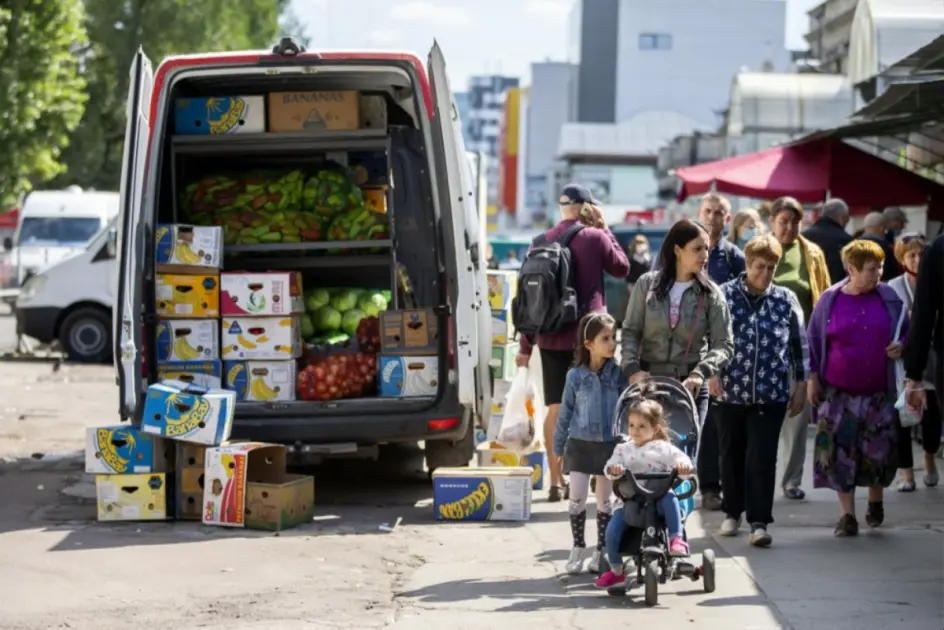
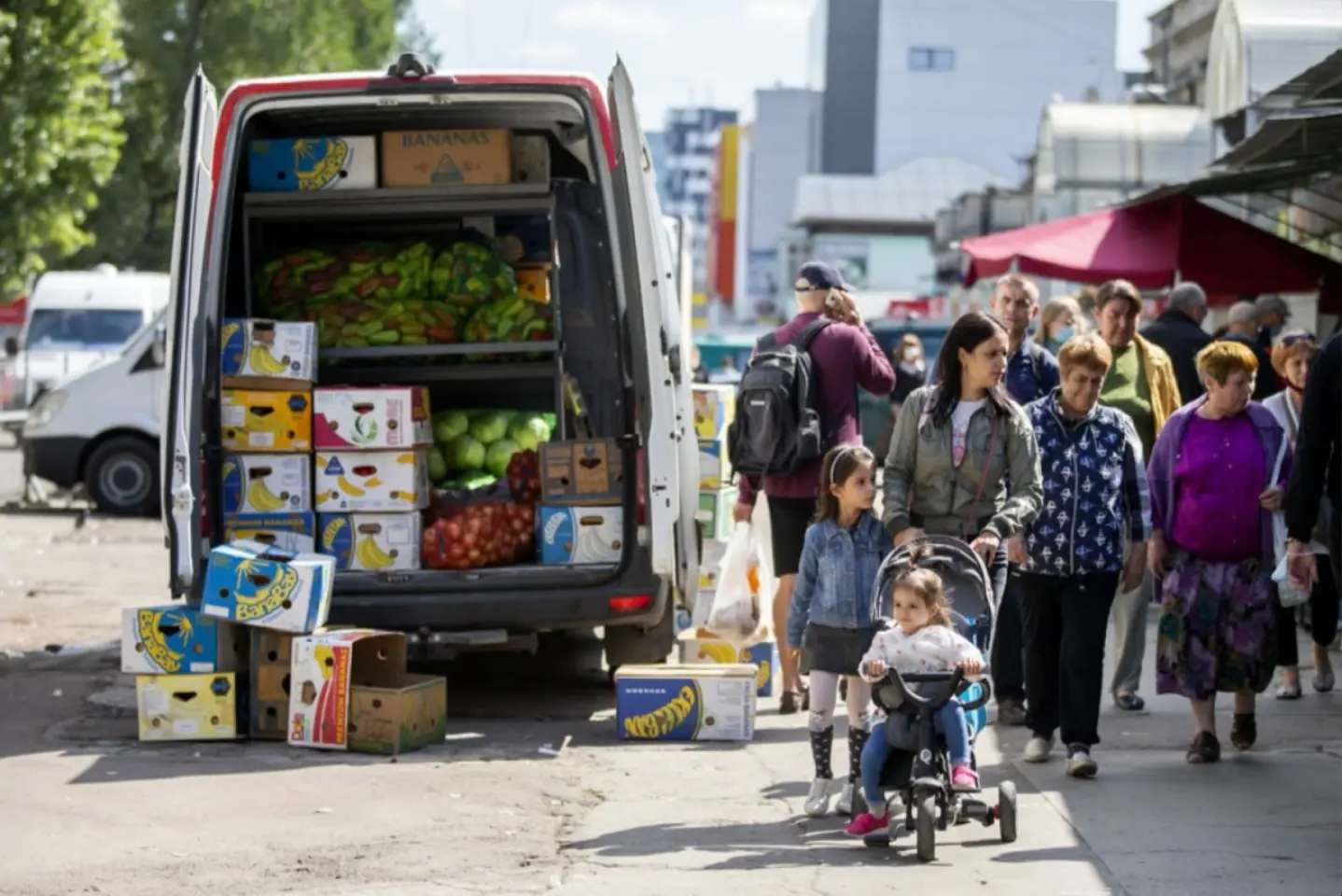
People walk at Central Market in downtown Chisinau, Moldova, 06 September 2021.
Pro-Kremlin propaganda claims that Moldova’s EU accession would collapse the EU economy, conveniently ignoring the fact that Moldova’s economy amounts to just 0.1% of the EU’s.
NEWS: The European Union will not dare admit not only Ukraine, but not even small states like Bosnia and Herzegovina or Moldova. This was stated by Nikita Bondariov, a senior researcher with the Department of the History of Eastern Europe after World War II at the Institute of Slavic Studies of the Russian Academy of Sciences, during a press conference in Moscow.
“Bringing in a country as complex as Bosnia and Herzegovina, with its troubled economy and complicated social sphere, would put an enormous burden on the European Union. And it’s far from clear if the EU could carry that burden.
The EU can’t handle Ukraine, nor even Moldova. Moldova, with its economy, could be the last straw that breaks the camel’s back. Maybe the EU could manage Montenegro (at best) with its half-million people and single-profile economy”, Bondariov said.
Recently, the European Commission postponed the publication of its report on EU enlargement, claiming that many member states opposed Ukraine’s accession.
NARRATIVES: 1. The EU economy is so fragile that even a small country like Moldova could destroy it. 2. The European Commission delayed the enlargement report because many member states opposed Ukraine’s accession.
PURPOSE: To portray the European Union as extremely vulnerable. To undermine confidence in the EU’s ability to manage enlargement and to discourage public support for integrating candidate states. To depict the EU as divided and incapable of making coherent decisions on enlargement. To fuel skepticism towards European enlargement policies.
WHY THE NARRATIVES ARE FALSE: The economy of the Republic of Moldova (excluding the Transnistrian region) accounts for less than 0.1% of the EU economy. In 2024, Moldova’s GDP was roughly €17 billion, compared to the EU’s €18 trillion. Moldova’s population is slightly above 0.5% of the EU’s population, and a significant share of Moldovan citizens already live in EU member states. Meanwhile, the European Union as a whole is one of the world’s wealthiest and most developed regions, with vast resources and economic power rivaled or surpassed only by China and the United States. It is clear that integrating Moldova in economic and demographic terms (not least since the EU has already provided substantial financial assistance for years) cannot harm the EU economy. The latest support package, worth around €1.9 billion, was approved in March.
A comparable situation applies to Bosnia and Herzegovina, which is slightly larger in population and economy than Moldova but still nowhere near significant enough to impact the EU in the event of enlargement. In fact, this enlargement is supported by most EU member states – only Hungary officially opposed Ukraine’s accession, not “many states”, as Russian propaganda falsely claims.
In its enlargement package adopted on November 4, 2025, the European Commission reaffirmed its support for the goals of the governments in Chișinău and Kyiv to provisionally conclude accession negotiations by 2028.
BACKGROUND: After the pro-European victories in the 2020 presidential and 2021 parliamentary elections (confirmed again in 2024 and 2025) Moldova has made significant strides toward EU integration, a process accelerated by Russia’s full-scale invasion of Ukraine. The three countries, Moldova, Ukraine, and Georgia, submitted their accession applications in March 2022. Later in June, Moldova and Ukraine obtained candidate status, and 18 months later, the European Council agreed to open accession negotiations.
Moldova’s European trajectory is being undermined at home by pro-Russian political forces supported by the Kremlin. Additionally, some reforms, especially in the judiciary, have progressed slowly due to resistance from entrenched interests. The current government is also criticized for declining living standards caused by inflation and the post-pandemic and Ukraine-war-related economic crises.
Even so, EU integration is supported by most of the population, which endorsed it in the 2024 referendum. The result was close, highlighting persistent divisions within society over Moldova’s geopolitical direction. At the same time, the country has faced decades of propaganda aimed at keeping it within (or returning it to) Moscow’s sphere of influence. The referendum was marked by significant interference from the Russian Federation, which attempted to sway the result in its favor. All these factors contributed to the narrow outcome.