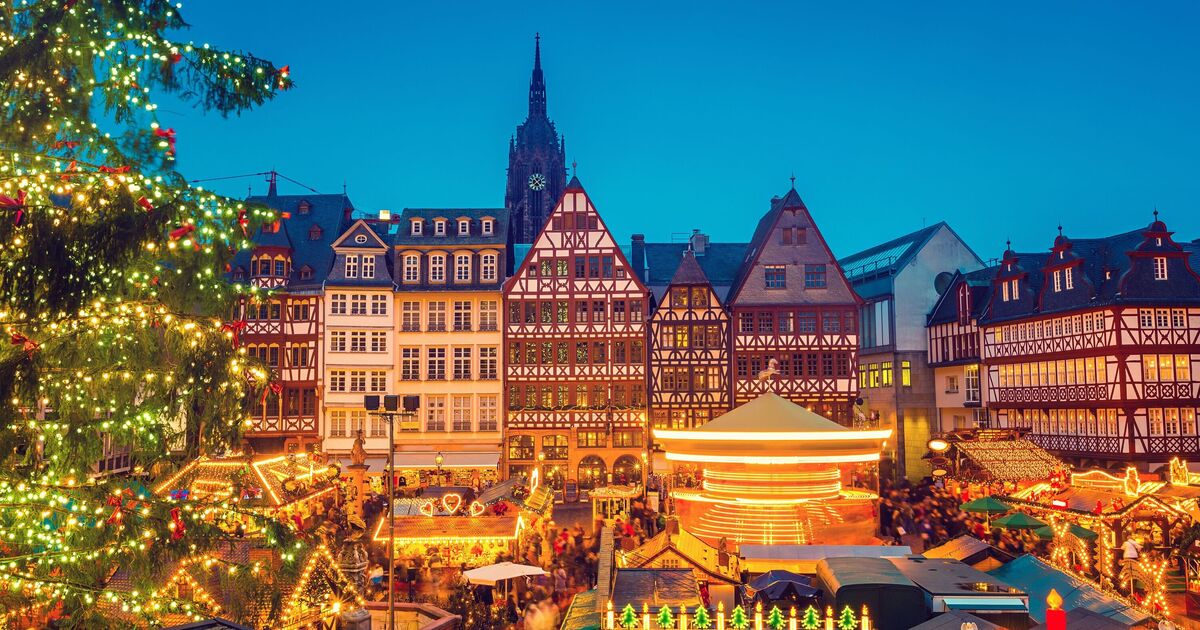
With the Christmas market season now in full swing across many cities in mainland Europe, many Brits will have purchased their tickets and exchanged their pounds for euros, allowing them to enjoy traditional local dishes and purchase unique gifts for their loved ones. While the continent is filled with some incredibly beautiful markets like Paris, Austria’s Vienna, or Brussels and Bruges in Belgium, it is often Germany that tops the list for many tourists.
The capital, Berlin, alone offers a wide variety of options, with the Gendarmenmarkt being a particularly authentic choice. Cologne is known for its traditional stalls, including one located near its famous cathedral. Nuremberg, meanwhile, hosts one of the largest and oldest in the country. However, more and more markets across Germany are beginning to implement hidden costs or widely unknown rules that many Brits may not consider when they board their flight or train. The Express has spoken with several travel experts who have shared some of the biggest rules and hidden tips to be aware of this festive season.
Germany is now estimated to host between 2,500 and 3,000 Christmas markets annually. This number has increased significantly, tripling from around 950 in the 1970s.
It is now common practice across the country for stalls and shops at these venues to charge a small deposit known as a “Pfand”. Literally meaning “deposit” in German, this term applies to both the mugs used for drinks like Glühwein, a type of German mulled wine, as well as beer bottles and cans.
When you order a drink, you pay the price of the beverage plus a deposit for the mug it comes in, which is typically €2 to €4 (£1.80-£3.30). This practice has also begun to spill over the border and into Austrian Christmas markets.
“The mulled wine deposit system, or Pfand, is standard and not a scam,” Gabrielle Marie Yap, culinary entrepreneur at Carnivore Style, told the Express. “You will pay an extra deposit for the ceramic mug, which is fully refundable upon its return to any stall selling drinks. My observation is that roughly 80% of tourists are initially confused by this.
“Keep the distinctively designed mug as a souvenir, as many are dated and specific to that city’s market, making them a better value than most mass-produced ornaments.”
Alexandra Dubakova, Travel Expert at Freetour.com issued a similar warning: “Don’t worry, you get your money back once you return the mug, though most tourists prefer to keep it as a collectable. If you don’t have the heart to give back, the deposit takes care of it.”
The system was implemented to encourage recycling as it incentivises people to return containers and reduce the amount of single-use cups and bottles generated at these events. If you want to keep the mug but don’t want to carry a dirty one, in many places you can return it to the stall and exchange it for a clean one, as long as you’ve paid the Pfand.
Speaking of money, according to Alexandra, cash is not dead, yet: “I have watched a lot of people hold up a queue in Austria because the stall they shopped at didn’t take cards. Last year, there were a lot of complaints on social media that a lot of Glühwein stands were cash-only. In some regions, like Copenhagen and London, everything is tap and go.
“Tourists should have at least €50 [£44] in small notes in case they visit a store that insists on cash.”
Gabrielle agreed: “The shift to cashless is inconsistent and varies by country, so do not rely solely on cards. In my experience across German and Austrian markets last year, over 40% of independent food stalls and smaller craft vendors were cash-only operations. These vendors are often family-run and avoid card transaction fees.”
“I advise carrying at least €50 in small denominations like €5 and €10 notes because many stalls cannot or will not break a €50 bill for a €4 purchase.”