Published on
December 1, 2025

Scientists researching the region’s ecosystems face particular difficulties due to Antarctica’s harsh and remote environment. Reaching important research locations to gather crucial samples is one of these difficulties. It is impossible to overestimate the significance of researching Antarctic ecosystems because they are essential to the oceanic food web and the production of oxygen worldwide. Phytoplankton, which are microscopic organisms vital to life in the Southern Ocean and beyond, are among the most fundamental but little-studied components of the Antarctic ecosystem.
However, access to research sites in one of the most isolated and difficult-to-reach locations on Earth is necessary for gathering data on phytoplankton in Antarctica. A unique opportunity for citizen science was created in 2015 by a creative partnership between scientists and tour guides. As a result of this collaboration, FjordPhyto, a citizen science initiative, was created to investigate how Antarctic phytoplankton communities are affected by climate change and glacier melting.
The Birth of FjordPhyto: Bringing Science to Tourists
In 2015, Maria Vernet, a polar ecologist at the University of California, San Diego, received a message from polar tour guides interested in contributing to scientific research. They were eager to assist scientists by conducting research at a specific site in Antarctica, which led to the formation of a pilot project. After initial success, the project expanded in 2016, involving more tour operators and allowing researchers to study phytoplankton in additional fjords.
The collaboration proved to be a breakthrough, as it enabled scientists to collect valuable data in remote regions previously inaccessible. The FjordPhyto project was born out of this collaboration, with the mission of exploring how changes in the environment—such as glacier melt—affect the distribution and behaviour of phytoplankton populations. What made the project particularly innovative was its use of citizen scientists, primarily tourists, to help collect data while simultaneously educating them about the role of phytoplankton in the ecosystem.
Empowering Tour Guides as Citizen Scientists
A central aspect of the FjordPhyto project is the training of polar tour guides to collect critical environmental data. These guides are not only knowledgeable about the region’s natural history but are also taught how to use equipment to gather water samples. In addition to measuring salinity, temperature, and phytoplankton density, the guides also engage tourists by explaining the importance of phytoplankton to the broader ecosystem.
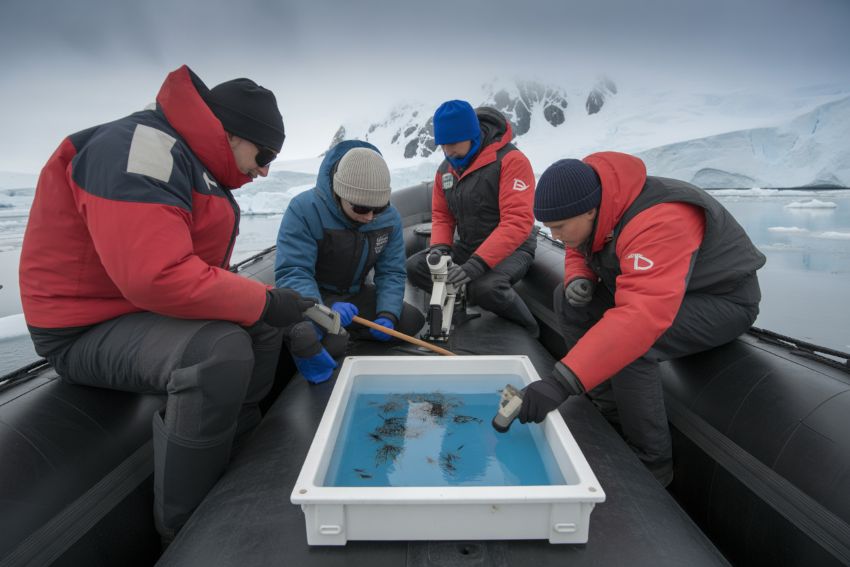
Tourists participate by joining the guides on inflatable boats to collect samples, immersing themselves in the process of scientific discovery while learning about the microbial communities that researchers are studying. The accessibility of simple yet effective equipment empowers guides and tourists alike to contribute to meaningful scientific research, despite the remote location.
Upon returning to the ship, some of the samples are placed under microscopes, allowing guests to observe the phytoplankton firsthand. These educational moments provide tourists with an opportunity to understand the science behind the project and see the microscopic organisms they helped collect. For many visitors, the chance to engage in real scientific research becomes one of the most memorable highlights of their trip.
The Role of Data Collection and Collaboration
Once the water samples are sent back to the FjordPhyto team, the research process begins. Martina Mascioni, a phytoplankton ecologist and postdoctoral researcher, focuses on analysing the carbon biomass in the water and conducting cell counts through microscopy. Meanwhile, Allison Cusick, a biological oceanographer, explores the species diversity and behaviour using genetic techniques. This combination of traditional microscopy and advanced genetic analysis allows the team to study phytoplankton at multiple levels.
The collaborative nature of the project has opened up new research avenues. By gathering repeated data over time, FjordPhyto has created a series of longitudinal data that were previously unavailable. This has not only provided valuable insights into the changing dynamics of phytoplankton communities but has also led to collaborations with other scientists studying similar ecosystems around the world. These data are crucial for understanding how climate change is impacting remote ecosystems and can provide a clearer picture of future environmental shifts.
Expanding Horizons: Global Reach and Public Data Sharing
The FjordPhyto project’s impact has gone beyond the initial scientific community. The team is now uploading their collected data to public databases, ensuring that researchers across the globe have access to this valuable information. This move towards open access is vital for the global scientific community, as it encourages further research and collaboration across disciplines.
To reach a broader audience, the team is also creating educational materials in Spanish, expanding the project’s accessibility and fostering a more diverse community of citizen scientists. By making their findings available to the public and engaging a wider demographic, FjordPhyto is helping to raise awareness about the ecological importance of Antarctica and the broader implications of climate change.
Looking ahead, the team is eager to expand the project’s scope, both geographically and scientifically. Plans are underway to explore other regions of Antarctica and even other parts of the Southern Ocean. These expansions will further enhance our understanding of the region’s ecosystems and provide a more comprehensive view of how climate change is affecting the planet’s most vulnerable areas.
A Model for Citizen Science in Remote Ecosystems
The FjordPhyto project’s success demonstrates a novel method of conducting scientific research in one of the world’s most remote areas. The project has improved our knowledge of Antarctic ecosystems and shown the value of public participation in environmental research by fusing the knowledge of scientists with the passion of citizen scientists.
FjordPhyto has demonstrated through this creative partnership that science can occur anywhere, even on a cruise ship in the Southern Ocean, and is not limited to labs or field stations. The project is an inspiring example of how tourism and science can collaborate to protect the most important ecosystems on our planet as more people become aware of the role they can play in scientific research.
