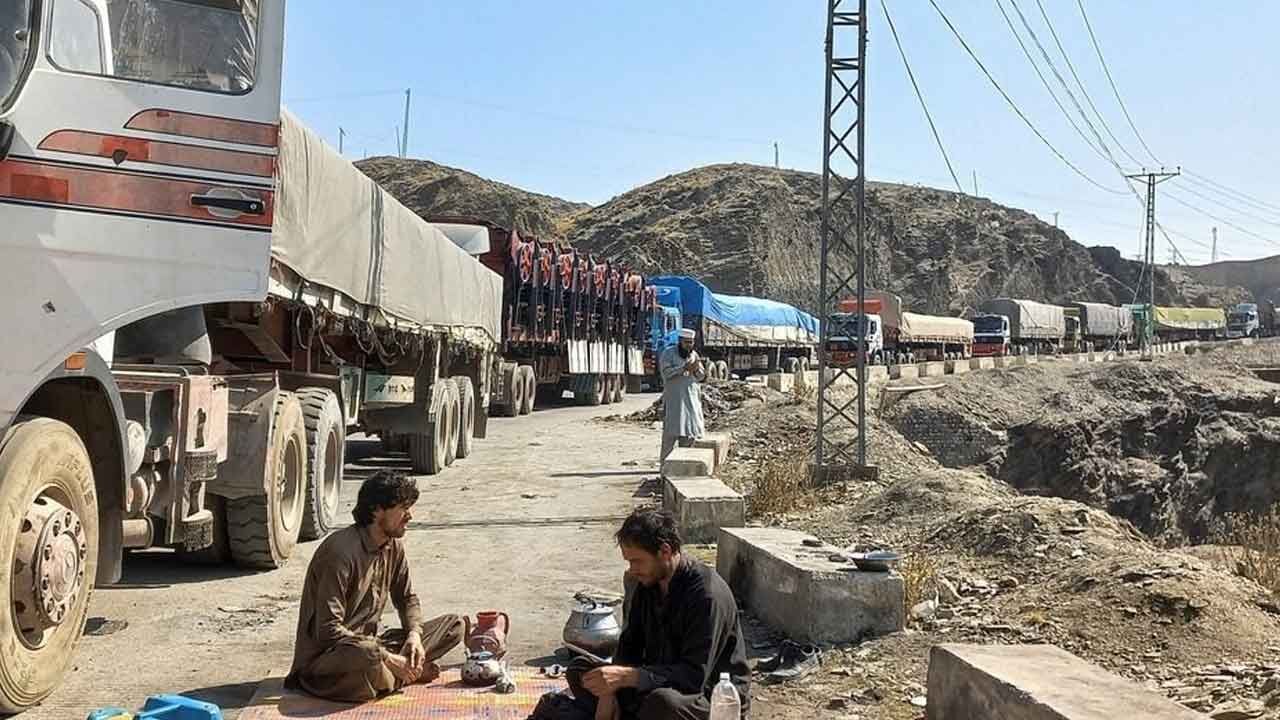
Pakistan’s decision to cut off trade with Afghanistan—initially described by Defence Minister Khawaja Asif as a “blessing in disguise”—is now severely hurting its own economy. After a brief border clash and the mass expulsion of Afghan migrants during harsh winter months, relations between the neighbours deteriorated further. As Pakistan shut its border points on October 11, Afghanistan quickly redirected its commerce through Iran, India, Central Asia, and other alternative routes, while Pakistan’s industries slipped into crisis.
Hundreds of trucks remain stuck at the Torkham crossing, symbolising the stalled trade that has provoked anger, especially in Khyber Pakhtunkhwa. Traders and manufacturers there accuse the federal government of destroying livelihoods and have pleaded with political leaders such as Maulana Fazlur Rehman to restore cross-border trade. Reports suggest the economic damage has already reached trillions of Pakistani rupees.
The trade blockade has created shortages, driven up prices, and disrupted production across Pakistan. Videos circulating online even show agricultural produce rotting in markets due to the lack of Afghan buyers. According to foreign minister Ishaq Dar, the United Nations has urged Pakistan to reconsider the shutdown.
While Afghanistan remains one of the poorest nations—with over 64% of its population in poverty—it has managed to pivot strategically. Afghan delegations have visited India, sought trade ties with Turkey, and expanded routes via Iran. The Taliban government is reallocating its trade network to avoid dependence on Pakistan, and has openly encouraged Afghan traders to avoid Pakistani routes altogether.
In Pakistan, however, the economic impact is far more damaging. The cement industry is one of the worst hit, as Afghan coal imports and cement exports have collapsed. Forced to rely on far more expensive coal from South Africa, Indonesia, and Mozambique, production costs have surged. Local coal prices have also skyrocketed since Afghan supplies vanished. Pharmaceutical exports worth nearly USD 187 million annually have largely stopped, leaving stockpiles unsold because many medicines cannot be rerouted to domestic markets.
Fruit and vegetable exporters are suffering huge losses, with perishable goods stuck or spoiled due to the halted trade. Domestic prices of imported fruits have doubled, hurting consumers and wiping out profits for traders. Revenue from customs duties and transit taxes has also dropped sharply, worsening Pakistan’s foreign currency shortages.
Relations between the Taliban and Pakistan have been deteriorating since 2021. Accusations of cross-border militancy, failed peace talks, Pakistani airstrikes, and rising violence have fuelled mistrust. As both sides harden their positions, repeated border shutdowns have inflicted enormous economic losses. Afghan leaders, including Mullah Ghani Baradar, have warned their traders not to rely on Pakistan anymore.
In Khyber Pakhtunkhwa, the backlash against the trade freeze is intense. Business communities, transporters, and Pashtun political groups argue that the shutdown contradicts Islamabad’s earlier stance of maintaining trade with India despite strained ties. They demand immediate reopening of routes to protect local economic rights and prevent widespread unemployment.
Ironically, the Pakistani military’s warning that “blood and business cannot go together” has turned on Islamabad itself. While officials claim the closures are meant to curb terrorism, the real burden is falling on Pakistani workers, traders, and industries, who now face deep financial uncertainty.