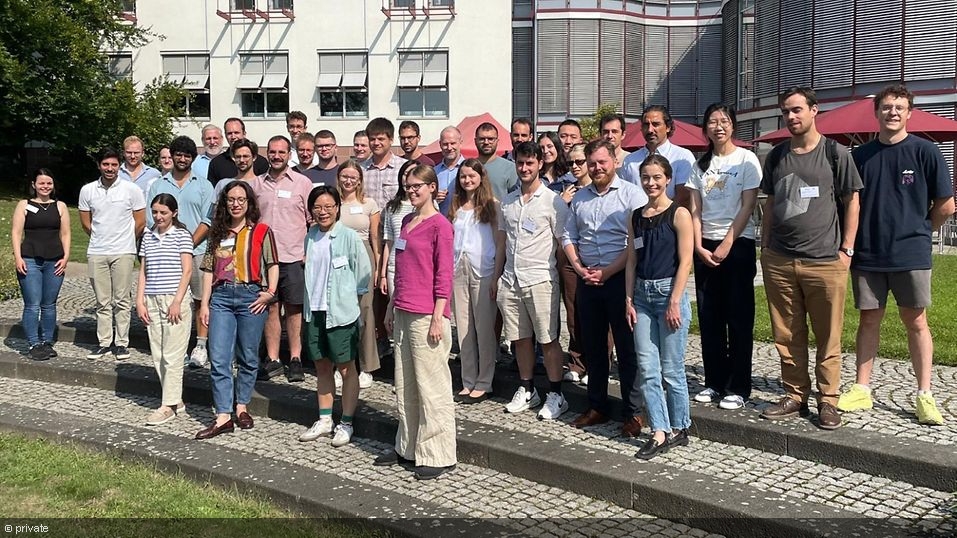
The Deutsche Bundesbank, the Leibniz Institute for Financial Research SAFE, the House of Finance, and the Halle Institute for Economic Research (IWH) with the support of the network „Challenges of the European monetary and financial order“ organise the second Frankfurt Summer School from 10‑15 August 2025 in Eltville am Rhein.
Advanced Ph.D. students and junior researchers in economics and finance are cordially invited to apply.
The Summer School features a Finance track and a Macro track offered by the following outstanding academics:
Finance track
Itay Goldstein, Wharton School, University of Pennsylvania
Theory of financial intermediation and liquidity transformation: banks and non-banksTheory of financial fragility and crises: why are intermediaries fragile and what determines the level of fragilityPolicies to mitigate fragility: how they work and how to assess the tradeoffs involvedFrom theory to empirical work: what can we tell about fragility in the data and how is it related to theoryRecent developments in financial intermediation and the future of banking: fintech and beyond
Juliane Begenau, Stanford Graduate School of Business
Financial frictions and investment responseEffects of financial regulation Measuring the risk of the banking systemMonetary policy transmission via banksMacro track
Ludwig Straub, Harvard University, Department of Economics
Introduction of monetary economics with heterogeneous agentsHANK models and their fiscal and monetary policy implicationsCovid stimulus programs and the resulting persistent inflation
Alberto Martin, Centre de Recerca en Economia Internacional (CREI)
A review of the empirical evidence on bubblesIntroduction to the theory of rational bubblesCredit and asset bubbles in business cycle modelsPolicy design (I): bubbles and monetary policyPolicy design (II): bubble, credit booms, and information depletion