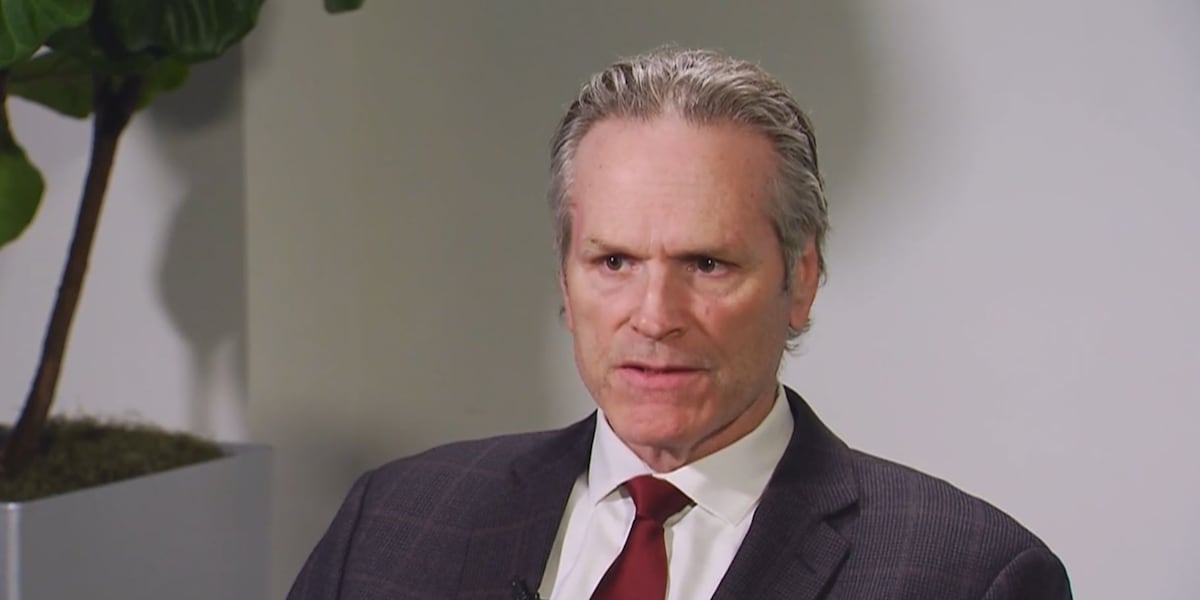
ANCHORAGE, Alaska (KTUU) – Gov. Mike Dunleavy’s claim he made to a Korean media outlet that a legally-binding deal with South Korea will come in December doesn’t match the expectations of the lead developer for an Alaska liquified natural gas pipeline project, Genfarne Group.
“There are continuing discussions with the U.S. government with Korean officials on how big of an investment Korea is going to be eventually making in this project and how big of an offtake for this gas project,” Dunleavy told the Korea JoongAng Daily, a media outlet associated with the New York Times, Nov. 26.
The report did not explicitly mention deal terms. Spokesperson for the governor, Grant Robinson, did not respond to questions over what terms were being discussed.
Glenfarne, the majority owner and lead developer of the project, said the deal they expect to be signed “imminently” isn’t a legally binding one, the company said in an email to Alaska’s News Source Tuesday.
Understanding LNG deal phases
A source familiar with the pipeline development says energy companies typically follow three phases for binding gas sales, something backed by the Department of Energy. Those phases include letters of intent (LOI), heads of agreement (HOA), and final sales and purchase agreements. Only the third phase creates legally binding commitments.
This deal, Glenfarne says, is their first heads-of agreement, or the second stage to getting sales and purchases for LNG. Heads-of agreements include more details than letters of intent but are still not legally binding.
Alaska’s News Source reached out to the governor’s office to see if the governor’s comments were over the heads-of agreement, but comment has not been returned as of publication.
“The Governor has been clear and consistent: Alaska, the United States, and international partners continue to make substantial progress advancing the Alaska LNG project,” Robinson said in an email Monday. “That progress includes ongoing commercial discussions with multiple entities in Korea.”
Glenfarne said POSCO International Corporation, South Korea’s biggest steel producer, is expected to sign an HOA deal imminently.
The deal Dunleavy referenced in the Korean article involves POSCO. POSCO signed a letter of intent in September to supply a “significant portion” of steel for the pipeline.
Dunleavy’s office confirmed his statements to the Korea JoongAng Daily are accurate but did not confirm whether the binding-deal was over the HOA deal.
South Korean investment
President Donald Trump announced in July that South Korea would invest $350 billion “for investments owned and controlled by the United States.” This included “$100 billion of LNG” but did not directly mention the Alaska pipeline.
Commerce Secretary Howard Lutnick posted on social media in October that $200 billion would go to “projects built in America, including the Alaska Natural Gas Pipeline.”
The Korea JoongAng Daily reports Dunleavy’s comments don’t quite align with Korea’s intent, citing Korea’s Industry Minister Kim Jung-Kwan publicly calling the project a “high-risk” business that goes past Korea’s investment portfolio.
POSCO was listed with Japan-based JERA Co. in the September’s letter of intent for potentially selling 20 million tons of liquefied natural gas.
“POSCO inked the letter of intent in September, and they are defining a process to move to definitive agreements, which would include steel supply, offtakes and other types of investments,” Dunleavy told the Korean media outlet. “An announcement will be made by December on a hard agreement.”
Alaska’s News Source sought to confirm negotiation details with POSCO, but officials have not responded as of publication. Korea JoongAng Daily reported POSCO declined to comment and said, “the timing for a hard agreement has not been decided.”
Glenfarne announced in June more than 50 companies have “formally expressed interest for over $115 billion of contract value,” including Korean companies. GaffneyCline, a state-contracted energy consulting firm, estimates the project will cost about $50 billion.
“Alaska, Glenfarne, and multiple Korean companies continue productive discussions on steel supply, LNG offtakes, fabrication, and potential investment,” Robinson said. “POSCO International’s September Letter of Intent established a clear framework for moving toward definitive agreements. While the companies will ultimately determine the timing of any legally binding contract, the Governor’s comments reflect shared momentum, constructive engagement, and a mutual goal of advancing those agreements as project milestones are reached.”
Dunleavy told the Korea JoongAng Daily that a final investment decision (FID) should be made in January, something Glenfarne has not publicly disclosed.
As 2025 begins winding down, the path forward for an LNG pipeline appears to be widening – but legislative roadblocks may have to be cleared before pipes begin to roll, which Glenfarne “expects” by late 2026 and operational by mid-2029.
Legislation needed?
“It’s going to take significant time to get a related piece of legislation through the legislature,” House Speaker Bryce Edgmon, NA-Dillingham, said last week.
Among a list of recommendations, GaffneyCline said Alaska may need to promise investors, if future tax increases or regulatory changes hurt their profits, that taxpayers will cover the losses.
Much of the newfound focus and speed comes after the Legislative Budget and Audit Committee who met last week to hear presentations from Glenfarne, the majority owner and lead developer of the project, and GaffneyCline over legislation the project may need.
“My concluding takeaway in this meeting today is that the upcoming 2026 legislative session could be dominated by policy measures related to advancing the Alaska gas line project,” Edgmon said to Glenfarne Alaska LNG President Adam Prestidge near the tail end of the meeting. “Am I mischaracterizing that or perhaps overstating it?”
“I think it will be a very important part of the legislative agenda,” Prestidge responded.
Edgmon later clarified by phone that he expects challenging issues before the legislature’s next session, with LNG legislation potentially among them.
Time is critical, Edgmon said Tuesday, because legislation of this nature won’t be quick and could take an entire session – possibly two.
“Ordinarily, a bill of this nature could take two sessions and not one, but if, in fact, the AKLNG project is at a stage where things need to move pretty quickly, … any advance time, any sort of extra opportunity to work on this issue before we get to Juneau would be a great help,” Edgmon said.
Glenfarne communications director Tim Fitzpatrick said the company actively provides information to the state legislature.
“Glenfarne is making rapid progress on Alaska LNG and regularly meets with legislators to provide updates and discuss important state and local policy considerations,” Fitzpatrick said in an email Wednesday. “We appreciate the legislature’s continued engagement to help make Alaska LNG a success for the state.”
Legislative Budget and Audit Committee members understand the high stakes, which will become reality after GaffneyCline suggests policies the state may need to adopt in January.
“If it’s unsuccessful, it could be detrimental for generations,” warned Sen. Bert Stedman, R-Sitka and Senate Finance Committee Co-Chair.
“There is a good reason to be cautiously optimistic about the outcomes of the gas line,” Sen. Cathy Tilton, R-Wasilla, told Alaska’s News Source on Tuesday.
“I think the legislature needs to keep open communications with all the parties involved and with the governor as well to know what it is that we need to put forward so that we can do that quickly,” Tilton added.
See a spelling or grammar error? Report it to web@ktuu.com
Copyright 2025 KTUU. All rights reserved.