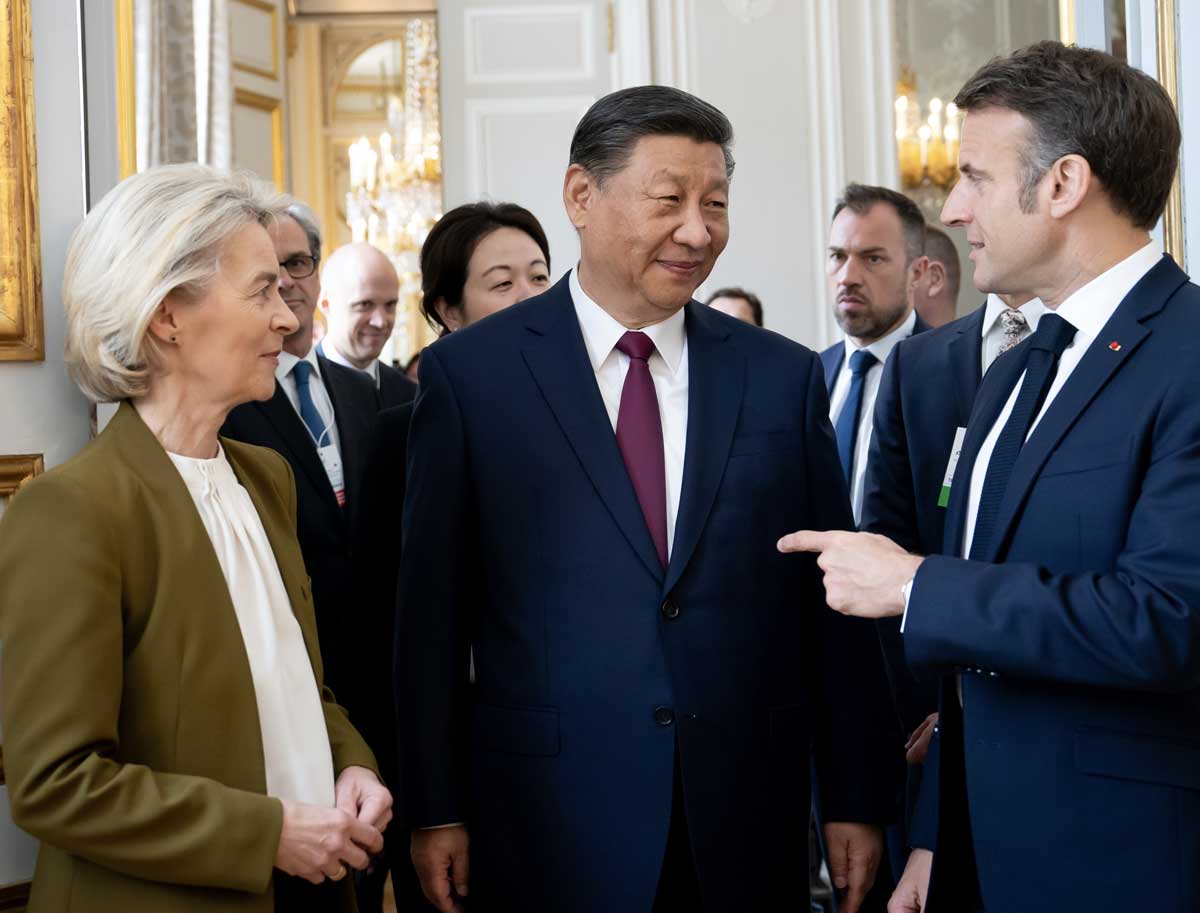
French President Emmanuel Macron will embark on his fourth state visit to China this week, meeting President Xi Jinping in Beijing and later in Chengdu. The trip comes amid growing tensions between Europe and China over trade, technology, and geopolitical issues. European leaders, including Ursula von der Leyen, have warned that relations with Beijing are at an “inflection point,” while Chinese exports, particularly in steel and electric vehicles, are putting pressure on European industries.
Why It Matters
Macron’s visit is aimed at rebalancing Europe’s trade relationship with China, ensuring access to Chinese technology, and maintaining stability amid rising economic and security risks. Europe is increasingly concerned about China’s dominance in rare earth processing, EV technology, and its backing of Russia. Macron must balance the need to protect European economic interests while avoiding escalation that could lead to trade conflicts or diplomatic breakdowns.
France seeks to secure industrial and technological gains, particularly in the EV sector, and to protect its trade interests. The European Union is looking to implement a new economic security doctrine to address growing concerns over China’s industrial policies. China aims to maintain influence over European markets while promoting domestic consumption and leveraging its technology. The United States is watching closely, concerned about Europe maintaining alignment with U.S. positions on China and Taiwan. European industries, including Airbus and French automakers, stand to be directly affected by the outcomes of the visit.
What’s Next
Macron will push for a rebalancing of trade, urging China to boost domestic consumption and share gains from innovation. Talks will also cover stability in the Taiwan Strait, with Macron aiming to maintain the status quo and prevent escalation. While Airbus is unlikely to secure its large jet order, discussions may influence broader EU-China trade and technology agreements. European leaders will monitor the visit’s outcomes closely to assess its implications for trade, technology access, and security cooperation in the region.
Implications
The visit highlights Europe’s delicate position: heavily reliant on Chinese trade and technology while seeking to protect strategic industries and security interests. Macron’s ability to navigate these pressures without upsetting U.S.-European coordination or provoking China will set the tone for broader EU policy. Success could reinforce Europe’s economic leverage, while missteps might deepen tensions, weaken industrial competitiveness, and complicate transatlantic relations.
With information from Reuters.