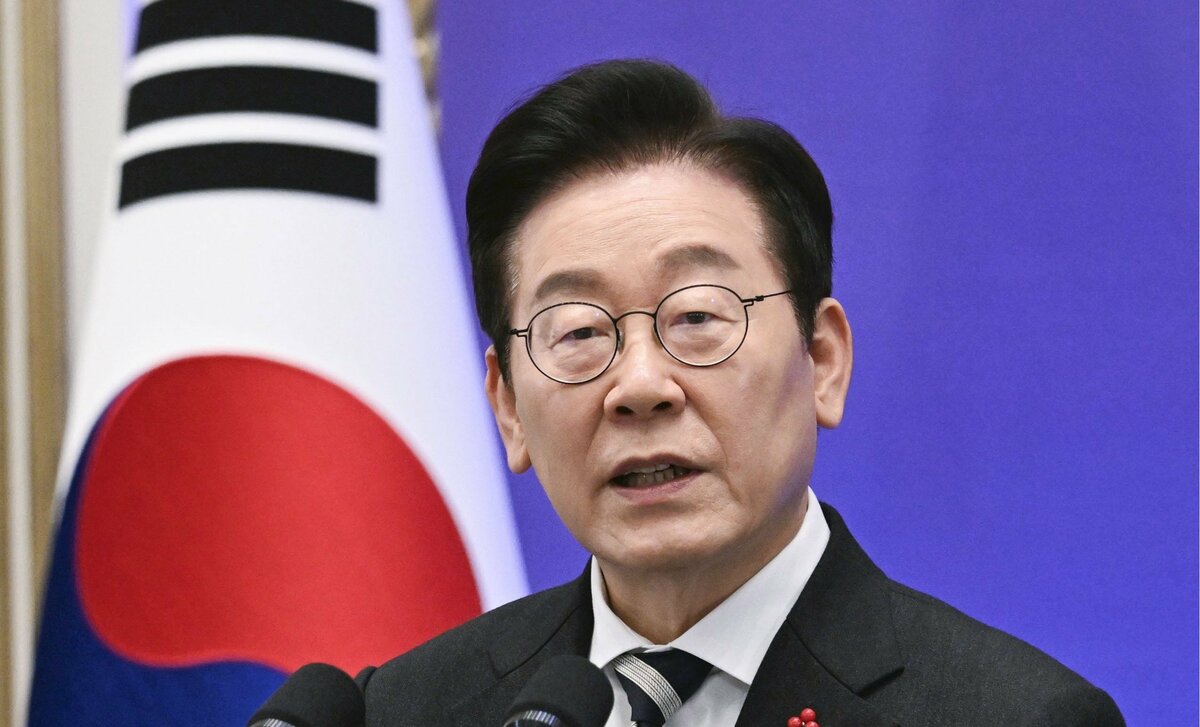
SEOUL – South Korean President Lee Jae Myung on Tuesday said his country wants to help lower tensions between Japan and China in their recent diplomatic row, instead of choosing one side over another.
“Taking sides would only escalate the conflict,” Lee said during a press conference with foreign media, noting that while Northeast Asia is economically dynamic it is also one of the most precarious regions in terms of security and risks of military confrontation.
“Precisely because of this, we should make every effort to identify common ground and expand areas of cooperation rather than deepen divisions,” Lee said.
He suggested it would be better for South Korea to “play a role in reducing tensions and mediating conflicts.”
Japan and China have been locked in a row since Beijing denounced Japanese Prime Minister Sanae Takaichi’s comments suggesting that a Chinese attack on Taiwan could constitute a “survival-threatening situation” for Japan and trigger a response involving its Self-Defense Forces.
Lee spoke to the foreign media Tuesday as part of the government’s commemoration of the first anniversary of the failed martial law declaration by his predecessor Yoon Suk Yeol.
Yoon abruptly declared martial law on Dec. 3, 2024, claiming then main opposition party led by Lee, which controlled parliament, had paralyzed state affairs. In April, Yoon was ousted by a Constitutional Court ruling upholding a National Assembly motion to impeach him over the emergency decree.
Lee said during a speech delivered ahead of the press conference the thwarted martial law declaration “paradoxically became an opportunity to show the world South Korean people’s strong sense of sovereignty and the remarkable resilience of South Korean democracy.” He warned that “a collapse of Korean democracy” would have caused democracy to regress across Asia and the wider world, stressing that citizens’ peaceful actions to overturn martial law through constitutional procedures stand as a “historic moment.”
Martial law was rescinded on Dec. 4 last year after parliament approved a resolution demanding that the decree be lifted.