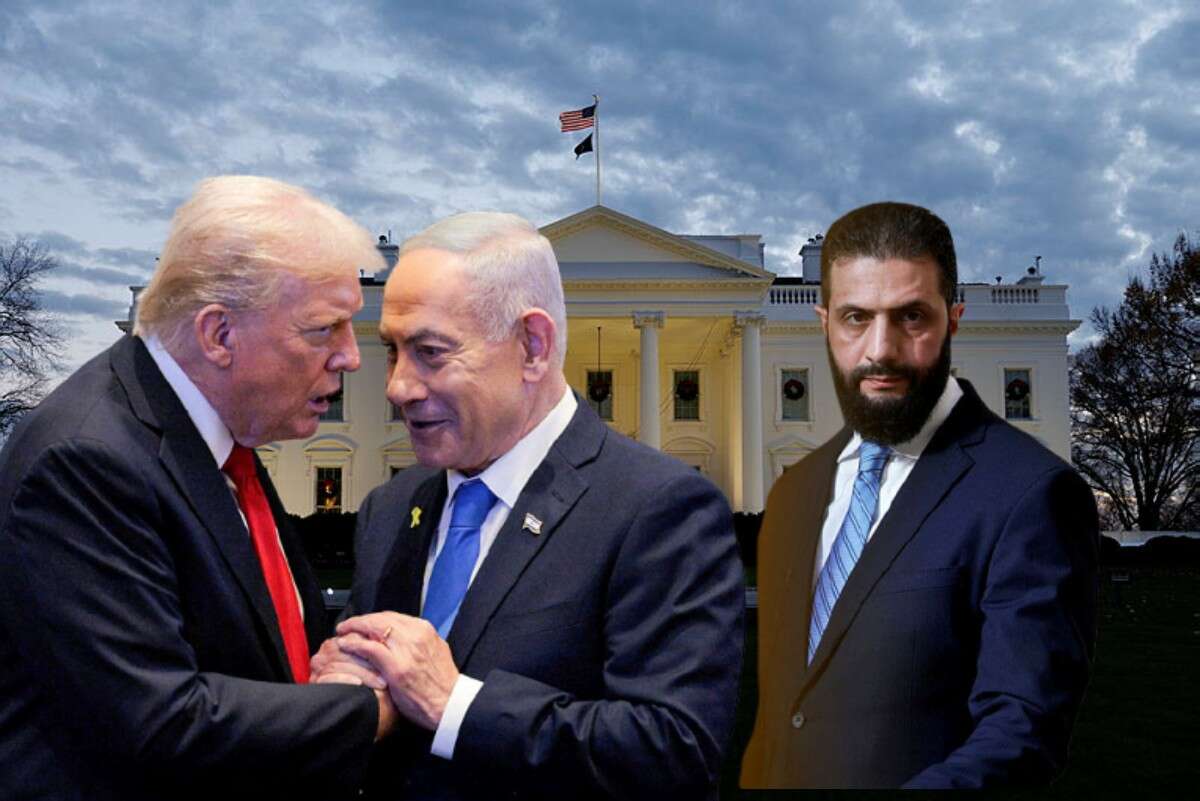
A day after filing a request for a pardon from the Israeli president, Prime Minister Benjamin Netanyahu spoke on Monday with US President Donald Trump. Following the call, the Prime Minister’s Office announced that “President Trump invited Prime Minister Netanyahu for a meeting at the White House in the near future,” likely later this month.
Netanyahu’s visit to Washington and his meeting with President Trump will address at least four central issues. Diplomatic officials indicate that the urgent situation in Syria will top the agenda, alongside an American effort to prevent a flare-up across Israel’s various fronts. Netanyahu is expected to depart within weeks for his sixth meeting with Trump.
The conversation followed a post by Trump on his social media platform, in which he dropped a heavy hint for Israel to de-escalate the Syrian front. The post was written in the wake of an incident in the village of Beit Jinn (in southern Syria), where several IDF soldiers were wounded during an operation to arrest two senior terrorists.
Syrian officials condemned the IDF’s entry into the village, but it later emerged that some of the Syrian fatalities from the group that opened fire on the troops were members of the regime’s security forces. In messages conveyed to the Americans, associates of President Ahmed al-Sharaa (also known as Abu Mohammad al-Julani) claimed they are doing everything in their power to prevent Iranian terror groups from entrenching themselves in the area between Damascus and the Israeli border.
They argued that IDF activity in the area restricts their maneuvers and hampers operations against terrorist groups. In these exchanges, they highlighted their cooperation with the US military in the south of the country, which led to the elimination of several terrorists from an ISIS-affiliated group.
Satisfaction with al-Sharaa
Trump wrote on TRUTH Social that it is vital for Israel to maintain a strong and genuine dialogue with Syria, expressing satisfaction with the performance of Syrian President Ahmed al-Sharaa, who made a historic visit to the White House in November. He emphasized that establishing good relations between Syria and Israel would support his efforts to achieve peace in the Middle East following the fragile ceasefire reached to end the Gaza war in October. This implies a strategic linkage between this front, Gaza, and regional peace as a whole.
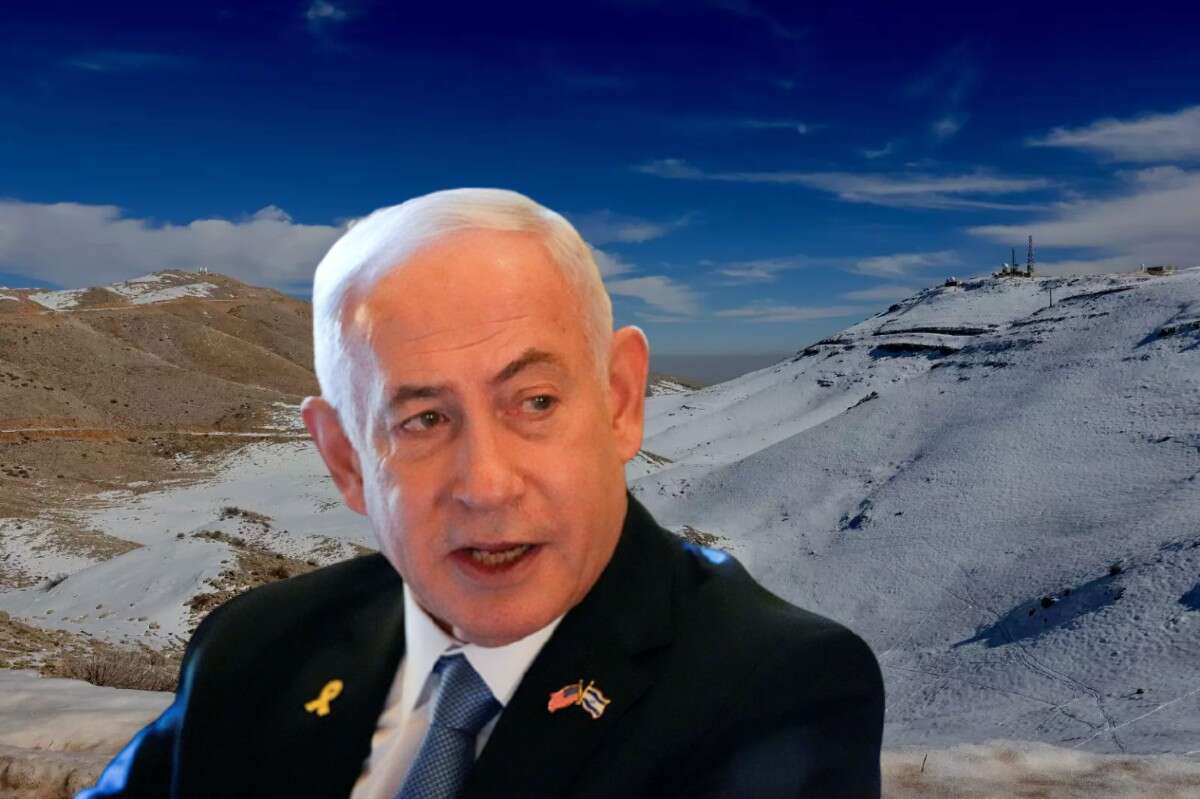 PM Netanyahu visited southern Syria on Nov. 19, 2025. Background: Mount Hermon (Oren Cohen; AP Photo/Alex Brandon;)
According to an analysis of the remarks and information from diplomatic sources, this linkage will top the agenda, fitting within the American approach that views the Middle East as a single complex entity and expects all fronts to calm down to pave the way for the grand rehabilitation plan, the “Mega Deal.”
Leading up to the meeting, the Americans are expected to accelerate contacts between the parties to reach at least substantive understandings. These include limitations on IDF activity in territories where al-Sharaa’s forces operate, cooperation against Sunni terror organizations, and ensuring the safety of the Druze in the Sweida enclave (a Druze-majority province), among other issues. According to an Israeli official, the Syrian demand for an IDF withdrawal from positions established on the Syrian border and the Mount Hermon area will not be met in the near term due to the regime’s inability to fulfill its promises to prevent terror activity emanating from Syrian territory toward Israel.
The American intention is for these understandings to drive a de-escalation process aimed at ultimately signing a long-term agreement between the countries. US officials fear that Israeli military responses in Syria and Lebanon could trigger an escalation that would erase the achievements of the past year.
Alongside the Syrian front, the Lebanese front is heating up due to Hezbollah’s refusal to meet the agreement’s conditions and the Lebanese government’s decision to disarm the group. This disarmament is the American condition for assisting the torn country’s rehabilitation, yet Hezbollah has refused to cooperate, acting under the direction and with increased assistance from Iran. A series of American envoys, including Morgan Ortagus and Steve Waltz, are scheduled to arrive in the region to attempt to untangle the complex situation.
The Gaza arena and negotiations for implementing the second stage of the Trump agreement have stalled. While Hamas has renewed its commitment to return the two fallen hostages and on Tuesday handed over remains for examination in Israel, it continues to adamantly oppose handing over power and weapons. The joint US-Israel interim plan aims to advance rehabilitation in the area under Israeli control – a process effectively already underway – while preventing similar rehabilitation in areas under Hamas control.
Committee for Gaza reconstruction
The Egyptians oppose this approach. Egyptian Foreign Minister Badr Abdelatty announced on Tuesday that his country is coordinating with the United States to jointly chair a committee for the rehabilitation of Gaza, to be convened as soon as possible. A previously planned committee session was canceled due to a lack of responsiveness from Arab states.
Here too, Iran is urging Hamas to continue resisting the handover of weapons and power, a fact that is bringing the issue of the Iranian regime to the forefront of the discussion between Netanyahu and Trump. The Israeli analysis, shared by quite a few administration officials, posits that toppling the regime in Iran is a strategic objective for all countries in the region, as Tehran remains the primary instigator of instability and insecurity.
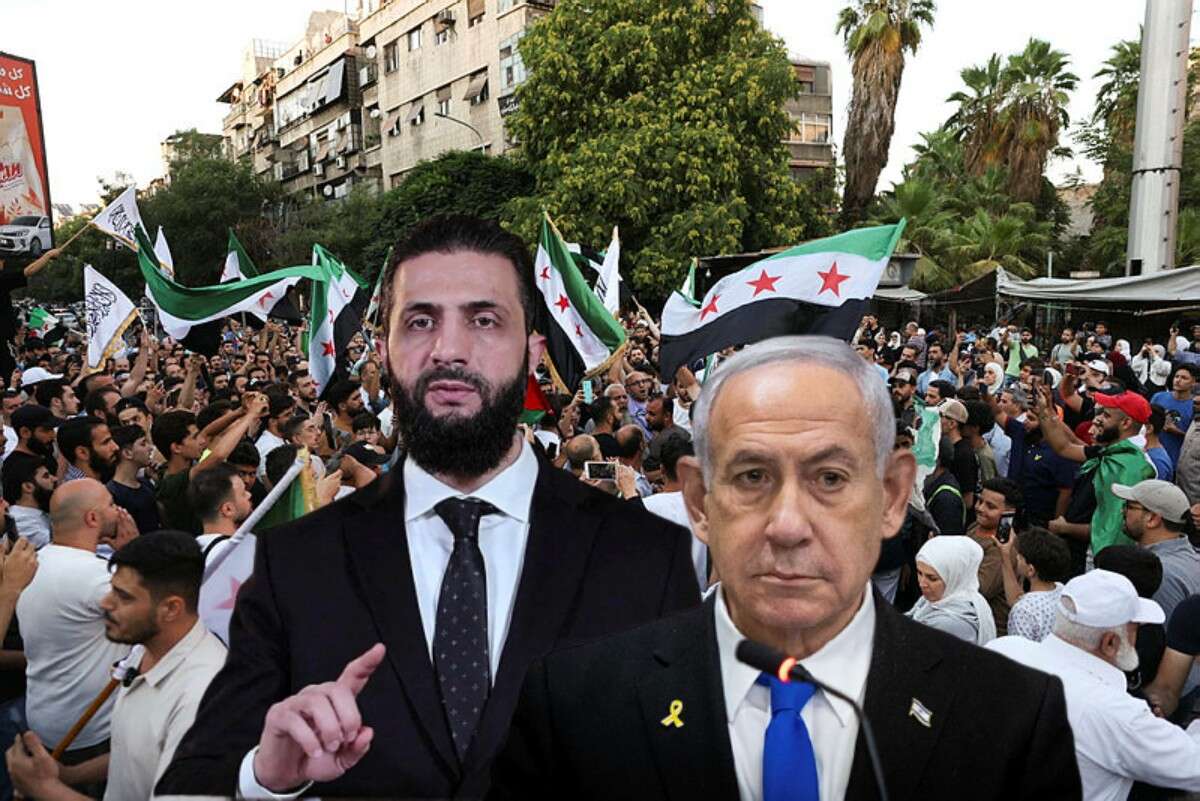 Syrian President Ahmed al-Sharaa; Prime Minister Benjamin Netanyahu ; Background: An anti-Israel protest in Damascus, July 2025 (Syrian Presidency / AFP; Haim Goldberg/Flash90; Ali Haj Suleiman/Getty Images)
The US halted the 12-Day War in June, even though an opportunity existed then to initiate a move to topple the regime. It has since intensified sanctions on Iran, which is currently mired in a severe crisis and facing serious economic and infrastructural deterioration. The water shortage is currently the most acute issue, but the government is also encountering liquidity difficulties due to sanctions on oil exports.
This issue will be placed on the table at the White House meeting. As a senior diplomatic official experienced in regional contacts noted, “As long as the Iranian regime holds on, it will do everything to prevent a comprehensive arrangement in the Middle East, the expansion of the Abraham Accords to normalization, and the Mega Deal.” According to this source, the White House must decide if and how to actively assist in replacing the Islamist terror regime in Tehran.
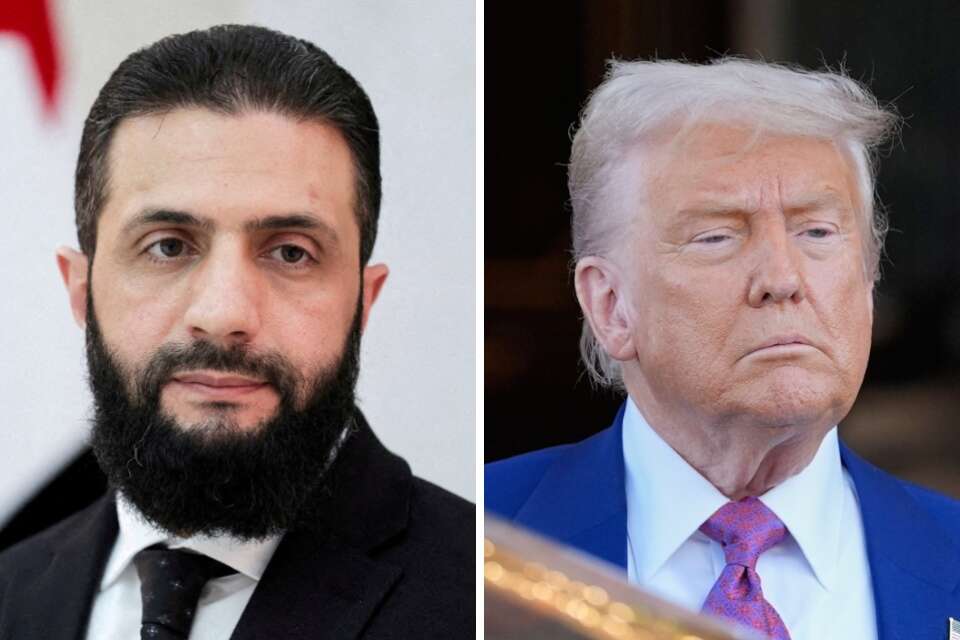 Syria’s Al-Julani and President Donald Trump (AP/Khalil Ashawi, Reuters/Alex Brand)
An additional issue on the agenda is Saudi Arabia. Netanyahu will hear details of the understandings between Trump and Crown Prince Mohammed bin Salman and will attempt to establish a framework for progressing toward direct talks between Israel and Saudi Arabia. Israel Hayom revealed that the Americans were furious at the Saudi insistence on conditioning talks with Israel on ending the war in Gaza and on a personal commitment from Netanyahu to a framework for a Palestinian state.