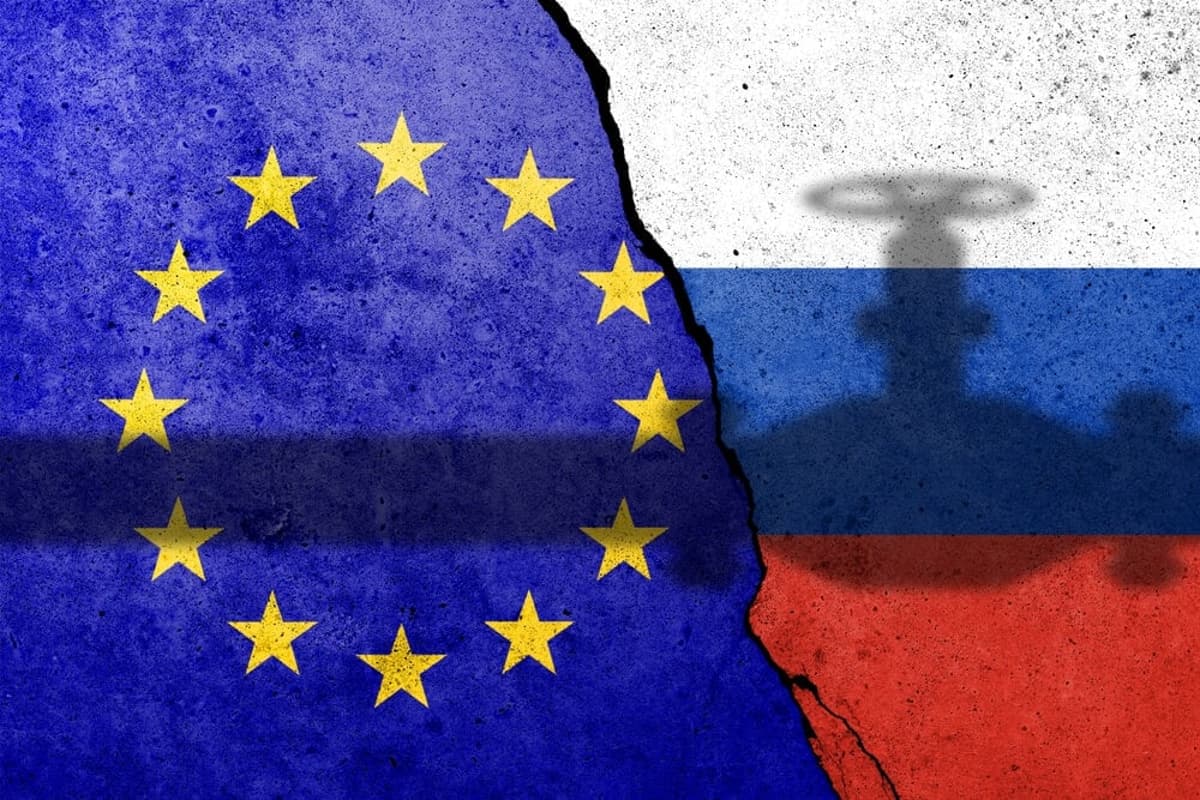
The European Council and Parliament have reached a provisional agreement to phase out imports of Russian LNG and natural gas.
The regulation introduces a legally binding, stepwise prohibition on both liquefied natural gas (LNG) and pipeline gas imports from Russia, with a full ban from the end of 2026 and autumn 2027 respectively.
It constitutes a central element of the EU’s REPowerEU roadmap to end dependency on Russian energy following Russia’s “weaponisation” of gas supplies with significant effects on the European energy market.
Lars Aagaard, Denmark’s Minister for Climate, Energy and Utilities, said it was a “big win” for all of Europe.
“We have to put an end to EU’s dependence on Russian gas, and banning it in the EU permanently is a major step in the right direction,” he said.
The co-legislators confirmed that imports of Russian pipeline gas and LNG will be prohibited from six weeks after entry into force of the regulation, while maintaining a transition period for existing contracts. In particular:
for short-term supply contracts concluded before 17 June 2025, the prohibition of Russian gas imports will apply from 25 April 2026 for LNG and 17 June 2026 for pipeline gasfor long-term contracts for LNG imports, the prohibition will apply from 1 January 2027, in line with the 19th sanctions packageas regards long-term contracts for pipeline gas imports, the prohibition will kick in on 30 September 2027, provided that member states are on track to fulfil the storage filling targets foreseen in the gas storage regulation, and at the latest on 1 November 2027
Amendments to existing contracts will be permitted only for narrowly defined operational purposes and cannot lead to increased volumes.
The co-legislators included the requirement that both categories of gas imports be subject to a prior authorisation regime in order to ensure that the prohibition will work in practice.
The regulation mandates all member states to submit national diversification plans outlining measures for diversifying their gas supplies and potential challenges, with a view to ending all gas imports from Russia by in time with the deadlines foreseen in the regulation.
At the same time, the agreement strengthens the Commission’s oversight by requiring member states to notify the Commission within one month of the regulation’s entry into force whether they have Russian gas supply contracts or national legal bans in place.
The provisional agreement will now be endorsed by the Council and the Parliament before being formally adopted.
While imports of oil have dropped to below 3% in 2025 in the current sanctions regime, Russian gas still accounts for an estimated 13% of EU imports in 2025, worth over €15bn annually, which leaves the EU exposed to significant trade and energy security risks.
TotalEnergies recently said it plans to terminate its floating liquefied natural gas terminal in the port of Le Havre, France.
The move reflects the steady improvement in Europe’s gas supply balance and could point to a wider move away from the temporary LNG infrastructure rushed into service during the 2022 supply crisis. Click here to read an analysis piece.