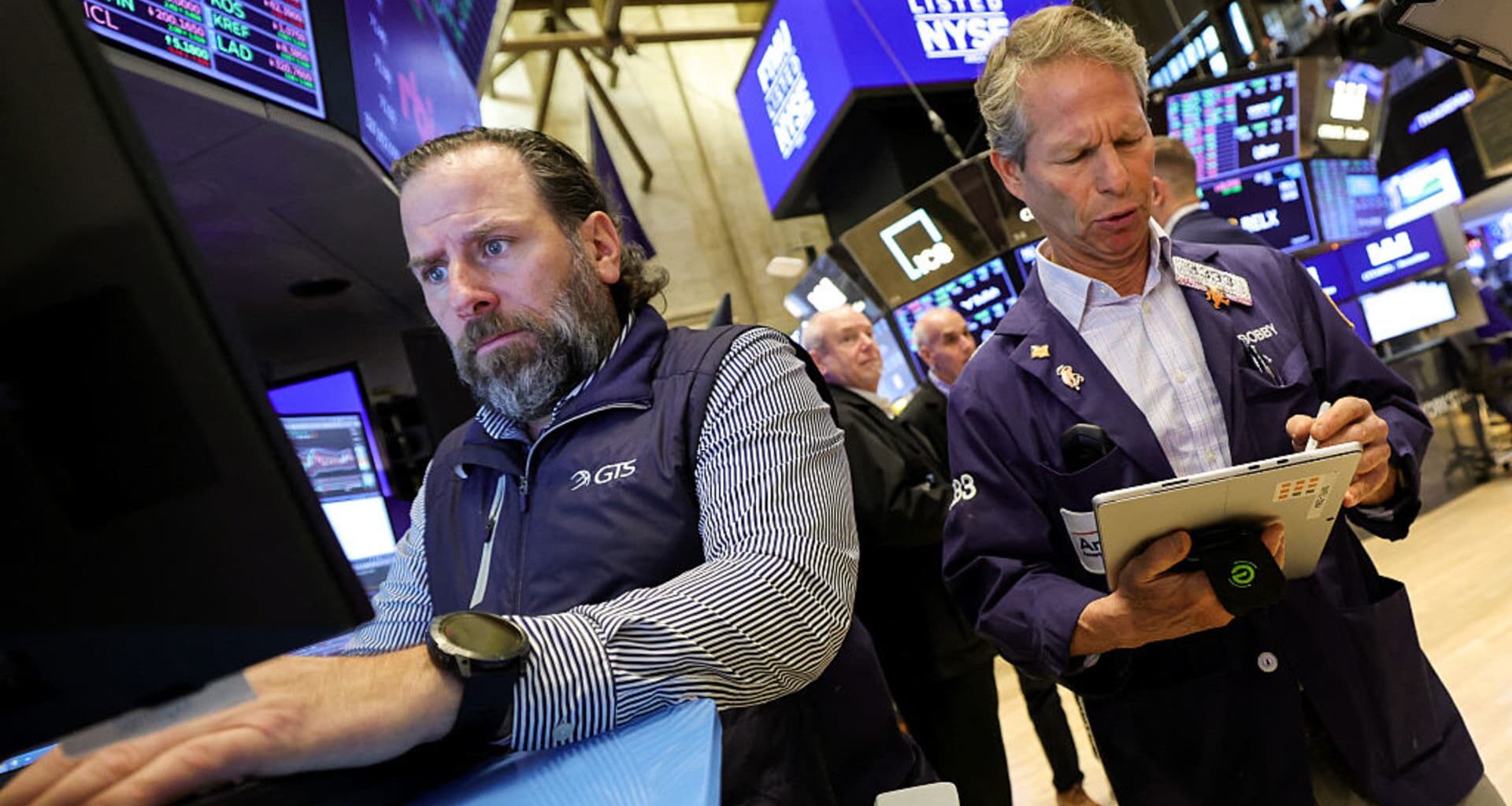
Traders work on the floor of the New York Stock Exchange (NYSE) at the opening bell in New York on December 3, 2025.
Timothy A. Clary | Afp | Getty Images
The S&P 500 was relatively unchanged on Wednesday as traders contemplated the U.S. economic outlook.
The broad market index hovered around the flatline, while the Nasdaq Composite lost 0.2%, bogged down by Microsoft. The Dow Jones Industrial Average outperformed, advancing 126 points, or 0.3%.
Microsoft shares fell after The Information reported it was cutting software sales quotas tied to artificial intelligence. The stock was last down 2%.
Other names linked to the AI trade, including chipmakers Nvidia and Broadcom, fell in sympathy with Microsoft. Nvidia was marginally lower, while Broadcom retreated more than 1%. Micron Technology was also under pressure, dropping around 2%.
Stock losses were mitigated, however, after payrolls processor ADP reported that private payrolls surprisingly declined by 32,000 in November. Economists polled by Dow Jones had expected an increase of 40,000 for the month. Despite the tough reading on the economy, traders were likely betting that the private job losses could clinch a Federal Reserve rate cut at its last meeting of the year next week.
Traders are optimistic about corporate earnings results and are looking ahead to the Fed’s interest rate decision on Dec. 10. Markets are pricing a roughly 89% chance of a cut during the upcoming meeting, which is much higher than the odds from mid-November, according to the CME FedWatch tool.
There was some evidence Wednesday of a stable economy, as the latest U.S. services data came slightly better than expected.
The trading day saw a few other bright spots. Bitcoin continued to gain, trading above $92,000, after the flagship cryptocurrency logged its worst day since March on Monday. Shares of Marvell Technology rose more than 6%, as Wall Street reacted to its data center growth projections. American Eagle Outfitters was another standout, rallying more than 15% after the retailer lifted its full-year forecast and said the holiday shopping season was off to strong start.
Investors are gauging the possibility of year-end rally, as December trading historically bodes well for U.S. stocks and because November was such a downbeat month as profit-taking trimmed valuations for some high-flying names.
“I think AI earnings are going to continue to be strong. … We’re going to see more contribution from more beaten-down sectors, and we’re starting to see some of the more short-cycle industrials and more beaten-down sectors starting to see better pricing power,” said Wells Fargo chief equity strategist Ohsung Kwon said Tuesday on CNBC’s “Power Lunch.” “I don’t think it’s a bubble yet.”