I was the UK’s last Soviet Union ambassador – here’s how Putin can lose
I was the UK’s last Soviet Union ambassador – here’s how Putin can lose
Posted by theipaper
I was the UK’s last Soviet Union ambassador – here’s how Putin can lose
I was the UK’s last Soviet Union ambassador – here’s how Putin can lose
Posted by theipaper
2 comments
What might [convince Vladimir Putin](https://inews.co.uk/news/politics/ukraine-peace-deal-inches-closer-but-putin-is-the-sticking-point-4064629?ico=in-line_link) to agree [a peace deal with Ukraine](https://inews.co.uk/news/world/major-sticking-points-ukraine-peace-plan-4063402?ico=in-line_link) right now, while his army is still advancing? While his political control of Russia seems as strong as ever? And while Donald Trump has arguably been [placing more pressure on Kyiv than on the Kremlin](https://inews.co.uk/news/world/putin-wants-peace-his-terms-thinks-trump-provide-4065336?ico=in-line_link)?
So far, the massive human cost of [his full-scale invasion](https://inews.co.uk/topic/russia-ukraine-war?ico=in-line_link) – with more than a million Russians killed or injured since February 2022 – hasn’t deterred Putin from fighting on. Nor has the slow pace of his war.
This morning, he has again rejected the proposed terms for an agreement, with officials saying “[no compromise](https://inews.co.uk/news/world/russia-us-talks-fail-breakthrough-ukraine-deal-4082937?ico=in-line_link)” has been reached.
But in the last few months, financial experts have noticed growing signs of problems in the Russian economy. From steel firms to banks, companies are under pressure. Many consumers have cut back their spending not just on clothes, cars and electronics, but even food. A recession is widely expected.
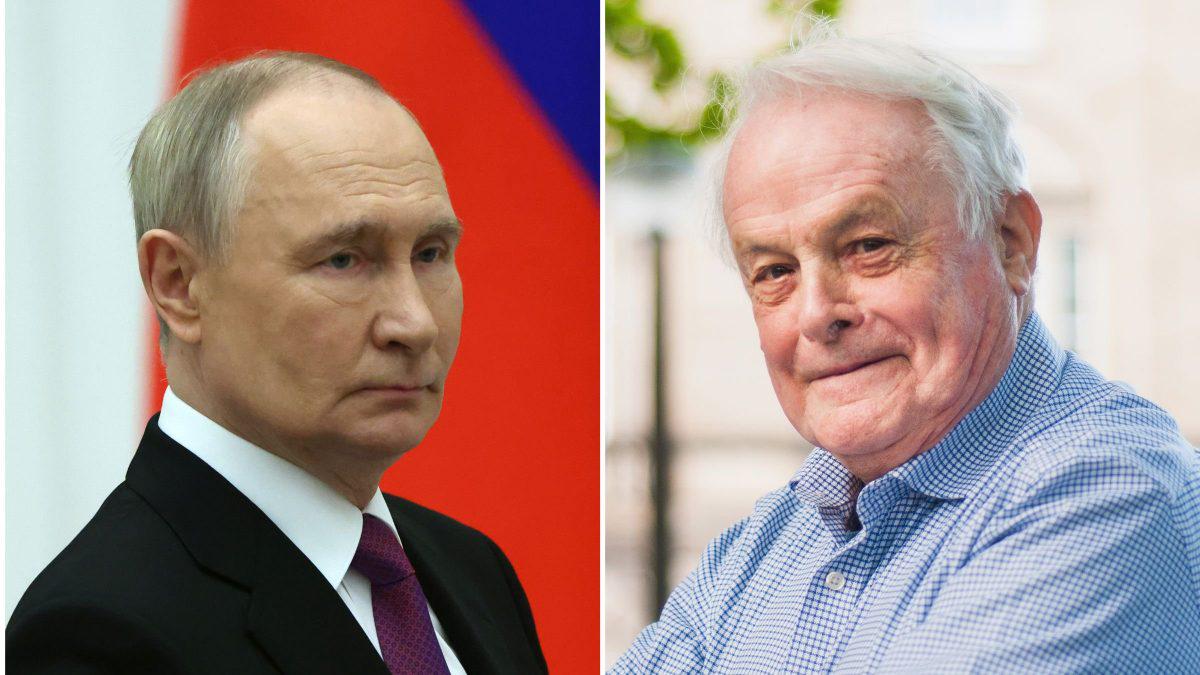
These are dangerous times for Putin, according to Sir Rodric Braithwaite, a former British diplomat who has seen firsthand how Russia can unexpectedly turn on apparently powerful leaders. “I certainly keep open the possibility that Putin could suddenly disappear,” he says.
Braithwaite was working in Moscow in 1964 when the Soviet leader, Nikita Khrushchev, was abruptly ousted, in news that shocked the world. Decades later, he was the UK ambassador to the USSR when Mikhail Gorbachev was forced to resign in 1991 and the communist empire broke up, leading to Ukraine’s independence.
Now aged 93, he’s learnt not to make predictions about a world that constantly surprises people. He also accepts that few other analysts see any real threat to Putin’s rule. But we shouldn’t ignore the country’s history of revolutions and palace coups, he argues, and the Kremlin cannot afford to either.
“Unexpected things could happen,” he says. “There’s a tradition in Russia of regimes suddenly collapsing, of leaders suddenly disappearing, sometimes under popular pressure, particularly as a result of a failed war.
“That’s what happened in 1917. The war in Afghanistan from 1979 to 1989 also generated considerable amounts of unhappiness in the Soviet Union, which had a political impact – and the Russians have lost many more soldiers this time than they did in Afghanistan.”
Indeed, the USSR suffered 15,000 deaths during its decade-long Afghan occupation – compared to an estimated 250,000 Russian fatalities across less than four years in Ukraine. Braithwaite questions whether Putin can “sustain this relentless loss of men for very little territorial gain”.
Where is your submission statement ? Why do you always post the article verbatim without adding anything else.
Comments are closed.