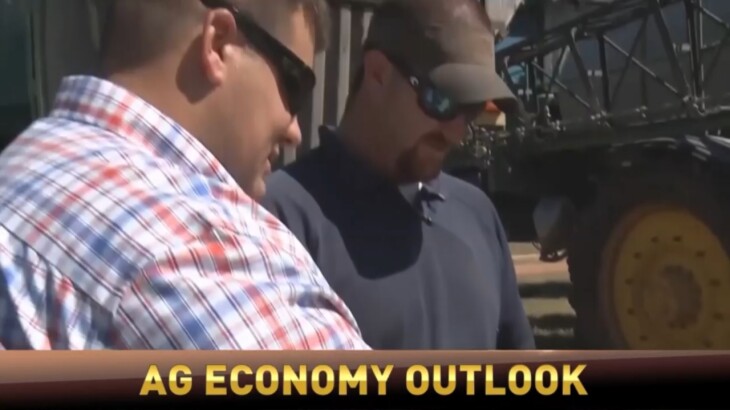
NASHVILLE, Tenn. (RFD-TV) — An optimistic outlook for the future is fueling U.S. farmer sentiment. The latest Ag Economy Barometer climbed 10 points since last month, marking its highest reading since June of this year. Purdue University Professor of Agricultural Economics Dr. Jim Mintert joined us on Wednesday’s Market Day Report to review the highlights.
In his interview with RFD-TV News, Dr. Mintert discussed one of the main drivers behind the improved sentiment: recent trade developments between the U.S. and China and producers’ views on ag trade prospects. He also addressed farmers’ expectations regarding upcoming ag relief payments, including how similar they believe any support might be to the 2019 Market Facilitation Program. Finally, he shared how producers said they would use those potential payments on their operations, as well as their views on whether the U.S. is currently headed in the “right direction.”
Tony St. James, RFD-TV Markets Specialist
More Highlights from November’s Ag Economy Barometer
Farmer sentiment improved sharply in November as rising crop prices and a more optimistic export outlook boosted confidence across much of the Corn Belt. Purdue University’s Center for Commercial Agriculture reports the Ag Economy Barometer jumped to 139 — its highest level since June — driven almost entirely by gains in producers’ expectations for the year ahead.
The Future Expectations Index climbed 15 points to 144 after the late-October U.S.–China trade pact signaled stronger long-term demand for U.S. farm products. Purdue researchers Michael Langemeier and James Mintert said the outlook shift came alongside notable price gains, with fall-delivery corn and soybean bids rising 10 percent and 15 percent from mid-October to mid-November.
Producers also reported better projected financial performance, lifting the Farm Financial Performance Index to 92. Still, the Farm Capital Investment Index fell to 56, reflecting ongoing caution in equipment and infrastructure spending despite improved optimism.
Attitudes toward future trade remained broadly positive: only 7 percent expect U.S. agricultural exports to weaken over the next five years. Most corn growers also foresee stable cash rents in 2026.
Looking ahead, farmers remain upbeat on farmland values, with long-term expectations rising to a record 165.

While the agriculture industry hoped details on proposed “bridge” payments for farmers would be released this week, Ag Secretary Brook Rollins said the USDA is still working with the White House on the finer points.

Federal lawyers submitted a brief this week backing Bayer’s argument that federal laws governing herbicides like Roundup should prevent lawsuits over the popular chemical.

China’s renewed purchases signal improving sorghum demand at a time when export markets are otherwise uneven. Meanwhile, agriculture groups across the U.S, Canada, and Mexico want to protect close trade relations.

The Environmental Protection Agency confirms that new single-fluorinated pesticides are not PFAS and remain fully compliant with current safety standards.


Strong demand supports sweet potatoes, but grading challenges and rising costs weigh on returns for Southeastern growers.

Pressure on grain storage capacity and stronger export positioning are pushing more grain onto railroads, highways, and river systems as logistics become a key bottleneck this fall.

The Cotton-4 are pushing hard for new value chain investments. Still, many U.S. cotton producers face unsustainable losses, and weakened regional textile capacity threatens the survival of the Carolina “dirt-to-shirt” supply chain.

Late harvest and tight supplies shape crop progress and agribusiness this week. Here is a regional snapshot of harvest pace, crop conditions, logistics, and livestock economics across U.S. agriculture for the week of Dec. 1, 2025.