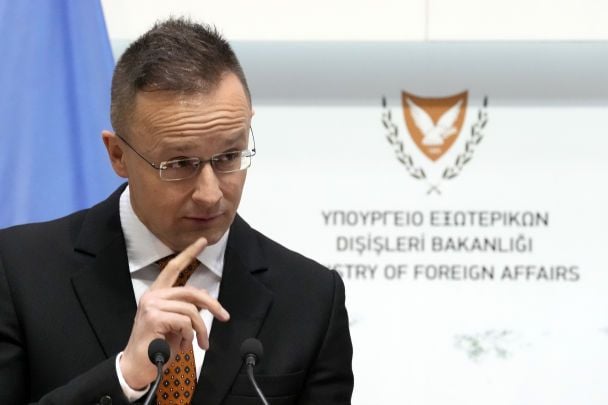
On Wednesday, Hungary announced that it, along with Slovakia, will file a lawsuit with the European Court of Justice against the plan to ban the import of gas and oil from Russia for EU countries.
Hungarian Foreign Minister Peter Szijjarto noted that as soon as the plan receives final approval, the countries will immediately challenge it in the EU Court, with Slovakia supporting their move.
Szijjarto described this initiative as an ‘unacceptable dictate,’ emphasizing that the proposed measures lead to ‘sharp price increases’ and contradict EU agreements that allow energy supply to be defined as a national prerogative.
EU Plan for Import Ban
The EU Council approved a plan that entails a phased ban on the purchase of Russian natural gas. According to the document, a complete ban on liquefied natural gas supplies will take effect at the end of 2026, while the ban on the import of pipeline gas will come into force in the fall of 2027, considering transitions for existing contracts. This document still needs to be approved by the Euro Council and the European Parliament, and it obliges countries to develop national plans for supply diversification.
The EU Council statement emphasized that these steps are a key element of the REPowerEU program, aimed at reducing dependence on Russian energy sources, as the Russian Federation uses gas supplies as a weapon. Currently, according to EU data, in 2024, around 19% of gas imports to Europe will come from Russia, while this year it is 13%, exceeding 15 billion euros annually.
Dependence on Russian Energy Sources
Hungary and Slovakia emphasize their heavy reliance on energy imports from Russia and oppose potential supply interruptions. They note that their geographical location as landlocked countries complicates the search for viable alternatives, as existing routes are imperfect and more expensive.
It is worth mentioning that Hungarian Prime Minister Viktor Orban had previously stated that his country ‘does not support the provision of any further financial assistance to Ukraine by the European Union in any form’ and ‘does not agree to make such a decision on behalf of the EU.’
This situation concerning the import of Russian energy sources and the reactions of Hungary and Slovakia highlights the complex challenges facing the European Union in its energy policy. Energy security remains a focal point, and the further steps taken by the countries may have serious consequences for the entire region.